Shall I Heal?

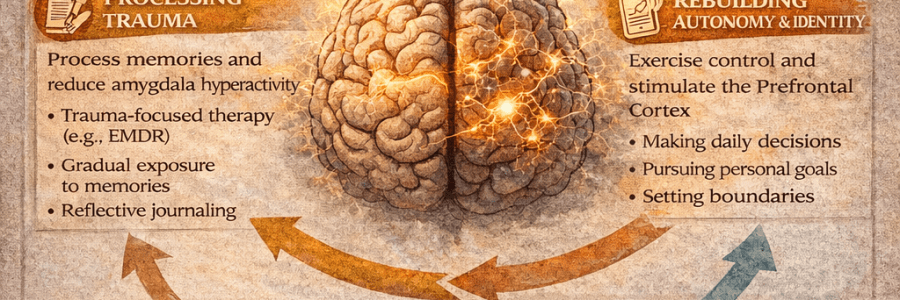
The Neuroscience of Deciding to Move On From Trauma There comes a quiet moment after survival. A moment where the chaos has settled just enough for a question to surface: “Am I ready to heal?”“Shall I… or shall I not?” Wanting to move on doesn’t mean you’re ready.And not feeling ready doesn’t mean you’re weak.… Read More Shall I Heal?

Psychological Profile of Covert Financial Abuse

How Control, Power, and Image Replace Love, Responsibility, and Care What Is Covert Financial Abuse? Covert financial abuse is a hidden form of coercive control in which one partner strategically withholds, manipulates, or distorts money and resources to maintain dominance, dependency, and psychological power — while simultaneously appearing generous, responsible, or struggling to outsiders. Unlike overt financial abuse, covert financial abuse is subtle, deniable,… Read More Psychological Profile of Covert Financial Abuse

The Psychological Stages of Long-Term Deception

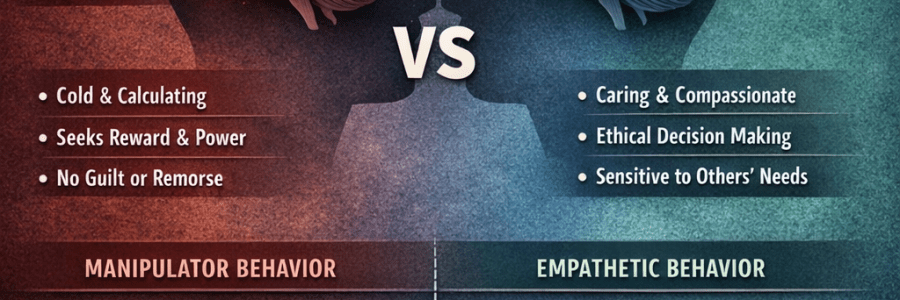
(How Manipulative Relationships Actually Unfold) This pattern is remarkably consistent across narcissistic, antisocial, psychopathic, and chronic deceiver profiles. Understanding these stages helps survivors: 🟢 STAGE 1 — TARGETING & ASSESSMENT “Who is useful to me?” Before emotional involvement begins, the deceiver unconsciously (or consciously) scans for: Psychological Process: They assess: How much emotional supply, care, attention, resources,… Read More The Psychological Stages of Long-Term Deception

Online Dating & New Relationship Red Flags

What to Look For (Early Detection Guide) 1. Relationship History Be cautious if someone: 👉 Pattern matters more than isolated events. 2. Timeline Inconsistencies Watch for: 👉 Consistency = psychological stability + honesty. 3. Aggressive or Hostile Posts Red flags include: 👉 Online behaviour predicts real-life behaviour. 4. Extreme Beliefs Be cautious if they express:… Read More Online Dating & New Relationship Red Flags

Forgiving an abuser while abuse is ongoing or unaccounted for is neurologically and psychologically impossible.

Forgiveness after abuse is not the same as forgiving a minor wrongdoing, and neuroscience and psychology explain why it’s often extremely difficult—sometimes impossible—without safety, repair, or accountability. Let’s break it down carefully. 🧠 Neuroscience & Psychology Behind Forgiving an Abuser 1️⃣ Trauma Hijacks the Brain Result: Even if you want to forgive, your body and brain defend themselves automatically. 2️⃣ Abuse… Read More Forgiving an abuser while abuse is ongoing or unaccounted for is neurologically and psychologically impossible.

When Someone Inserts Themselves Into a Relationship Triangle Out of Jealousy

This behavior occurs when a third party actively interferes in a relationship to create conflict, insecurity, or emotional distance. In psychology, this is a form of triangulation. It is not about love or care — it is about emotional insecurity, fear, and control needs. Why People Do This 1. Jealousy & Fear of Loss 2. Need for Control 3.… Read More When Someone Inserts Themselves Into a Relationship Triangle Out of Jealousy

Triangulation Psychology

Why Some People Pull Others Into Conflict Triangulation is a psychological manipulation pattern where a third person is deliberately pulled into a situation to create confusion, control, jealousy, power imbalance, or emotional instability between two people. Instead of direct communication, a triangle is created: Person A → Person B → Person CInstead of:Person A ↔ Person B This pattern… Read More Triangulation Psychology

When an Outsider Invents a Story to Break Your Relationship

The Neuroscience & Psychology Behind the Behavior When a third party deliberately creates false stories, distortions, or manipulations to damage a relationship, this is not accidental and rarely harmless. This behavior is driven by psychological insecurity, emotional dysregulation, control needs, and unresolved trauma patterns. The Core Psychological Drivers 1. Jealousy & Emotional Threat When someone feels emotionally threatened by… Read More When an Outsider Invents a Story to Break Your Relationship

Inventing Stories to Break Up a Relationship

The Psychology & Neuroscience Behind This Behavior When someone creates false narratives, distortions, or invented stories to damage or end a relationship, this behavior is rarely about truth. It is about control, fear, insecurity, and psychological survival strategies. This pattern is deeply rooted in attachment wounds, emotional immaturity, and threat-based brain responses. The Core Psychological Drivers 1. Fear… Read More Inventing Stories to Break Up a Relationship

What Forgiveness Does When You Are Healing From Trauma

Neuroscience & Psychology Explained Forgiveness is often misunderstood. Many people believe forgiveness means: From a neuroscience and psychology perspective, true forgiveness is none of these. Forgiveness is not about the other person.It is about freeing your nervous system from survival mode. Trauma Lives in the Nervous System, Not Just the Memory Trauma does not stay in the… Read More What Forgiveness Does When You Are Healing From Trauma