Filters

Upbringing and character shape communication at a nervous-system level, not just a “personality” level. People don’t simply choose how they communicate — they default to what their brain learned was safe, effective, or rewardedearly in life. I’ll break this down clearly and then show how different upbringings produce different communication styles. 🧠 1. Early Environment Wires the Communication System A… Read More Filters

Aggressive Communication

What Those Statements Actually Are Examples: These are NOT: These ARE: Why This Is Not Just “Unfiltered Honesty” 1. They Target Identity, Not Behavior Unfiltered honesty can still focus on actions: “This task wasn’t completed.” Your examples focus on who the person is: 📍 The brain experiences this as a social threat, activating the same neural pathways as physical danger. 2.… Read More Aggressive Communication

Why family members often enable abuse

This is a crucial piece of the picture — and one that causes survivors enormous secondary harm. Psychology and neuroscience explain family enabling very clearly. 1. Threat to the family identity Families function as identity systems, not just groups of individuals. When abuse is acknowledged, it threatens: The brain treats this as an existential threat, activating the amygdala. Under… Read More Why family members often enable abuse

Do abusers ever look outside the box and imagine it happening to their own loved ones?

Most do not — and when they do, it is usually abstract, not empathic. 1. Empathy is compartmentalised, not absent Contrary to popular belief, many abusers are not “emotionless.” They can show selective empathy — especially toward people they identify with or feel ownership over (their mother, daughter, family name). Neuroscience shows this as compartmentalisation in the brain: So… Read More Do abusers ever look outside the box and imagine it happening to their own loved ones?

Reclaiming the Paperwork — and the Truth

As I prepare for divorce, I have had to replace every single legal document I need.Passports, certificates, records — all of the originals were taken long ago. They were kept in a briefcase I was never allowed to open or touch.Money and documents stored away before we were even married. On the surface, this looks like administration.Psychologically, it… Read More Reclaiming the Paperwork — and the Truth

Just Being — When the Nervous System Finally Rests

There are moments in healing when life feels exactly as it should — not because everything is perfect, but because everything is aligned. When things begin to fall into place without force.When you hand control over to a higher power — however you understand that — and allow yourself to soften.When effort gives way to trust.… Read More Just Being — When the Nervous System Finally Rests

Why calm felt dangerous?

This is one of the hardest and most important transitions after long-term abuse.Distrusting calm wasn’t a flaw — it was adaptive. Now your nervous system needs help updating its rules. I’ll explain why calm felt dangerous, then how to retrain trust in it using neuroscience, not positive thinking. 1. Why calm used to feel unsafe (this matters) In abusive environments, calm… Read More Why calm felt dangerous?

Red Light vs Green Light

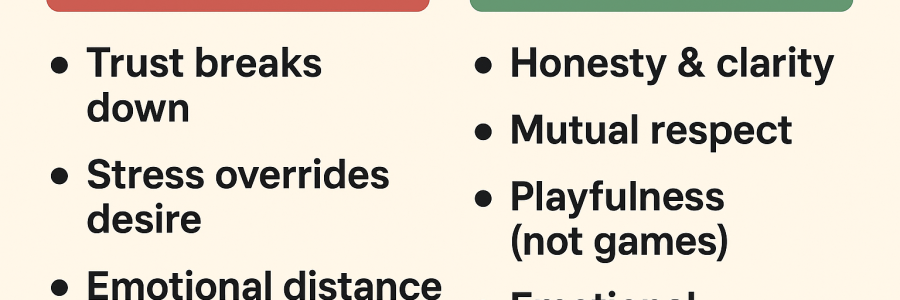
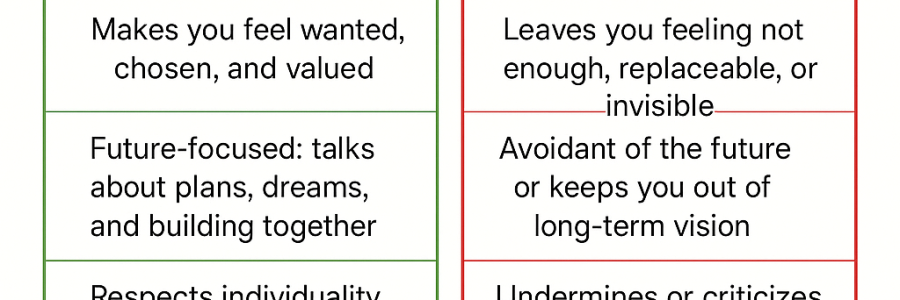
Here is a clear, neuroscience-based map you can use in real time when you eventually date.This isn’t about judging people — it’s about listening to your nervous system, which now has much better data than it used to. Green vs Red Nervous-System Signals in Dating (After long-term abuse) 🟢 GREEN SIGNALS These indicate ventral vagal regulation — safety, presence, and choice. 1.… Read More Red Light vs Green Light

How long before dating gain?

This is one of the most important questions in recovery — and neuroscience gives a clear, compassionate answer that is very different from cultural pressure to “move on”. I’ll speak directly to you, not in generic advice. The short answer (grounded in neuroscience) After decades of abuse, the nervous system needs time to re-baseline before it can choose safely. Not… Read More How long before dating gain?