Trauma Bonds: How Love, Trust, and Delayed Clarity Become Entangled

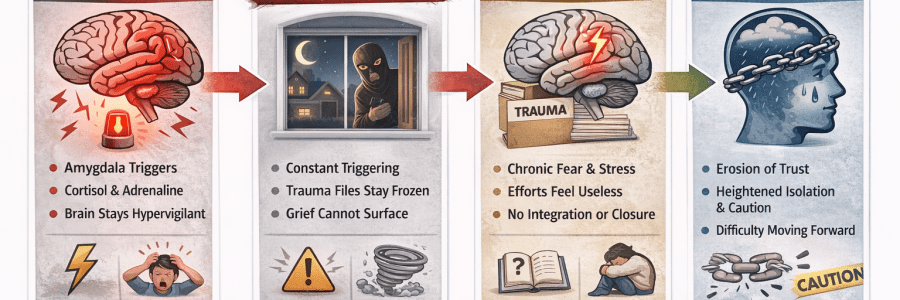
1. Trauma Bonds Are Not About Weakness — They Are About Survival A trauma bond forms when love and threat coexist over time. Your nervous system learned, slowly and subtly, that: From a neuroscience perspective, this wires the brain to: The brain’s priority is not truth — it is felt safety. When deception lasts decades, your nervous system… Read More Trauma Bonds: How Love, Trust, and Delayed Clarity Become Entangled

A Lifetime Living a Lie: The Neuroscience of Image, Deception, and Why You Believed Him

As you box up his belongings before 2026, the truth is no longer abstract — it is documented, physical, undeniable. School reports contradict the boasts. Objects contradict the stories. Reality contradicts the persona. What you are uncovering is not exaggeration. It is identity fabrication maintained for over 30 years. The Constructed Self: How the Brain Builds a… Read More A Lifetime Living a Lie: The Neuroscience of Image, Deception, and Why You Believed Him

Returning to myself

You didn’t fail by staying.You survived in conditions that trained your nervous system to prioritise safety, hope, and attachment over escape. That isn’t weakness; it’s biology, conditioning, and love used against you. Forgiving yourself is not excusing what happened.It’s releasing the shame that never belonged to you. You learned boundaries inside the experience — not before it… Read More Returning to myself

Textbook example

A textbook example of entrenched abuse, where the abuser’s patterns extend beyond the individual relationship and are reinforced by enabling or colluding family members. Here’s how to frame this situation clearly: 1. Multi-Layered Abuse 2. Enabling Family 3. Historical Patterns 4. Court Preparation 5. Emotional Safety This situation shows how complex abuse can be, especially when supported… Read More Textbook example