Involving underage children in covering up abuse

Involving underage children in covering up abuse, coaching them to lie, or pressuring them to protect adults is considered a very serious safeguarding concern. Psychologically, this can place children into what is called a loyalty bind β€” where they feel forced to choose between truth and attachment to caregivers. That conflict can create long-term effects on the… Read More Involving underage children in covering up abuse

Involving Children and Grandchildren

When family members involve children or grandchildren in denying, minimizing, or covering up abusive behaviour, it places enormous psychological pressure on everyone involved β€” especially the younger generations. From a neuroscience and psychology perspective, several dynamics often overlap: For the people witnessing this, the impact can be profound: One of the hardest parts is that… Read More Involving Children and Grandchildren

Deep neurochemical and emotional bonding.

Some of the strongest human connections are formed when attraction is not primarily driven by money, status, appearance, or social gain, but by deep neurochemical and emotional bonding. Neuroscience shows that humans are biologically wired for attachment. In genuinely intense connections, the brain’s reward, safety, and bonding systems can become highly synchronized between two people.… Read More Deep neurochemical and emotional bonding.

Limerence

The psychological term most often linked to β€œlove at first sight” is β€œinstant attraction” or β€œlimerence” when the feelings become intense, obsessive, and emotionally consuming. In neuroscience and psychology, researchers also talk about rapid romantic attachment or thin-slice attraction β€” where the brain forms powerful impressions within seconds. From a neuroscience perspective, something very real does happen, although scientists debate whether it is truly β€œlove”… Read More Limerence

Complicated Grief

Complicated Grief refers to a persistent, intense, and often disabling form of grief where the natural healing process becomes stuck or delayed. The emotional pain remains acute for a long time and can interfere with daily functioning, identity, sleep, and emotional regulation. It is different from normal grief in that the intensity does not gradually… Read More Complicated Grief

The Normal Cortisol Rhythm

Cortisol rhythms refer to the natural daily cycle of cortisol release in the body, which follows the body’s circadian rhythm. Cortisol is often called the β€œstress hormone,” but it is also essential for: The Normal Cortisol Rhythm In a healthy pattern, cortisol follows a predictable 24-hour cycle: This daily rise-and-fall pattern is called the:Circadian Rhythm Cortisol… Read More The Normal Cortisol Rhythm

Oxytocin is a hormone and neurotransmitter heavily involved in:

It is often called the β€œbonding hormone” or β€œlove hormone,” although neuroscience shows its role is more complex than that simple label suggests. When Are Oxytocin Levels Released? Oxytocin release increases during: This is why physically and emotionally intimate relationships can create strong feelings of bonding and emotional attachment. Oxytocin and Romantic Relationships Research suggests oxytocin helps: In healthy… Read More Oxytocin is a hormone and neurotransmitter heavily involved in:

Nucleus Accumbens is one of the brain’s key reward and motivation centres and plays a major role in:

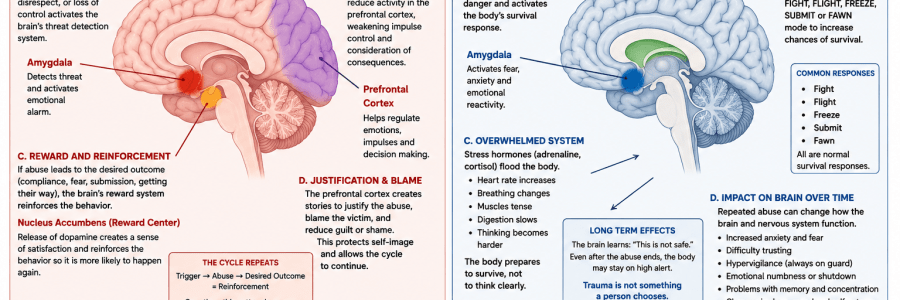
It is part of the brain’s mesolimbic dopamine system, often called the reward pathway. What Does the Nucleus Accumbens Do? The nucleus accumbens helps the brain answer questions like: When something emotionally rewarding happens β€” such as: dopamine activity increases within this system. This creates: That is one reason early romantic attraction can feel euphoric or… Read More Nucleus Accumbens is one of the brain’s key reward and motivation centres and plays a major role in: