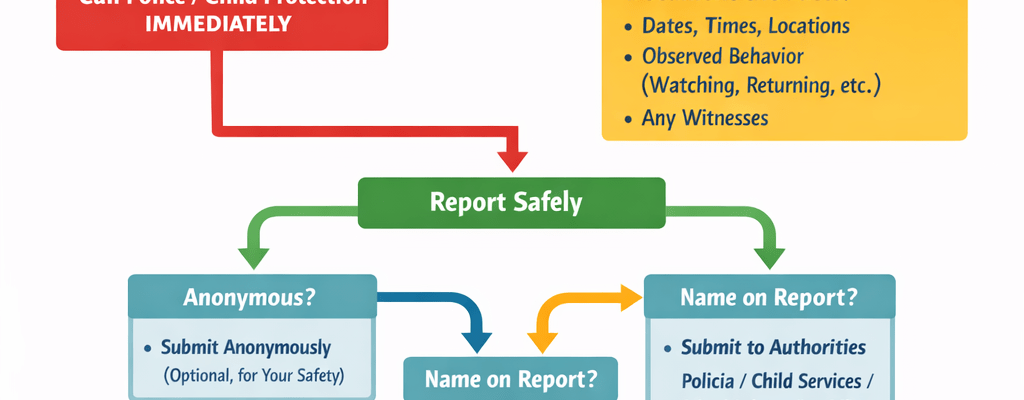
When you report concerns, not accusations, and you do it through the proper channels, you are generally protected.
Why reporting is safer than staying silent
- Authorities expect third-party reports — they rely on them.
- You are not responsible for proving anything.
- You are not accusing — you are passing on information so trained professionals can assess risk.
- Silence protects abusers; reporting transfers responsibility away from you.
What actually protects you when reporting
You stay safe when you:
✔ Stick to facts, dates, behaviours
✔ Avoid speculation, diagnosis, or labels
✔ Do not confront the person
✔ Do not investigate on your own
✔ Report once, then disengage
✔ Keep copies and limit who you tell
This is why your neutral wording matters — it’s a shield.
Common fears (and the reality)
“What if I’m wrong?”
→ Authorities screen reports. That’s their job, not yours.
“What if they retaliate?”
→ Anonymous or confidential reporting is often available.
→ Retaliation itself becomes evidence.
“What if I get dragged into drama or court?”
→ Most reports never involve the reporter beyond the initial statement.
“What if people think I’m overreacting?”
→ Safeguarding is about patterns, not certainty.
When fear is a sign you should NOT handle it alone
Fear often means:
- You’re too close emotionally (ex-partner, history of abuse)
- The behaviour involves minors
- There may already be multiple people concerned
Those are exactly the cases meant for formal reporting — not personal handling.
One calm truth to hold onto
Reporting is not an act of aggression.
It’s an act of containment.
You are not “doing something” to someone.
You are handing information to the system designed to deal with it.
 Linda C J Turner | Trauma Therapist & Emotional Healing Specialist