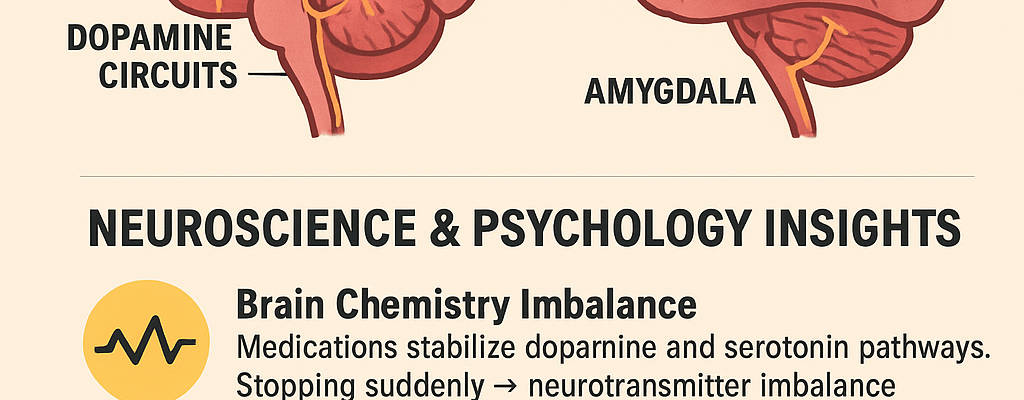
What you’re pointing toward is neuroplasticity:
the brain literally rewires itself based on the thoughts you repeat, the stories you tell, and the actions you take.
This creates a kind of self‑fulfilling loop that can either protect you or harm you, depending on what you reinforce.
Here’s how the science explains it:
1. The Brain Believes What You Repeatedly Tell It
When you repeat a story — even an exaggerated one — the brain strengthens the neural pathways associated with that narrative.
- Neuroplasticity builds connections based on repetition.
- The brain becomes biased toward seeking evidence that matches the story you’ve told.
- This is known as confirmation bias and predictive coding.
Meaning:
If you say something often enough, your mind begins to treat it as truth — even if it wasn’t originally.
This is why accuracy, honesty, and grounding are so important.
2. False Accusations and Fabricated Stories Can Backfire Psychologically
Not because of “karma,” but because:
A) Cognitive Dissonance
If your actions and truth don’t match, your brain experiences stress and tries to reduce the discomfort by:
- justifying actions
- shifting beliefs
- distorting memories
This becomes emotionally and mentally exhausting.
B) Identity Drift
The stories you tell shape your internal identity model.
If you say something untrue repeatedly, you can begin to believe your own script.
C) Narrative Entrapment
Once you create a story — even unintentionally — the brain resists contradicting it, because:
- it wants consistency
- it avoids embarrassment or accountability
- it avoids social shame
This can trap people in unhealthy patterns.
3. Your Brain’s “Reality Filter” Is Built From Your Beliefs
The brain constantly predicts reality using:
- past experiences
- emotional biases
- repeated thoughts
- social reinforcement
If you hold onto a belief — even a negative or distorted one — the brain’s predictive processing network will search for proof that it is true.
This is why:
- negative beliefs create negative outcomes
- false narratives become stressful
- accusations (even internal ones) reshape your worldview
Your inner world becomes your outer filter.
4. Why “Be Careful What You Accuse Others Of” Makes Psychological Sense
Not in a mystical sense — but in a cognitive neuroscience sense:
- The stories you tell about others shape your emotional state.
- Your emotional state shapes your perceptions.
- Your perceptions shape your behavior.
- Your behavior shapes your reality and relationships.
This is literally how “karma-like” patterns emerge — not fate, but behavioral consequences + brain wiring.
5. Why Integrity Protects Your Mental Health
Being truthful — with yourself and others — stabilizes:
- your nervous system
- your identity
- your decision-making
- your social relationships
It keeps the brain’s prefrontal cortex (logic) and limbic system (emotion) aligned.
This is why honesty, self-awareness, and accountability feel grounding and calming.
6. A Healthier Way to Frame It
Instead of “karma,” think:
Neural and behavioral consequences.
What you feed your brain, it reinforces.
What you repeat, it believes.
What you act on, becomes your pattern.
So grounding yourself in clarity, truth, and emotional regulation:
- protects your reality
- preserves your mental health
- keeps your relationships clean
- prevents self-created suffering
 Linda C J Turner | Trauma Therapist & Emotional Healing Specialist