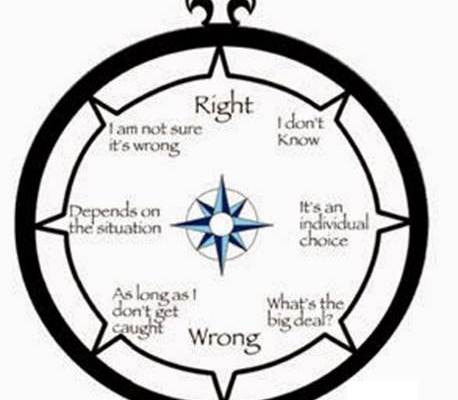
There is something deeply unsettling about people who demand ethical perfection from others while covertly breaking those very rules themselves. Hypocrisy — particularly the kind cloaked in moral superiority — is more than just frustrating; it can be psychologically damaging, especially in intimate relationships. When someone manipulates ethics for personal gain, projects their own behavior onto others, and then gaslights their partner into silence or self-doubt, they are engaging in a dangerous psychological game that undermines trust and self-worth.
What Is Hypocrisy?
Hypocrisy is defined as the practice of claiming to have moral standards or beliefs to which one’s own behavior does not conform. But there is a deeper psychological dimension when hypocrisy is weaponized — when it’s not just passive contradiction, but active manipulation. This is often compounded by projection, where individuals deny their own negative traits or actions by attributing them to others.
For example, a partner might criticize you for being ethically uncomfortable with a certain person or situation — yet they themselves not only maintain a relationship with that person for personal gain (cheap labor, in this case) but also sabotage them behind their back, such as by reporting them to authorities and trying to cover their digital trail. This is not just hypocrisy — it’s moral dissonance, deception, and betrayal masquerading as practicality.
The Neuroscience of Hypocrisy and Manipulation
Our brains are wired for social fairness and moral coherence. Studies using fMRI (functional magnetic resonance imaging) have shown that the anterior cingulate cortex (ACC) lights up when people experience moral conflict or see others breaking social norms. This part of the brain helps us process errors and maintain internal consistency — essentially, our “moral compass.”
However, for individuals with narcissistic or manipulative tendencies, this region may be underactive or overridden by the prefrontal cortex when used for strategic reasoning. In such individuals, the brain can justify unethical behavior by reframing it as “necessary,” “justified,” or “harmless.”
Moreover, the amygdala, our emotional processing center, plays a crucial role. People who frequently engage in manipulative or deceptive behavior often have a dulled amygdala response to wrongdoing — they feel less guilt or anxiety about it. This can be seen in traits aligned with psychopathy, narcissistic personality disorder, or antisocial behavior, where empathy and remorse are lacking.
Projection: A Classic Defense Mechanism
Freud first coined projection as a psychological defense mechanism, where someone attributes their own unacceptable feelings or behaviors onto someone else. It is often used by individuals who cannot tolerate the idea of being “bad” or morally flawed, so they shift the blame outward.
In the example you shared, the husband’s behavior is a textbook case. He:
- Disagrees with ethical concerns you have – minimizing or ridiculing your valid discomfort.
- Maintains the relationship for personal gain – showing a willingness to compromise values when it benefits him.
- Secretly reports the person and covers it up – a deeply hypocritical act that exposes a double standard.
- Projects blame and makes you feel bad – possibly to offload his own guilt or to maintain control in the relationship.
This is psychological gaslighting, where your own reality is twisted to suit someone else’s narrative.
The Impact on the Victim
Being in a relationship with someone who operates this way can erode your sense of identity, self-trust, and moral clarity. Victims often report:
- Feeling confused or anxious about ethical decisions.
- Struggling to assert their values because they’re constantly overridden.
- Developing guilt or shame that isn’t theirs to carry.
- Doubting their perceptions, especially when gaslighting is involved.
Over time, this kind of environment can trigger chronic stress, activating the hypothalamic-pituitary-adrenal (HPA) axis, leading to cortisol dysregulation. The result? Brain fog, sleep disturbances, low energy, and even depression.
“Glass Houses”: A Note on Moral Inconsistency
There is often an irony in hypocritical behavior — those who cast stones are often standing in fragile glass houses. They critique others while ignoring their own or their family’s ethical failings. This can be rooted in deep insecurity, shame, or a desire for power and control.
In family systems theory, such behavior may emerge from intergenerational trauma, where shame and secrecy are passed down. These individuals often feel entitled to bypass moral codes for the sake of family loyalty, image, or personal gain — while holding others to standards they don’t live by.
How to Reclaim Your Clarity and Integrity
If you’ve been caught in the web of someone else’s hypocrisy and projection, here are a few ways to regain your footing:
- Name the Behavior: Recognize hypocrisy and projection for what it is. Use language like: “This doesn’t align with your words” or “That feels like you’re projecting your actions onto me.”
- Stay Anchored in Your Values: Write down your ethical boundaries and revisit them when you feel manipulated or confused.
- Avoid Arguing with False Narratives: When someone is twisting facts, your best strategy is often silence or calmly stepping away. You don’t need to convince someone committed to misunderstanding you.
- Seek Support: Therapy, journaling, and connection with integrity-based people are crucial. Healing happens through validation, safety, and truth.
- Protect Your Energy: Some people cannot be reasoned with. It’s okay — even healthy — to create distance from those who live in duplicity.
Final Thought
Hypocrisy isn’t just annoying — it’s a form of psychological manipulation when done intentionally. When paired with projection and gaslighting, it becomes a weapon that undermines your sense of reality and morality. But knowledge is power. Understanding the neuroscience and psychological mechanisms behind these behaviors can help you reclaim clarity, rebuild trust in your own intuition, and walk forward with dignity.
— Linda C J Turner
Trauma Therapist | Neuroscience & Emotional Intelligence Practitioner | Advocate for Women’s Empowerment
 Linda C J Turner | Trauma Therapist & Emotional Healing Specialist