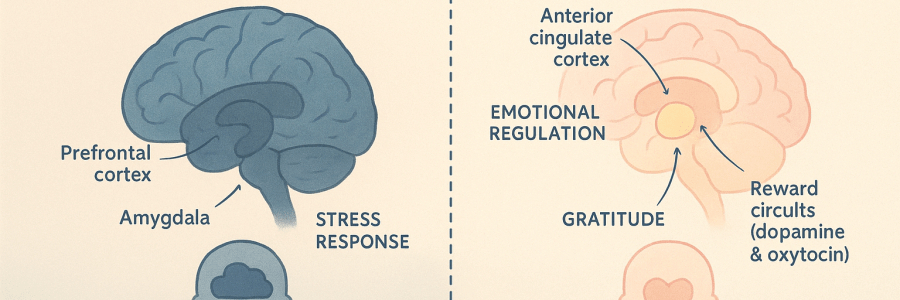
Stress and Threat Response

1. Legal Actions You Can Take When an ex’s family member sends derogatory, threatening, or manipulative messages aimed at influencing a financial settlement or your reputation, the law provides several protections: a. Document Everything b. Civil Legal Options c. Criminal Considerations d. In Court 2. Psychological and Neuroscience Impact Being targeted like this by a family member,… Read More Stress and Threat Response

🧠 WHY SOME PEOPLE HEAL AND OTHERS STAY STUCK (DESPITE INSIGHT)

1️⃣ INSIGHT LIVES IN THE THINKING BRAIN — TRAUMA DOES NOT Insight = prefrontal cortex Trauma = subcortical brain You can understand what happened and still: Because the body hasn’t learned the danger is over. Insight alone does not update survival circuits. 2️⃣ HEALING REQUIRES SAFETY — NOT JUST TRUTH Many people gain insight while still living in… Read More 🧠 WHY SOME PEOPLE HEAL AND OTHERS STAY STUCK (DESPITE INSIGHT)

🧠 ANGER vs GRIEF IN TRAUMA RECOVERY

(Brain → function → outcome) 🔥 ANGER Purpose: protection and containment 🧠 Brain state 🧭 Function after trauma Anger says: “This should not have happened.” That is a healthy early response. 🧍 Behavioural expressions 🧠 Nervous-system effect This is why anger often comes before grief. 🌊 GRIEF Purpose: integration and release 🧠 Brain state 🧭 Function after trauma… Read More 🧠 ANGER vs GRIEF IN TRAUMA RECOVERY

🧠 SECURE vs AVOIDANT COMPANIONSHIP BRAINS

(Brain → behaviour → relationship experience) 🟢 SECURE COMPANIONSHIP BRAIN “Connection is safe and mutual.” 🧠 Brain wiring ⬇️ 🧍 Behaviour in early interactions ⬇️ 🔗 Companionship pattern ⬇️ 🧠 Nervous-system effect on you 🔴 AVOIDANT COMPANIONSHIP BRAIN “Connection is useful but dangerous.” 🧠 Brain wiring ⬇️ 🧍 Behaviour in early interactions ⬇️ 🔗 Companionship… Read More 🧠 SECURE vs AVOIDANT COMPANIONSHIP BRAINS

WHY EMOTIONALLY REGULATED PEOPLE BECOME MAGNETS

1️⃣ Regulation is a resource the brain can sense Humans unconsciously scan for nervous-system cues. Your signals: To a dysregulated brain, this registers as: “This person can hold me.” That perception alone invites offloading. 2️⃣ Dysregulated systems seek external regulation People who lack self-regulation unconsciously use others to: They are not seeking companionship — they are seeking regulation… Read More WHY EMOTIONALLY REGULATED PEOPLE BECOME MAGNETS

🧠 BRAIN → 🧍 BEHAVIOUR → 🔗 RELATIONSHIP DYNAMICS

1️⃣ CHRONIC STRESS / SCARCITY BRAIN (Financial stress, housing insecurity, burnout, emotional depletion) 🧠 Brain state ⬇️ 🧍 Behaviour ⬇️ 🔗 Relationship outcome 2️⃣ DOPAMINE-CONDITIONED BRAIN (Novelty, convenience, instant gratification culture) 🧠 Brain state ⬇️ 🧍 Behaviour ⬇️ 🔗 Relationship outcome 3️⃣ AVOIDANT / ENTITLED NERVOUS SYSTEM (Often unconscious, not always malicious) 🧠 Brain state… Read More 🧠 BRAIN → 🧍 BEHAVIOUR → 🔗 RELATIONSHIP DYNAMICS

Transactional, one-sided, and emotionally empty.

There are identifiable neuroscience and psychology mechanisms behind why so many interactions now feel transactional, one-sided, and emotionally empty. I’ll break this down clearly and without platitudes. 1. The brain has shifted from social bonding to resource extraction Humans evolved for reciprocal bonds. The nervous system expects: But modern stress rewires the brain toward survival efficiency instead of connection. Chronic stress does this… Read More Transactional, one-sided, and emotionally empty.

When calm unsettles someone

Calm feels threatening to these people because calm removes the very thing their nervous system depends on to feel real, powerful, or regulated. This isn’t metaphorical — it’s neurological. Here’s what’s happening underneath the behavior. 1. Calm Starves Their Reward System For people who provoke reactions, emotional intensity is the reward. Provocation → your reaction → dopamine.… Read More When calm unsettles someone

Pushing your buttons

When someone openly admits they push your buttons “to see you react,” it’s not accidental or unconscious — it’s deliberate and rewarding to them. Here’s what’s happening neurologically and psychologically. 1. They Are Regulating Themselves Through Your Reaction For some people, especially those with coercive, antagonistic, or narcissistic traits, other people’s emotional reactions function as a… Read More Pushing your buttons