Why Some People Create Convincing Emotional Masks

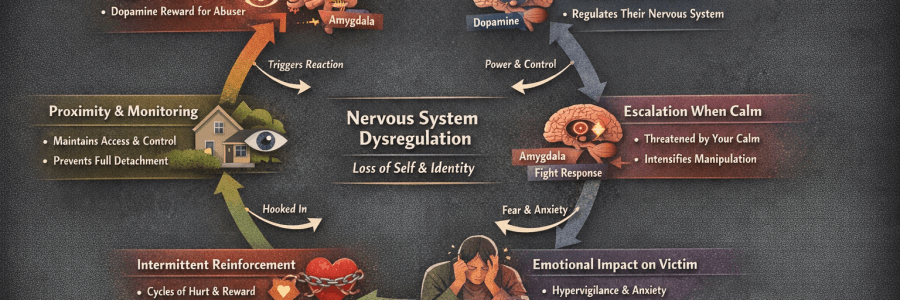
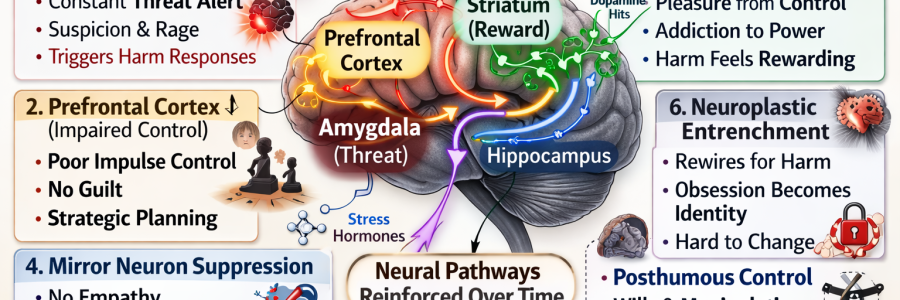
(Especially When Desperate for Money & Lifestyle) 1. Survival Brain Overrides Moral Brain When someone is financially desperate, the brain shifts into survival mode. This activates: In survival mode: Short-term survival > long-term ethics So the brain prioritizes: Not authenticity. This is not conscious evil.It’s biological threat adaptation. 2. Dopamine Hijacking: Lifestyle = Reward Addiction Luxury, comfort, validation,… Read More Why Some People Create Convincing Emotional Masks

The Neuroscience of “I Didn’t See That Coming”

When you suddenly realise who someone really is, your brain goes through a rapid model collapse. You had built an internal prediction model of them: Then suddenly — new data violently contradicts that model. This causes: ⚡ Prediction Error Shock Your brain says: “Reality does not match expectation.” This triggers: That’s why it can feel: 🧠 Cognitive Dissonance… Read More The Neuroscience of “I Didn’t See That Coming”

Gray Divorce: Why Women Are Walking Away After Decades

Divorce rates are decreasing for younger couples. Overall, fewer people are divorcing. Yet there is one group bucking the trend: people over 50, married 20–30+ years — often called “gray divorce.” And here’s the pattern: Women are filing. After decades of marriage, after raising children and building a family, women are choosing to leave. Why Now? Neuroscience Explains… Read More Gray Divorce: Why Women Are Walking Away After Decades

Why the morning safety + dog + clarity moment matters

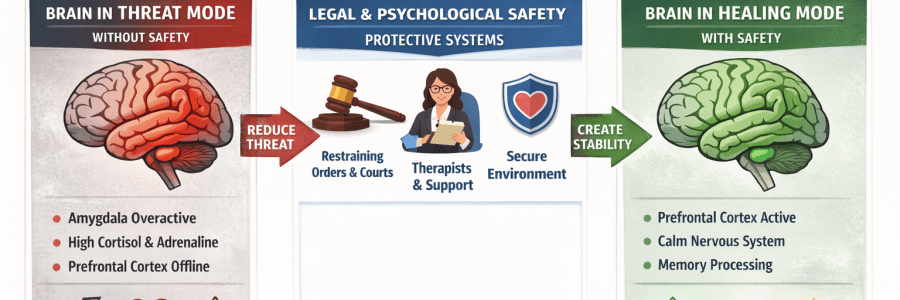
1. Your nervous system is no longer co-regulating someone else When you wake now: Your system wakes to itself, not to monitoring another adult. That’s why the thought arrives unforced. Clarity doesn’t come from analysis — it comes from absence of threat. 2. The dog is a real-time polyvagal regulator This isn’t poetic — it’s biology. A calm dog beside… Read More Why the morning safety + dog + clarity moment matters

Miserable

Waking up safe, regulated, dog beside you — that’s your nervous system finally exhaling. That detail matters more than it looks. 🐾What you’re noticing now isn’t revisionist history. It’s pattern recognition coming online once your brain is no longer in survival mode. 1. Chronic emotional flatness = nervous system shutdown From a neuroscience perspective, your ex sounds… Read More Miserable

Why “aggressive” sticks (the conditioning layer)

For many women — especially thoughtful, capable, emotionally intelligent ones — the word aggressive is wired early as a danger signal, not a descriptor. 1. Early social conditioning (pre-verbal + verbal) From childhood, many girls learn — implicitly or explicitly: So the nervous system learns: Belonging = self-containment When “aggressive” is used later, it doesn’t land as feedback.It… Read More Why “aggressive” sticks (the conditioning layer)

Key Principles of Heart–Brain Neurodynamics

Let’s dive into the heart–brain neurodynamics—how the heart and brain communicate, influence each other, and regulate physiology, emotion, and cognition. I’ll break it down systematically. 1. Heart–Brain Communication Pathways The heart and brain are constantly exchanging information through several channels: A. Neural Pathways B. Hormonal & Biochemical Pathways C. Electromagnetic Field 2. Heart–Brain Feedback Loops The heart and… Read More Key Principles of Heart–Brain Neurodynamics

1. What is the “Intelligence of the Heart”?

The term comes from heart–brain science, polyvagal theory, and biofeedback research. It refers to the heart’s ability to sense, respond, and influence physiological, emotional, and cognitive states. Key insight: The heart is not just a pump—it is a dynamic regulator of the nervous system. 2. Trauma and the Heart Trauma impacts the autonomic nervous system (ANS): Heart intelligence interventions aim to restore… Read More 1. What is the “Intelligence of the Heart”?

HRV Biofeedback Cheat Sheet for Self-Regulation

1. Tools You’ll Need Tool Purpose Tips Chest strap HR monitor (Polar H10, Wahoo, Garmin) Most accurate HRV measurement Comfortable, wear snug but not tight Smartwatch or ring (Apple Watch, Oura, Garmin) Convenient HRV tracking Best for daily trends, not precise metrics HRV Biofeedback app (Elite HRV, Inner Balance, HeartMath, Kubios) Real-time feedback & guided… Read More HRV Biofeedback Cheat Sheet for Self-Regulation