Guessing Games to Trauma Bond
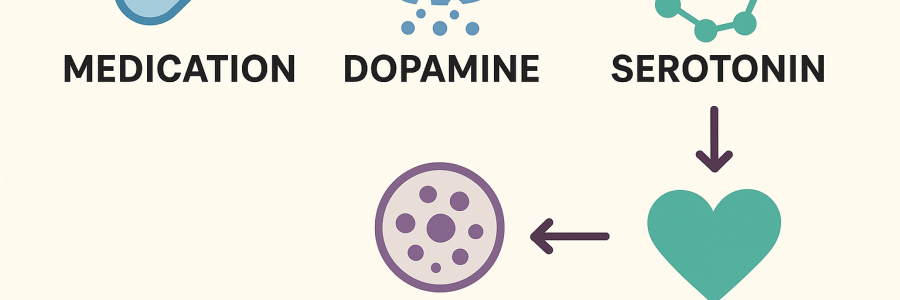
One-line summary: A step-by-step diagram showing how withholding answers (“you’re guessing / you’ll never know”) drives chronic stress, brain changes, and dependency — turning poor communication into coercive control. Flowchart (quick visual) [Guessing games / withheld answers] | v [Uncertainty & confusion] | v [Hypervigilance & stress response] | v [Neurochemical changes: cortisol ↑, dopamine ↓]… Read More Guessing Games to Trauma Bond

How “Guessing Games” Create Trauma Bonds

One-line summary: A step-by-step diagram showing how withholding answers (“you’re guessing / you’ll never know”) drives chronic stress, brain changes, and dependency — turning poor communication into coercive control. Flowchart (quick visual) [Guessing games / withheld answers] | v [Uncertainty & confusion] | v [Hypervigilance & stress response] | v [Neurochemical changes: cortisol ↑, dopamine ↓]… Read More How “Guessing Games” Create Trauma Bonds

Brain map — From cold/emotionless relationship to warmth & re-awakening

One-line summary: A step-by-step visual map showing how long-term emotional coldness wires the brain and nervous system — and how exposure to consistent warmth reactivates bonding circuits, reshapes beliefs, and supports lasting change. Flowchart (quick visual) [Long-term cold / emotional unavailability] | v [Neural adaptation & attachment conditioning] | v [Numbing / down-regulation] | v [Exposure… Read More Brain map — From cold/emotionless relationship to warmth & re-awakening

🧠 Why Cold, Emotionless Love Feels “Normal” After Decades

The brain is plastic: it adapts to what it experiences repeatedly. If for decades your partner is cold, dismissive, or emotionally unavailable, your nervous system normalizes this. The brain builds neural pathways around the idea: “This is what love is. Love equals distance and coldness.” Our attachment system seeks familiarity, not necessarily health. If “closeness” is associated… Read More 🧠 Why Cold, Emotionless Love Feels “Normal” After Decades

5-Minute Brain-Health Gratitude Ritual

⏱ Total time: ~5 minutes 1. Light + Breath Reset (1 min) Step: Sit by a window or step outside into natural light. Take 5–6 slow breaths (inhale through the nose, exhale twice as long through the mouth). Neuroscience: Morning light boosts serotonin and regulates circadian rhythm. Slow exhale activates the vagus nerve, calming the amygdala. 2. Name Three… Read More 5-Minute Brain-Health Gratitude Ritual

🔹 Practical Toolkit for Rebuilding Trust & Calming the Nervous System

This toolkit is designed for people healing from betrayal, abandonment, or relational trauma. Each step uses neuroscience and psychology to rewire fear circuits into pathways of safety. 1. Morning Reset: Train Your Nervous System for Safety Why: The brain’s default mode network (rumination center) is most active in the morning. Starting with regulation shifts your baseline. 3-Minute Breathing… Read More 🔹 Practical Toolkit for Rebuilding Trust & Calming the Nervous System

Rebuilding Trust: How the Brain Rewires After Betrayal

Healing from broken trust is not only a psychological process—it is a neurological one. When safety has been compromised, the brain reorganizes itself around fear and hypervigilance. But through compassion, communication, and consistent reliability, the nervous system can slowly recalibrate. Modern neuroscience shows us how. How Betrayal Shapes the Brain When trust is violated—through lies,… Read More Rebuilding Trust: How the Brain Rewires After Betrayal

🌿 Buddhism in 10 Daily Habits 🌿

1. Pause and Notice Take a moment to observe your thoughts, feelings, and body. Awareness is the first step to clarity.Example: Before reacting to a situation, breathe and notice your inner state. 2. Accept Change Remind yourself that everything is temporary. Life flows, and so can you.Example: When plans change, say: “This is temporary. I can adapt.”… Read More 🌿 Buddhism in 10 Daily Habits 🌿

Understand Suffering (Four Noble Truths)

Here’s a simple, modern, day-to-day guide to Buddhist teachings, showing how each principle can be applied in everyday life: 1. Understand Suffering (Four Noble Truths) Daily Application: Notice when you’re stressed, frustrated, or unhappy. Instead of blaming others or yourself, pause and observe: What desire or expectation is causing this discomfort? Example: You’re irritated your friend canceled plans. Instead… Read More Understand Suffering (Four Noble Truths)