Why They Stay Close: The Psychology of Obsessive Proximity After a Breakup

Even after the relationship ends — after the messages, the threats, even a restraining order — some people still won’t go away.They linger nearby, rent close to your home, “coincidentally” appear in places they know you go, or find indirect ways to stay connected. It feels irrational. It is.But beneath the chaos, psychology and neuroscience reveal a… Read More Why They Stay Close: The Psychology of Obsessive Proximity After a Breakup

🧠 1. What happens in the brain (neuroscience perspective)

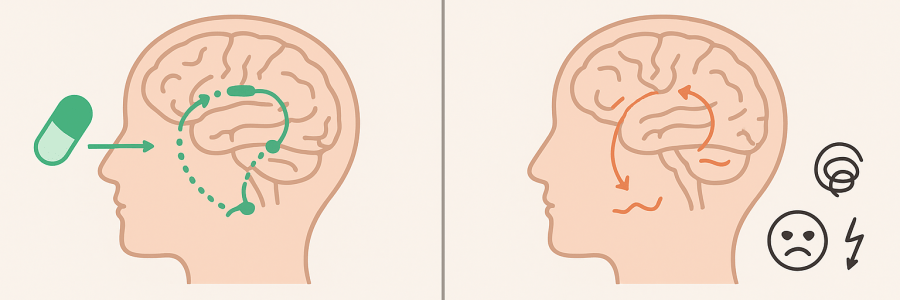
Antipsychotic medication (used for conditions like schizophrenia, schizoaffective disorder, or severe bipolar disorder) works by regulating dopamine and sometimes serotonin activity in key brain circuits — especially those involving: When you’ve been on these medications for years, your brain adapts to their presence: So, if someone suddenly stops taking the medication, the brain’s chemistry rebounds — dopamine activity can spike unpredictably.This “dopamine… Read More 🧠 1. What happens in the brain (neuroscience perspective)

When Intimidation Stops Working: The Neuroscience of Calm Power

When fear, threats, and insults stop working — when the person who once scared you realizes you’re no longer shaken — something powerful has shifted.Not in them, but in you. They will throw everything they can: intimidation, legal threats, emotional manipulation, guilt trips, character attacks. But when your nervous system no longer reacts the way it used… Read More When Intimidation Stops Working: The Neuroscience of Calm Power

Silence

🧠 Neuroscience and Psychology Behind It When you say, “If you need to disappear to feel powerful, I’ll take that as my cue to walk toward peace,”you’re describing emotional differentiation — a state where your nervous system no longer confuses someone else’s withdrawal with your own worth. It’s the neuroscience of emotional detachment, not as avoidance, but as self-preservation… Read More Silence

The Body Reflects the Nervous System

When someone shifts from hunched and shuffling to upright and puffed-chest, it’s not just posture changing — it’s a neurobiological and psychological state shift. Let’s unpack this step by step 👇 🧠 1. The Body Reflects the Nervous System A hunched, shuffling posture signals parasympathetic dominance, especially the dorsal vagal state — associated with withdrawal, defeat, or shutdown.It’s the body saying: “I don’t feel… Read More The Body Reflects the Nervous System

🧠 The Neuroscience of Defensive Dominance: How Fear Becomes Power Displays

1. The Trigger: Perceived Threat It all starts in the amygdala, the brain’s emotional alarm center.When you (or an animal) feel threatened — physically, socially, or emotionally — the amygdala fires, signaling danger. This can be: 2. Fight or Flight — and the Choice to “Puff Up” The amygdala sends an urgent message to the hypothalamus, which activates the autonomic nervous… Read More 🧠 The Neuroscience of Defensive Dominance: How Fear Becomes Power Displays

🧠 1. Lies Are Cognitively Expensive

This is one of my favorite topics because it shows just how deeply our brains are wired for truth. Here’s a breakdown of the neuroscience behind why truth-telling feels lighter and more resilient than defending a lie: 🧠 1. Lies Are Cognitively Expensive Result: Lies feel heavy, exhausting, and stressful; truth feels lighter because it doesn’t require mental… Read More 🧠 1. Lies Are Cognitively Expensive

🧠 Neuroscience of Recovery After Abuse & Separation

1. Brain Stress Systems (Damage Phase) 2. Brain Healing & Rewiring (Recovery Phase) 🧩 Psychology of Moving Forward Grief & Trauma Processing Coping Pathways That Work ⚖️ What “Getting On With Life” Looks Like (Brain + Psychology Integration) 💡 Key Insight:Abuse wires the brain for fear, but recovery rewires it for freedom. Divorce and separation are not the end of… Read More 🧠 Neuroscience of Recovery After Abuse & Separation