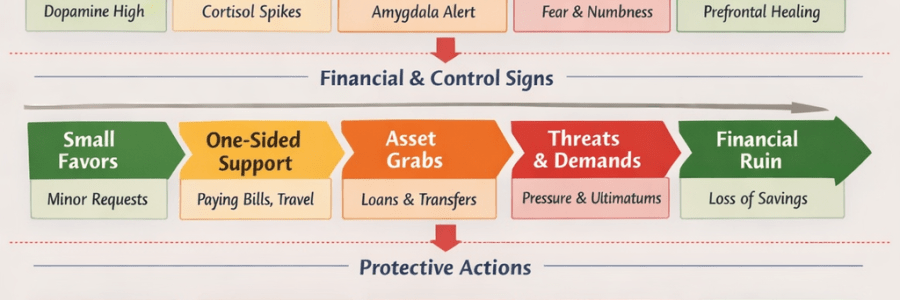
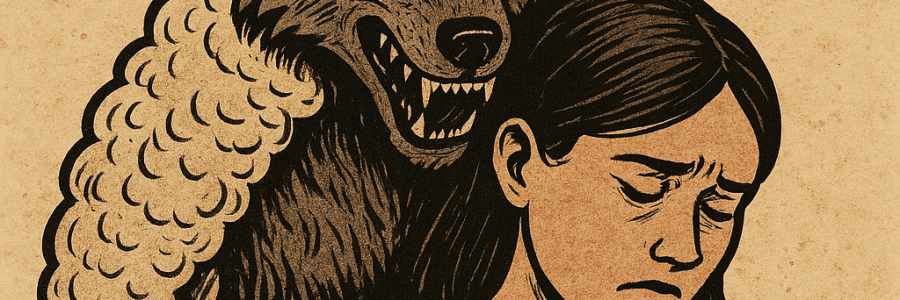
Financial Exploitation Escalation 

STEP 1: Subtle Dependence Small favors or expenses covered by survivor Abuser asks occasionally for help Nervous system: mild trust mixed with slight vigilance Red flag: evasiveness or resentment when asked to reciprocate Protective action: slow down contribution, observe behavior ↓ STEP 2: Regular Exploitation Survivor covers routine bills, groceries, or travel Abuser contributes minimally… Read More Financial Exploitation Escalation 

The Tactic: Exploitation of Resources Without Reciprocity

Some people use charm, intimacy, or emotional manipulation to gain financial, domestic, or logistical support from their partner while contributing little or nothing in return. Common behaviours: Asking for large gifts early in the relationship Expecting partner to pay for holidays, bills, or rent Using partner’s home or resources for convenience without reciprocation Claiming emergencies or special… Read More The Tactic: Exploitation of Resources Without Reciprocity

Why Some Men Seek Vulnerable Women to Exploit

Certain men intentionally target women who: Have high trust due to past trauma or caregiving roles Are isolated socially or emotionally Show empathy or caretaking tendencies May have financial or emotional resources Motivation Financial gain: Gifts, assets, or income Power/control: Using trust as leverage Emotional regulation: Feeling calm or dominant by exploiting vulnerability 🧠 Neurological reinforcement: Their brain associates your compliance + trust… Read More Why Some Men Seek Vulnerable Women to Exploit

Trusting or Being Intimate Too Soon

When you allow trust or intimacy to build faster than the other person proves reliability, your nervous system is essentially “rewiring” based on incomplete data. Consequences: Nervous system may misinterpret safety cues Old trauma loops are reactivated if boundaries are violated Emotional investment can increase vulnerability to manipulation The system has learned: “Connection + danger = chaos.” Rushing rewards can trigger old survival… Read More Trusting or Being Intimate Too Soon

1️⃣ Visual “Road to Safety in New Relationships”

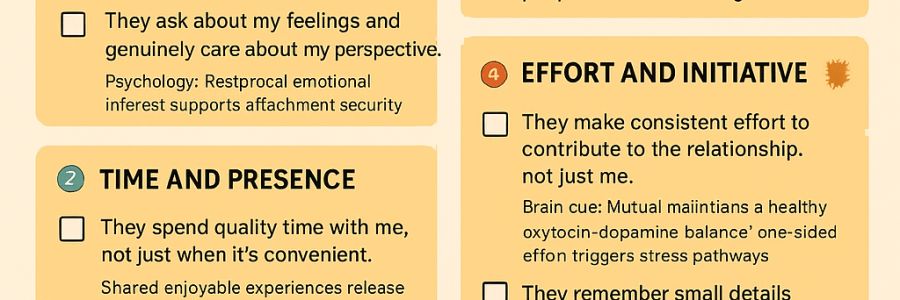
Think of this as a stepwise journey, showing how trust, boundaries, and emotional reward rebuild over time: 2️⃣ Specific Exercises to Test Trust Safely Exercise Purpose How to Apply Safely Low-Stakes Requests Test reliability Ask for small favors or follow-throughs; observe consistency Boundary Enforcement Drill Test respect for limits Say “I need space” or “I’m not… Read More 1️⃣ Visual “Road to Safety in New Relationships”

Healing Through Relationships

Entering a new relationship after decades of cruelty and abuse is a profound and delicate process. It’s not just about finding the right partner — it’s about rewiring your nervous system, reclaiming trust, and protecting your boundaries. Here’s a clear, structured overview: 1️⃣ Understand the Impact of Long-Term Abuse After long-term abuse, survivors often experience: Hypervigilance: Constantly scanning for… Read More Healing Through Relationships

Abuse → Denial → Escalation → Collapse: Conceptual Map

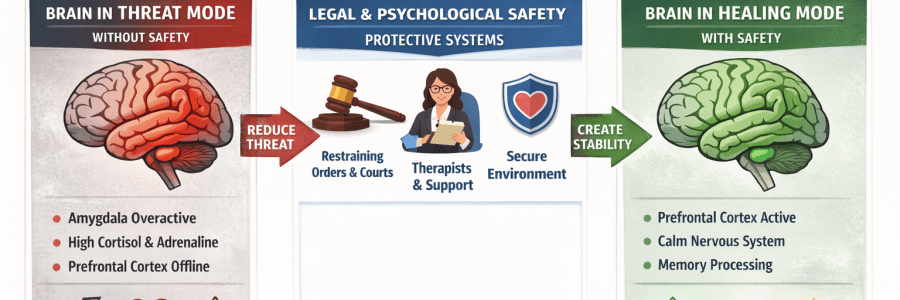
Step 1: Abuse Types: Emotional, psychological, financial, or physical harm. Chronic stress → sustained activation of amygdala and HPA axis → elevated cortisol. Hypervigilance: constant scanning for threats. Memory fragmentation: trauma memories stored in implicit memory. Dysregulated vagus nerve: affecting social engagement and calming capacity. Legal Effects: Initial reports may be ignored or minimized; protective measures may be requested. Step 2:… Read More Abuse → Denial → Escalation → Collapse: Conceptual Map

Why Silence Protects Survivors During Escalation

Escalation is the most dangerous phase in abusive dynamics because regulation is failing. Silence works because it removes the very signals escalation feeds on. 1️⃣ Escalation Requires Feedback — Silence Removes It During escalation, the abuser’s nervous system is: dysregulated reward-seeking threat-focused They are scanning for: emotional reaction fear engagement resistance 🧠 Silence provides none. ➡️ Without feedback,… Read More Why Silence Protects Survivors During Escalation

Silence Removes the Regulation Source

Abusive dynamics work because the abuser uses another person to: regulate anxiety discharge tension stabilise identity confirm power When you go silent: there is no emotional input no reaction no feedback loop 🧠 ResultThe nervous system loses its external regulator. ➡️ Dysregulation begins internally. 2️⃣ The Brain Encounters Reward Collapse Cruelty and control rely on dopamine prediction: “If… Read More Silence Removes the Regulation Source

How One Enforced Boundary Disrupts the Entire Cruelty Loop

Cruelty depends on access.A single boundary works because it removes fuel, not because it teaches insight. 1️⃣ Boundary Enforcement = Circuit Interruption When a survivor enforces a boundary (not explains it, not negotiates it): No response No emotional feedback No repair attempt No re-entry point 🧠 Neurological effect Dopamine prediction fails The brain expected reward → receives none The cruelty→relief… Read More How One Enforced Boundary Disrupts the Entire Cruelty Loop