Coercive Control Escalation Chart

(How abuse develops step-by-step) 1️⃣ Idealisation & Grooming Goal: Create emotional dependenceLooks like: Hidden function: Builds trust + emotional attachment before control begins 2️⃣ Subtle Control & Boundary Testing Goal: Test how much control they can exertLooks like: Red flag: You start changing behaviour to keep peace 3️⃣ Isolation & Dependency Building Goal: Cut off external supportLooks like: Red flag: Your… Read More Coercive Control Escalation Chart

The Psychological Stages of Long-Term Deception

(How Manipulative Relationships Actually Unfold) This pattern is remarkably consistent across narcissistic, antisocial, psychopathic, and chronic deceiver profiles. Understanding these stages helps survivors: 🟢 STAGE 1 — TARGETING & ASSESSMENT “Who is useful to me?” Before emotional involvement begins, the deceiver unconsciously (or consciously) scans for: Psychological Process: They assess: How much emotional supply, care, attention, resources,… Read More The Psychological Stages of Long-Term Deception

Online Dating & New Relationship Red Flags

What to Look For (Early Detection Guide) 1. Relationship History Be cautious if someone: 👉 Pattern matters more than isolated events. 2. Timeline Inconsistencies Watch for: 👉 Consistency = psychological stability + honesty. 3. Aggressive or Hostile Posts Red flags include: 👉 Online behaviour predicts real-life behaviour. 4. Extreme Beliefs Be cautious if they express:… Read More Online Dating & New Relationship Red Flags

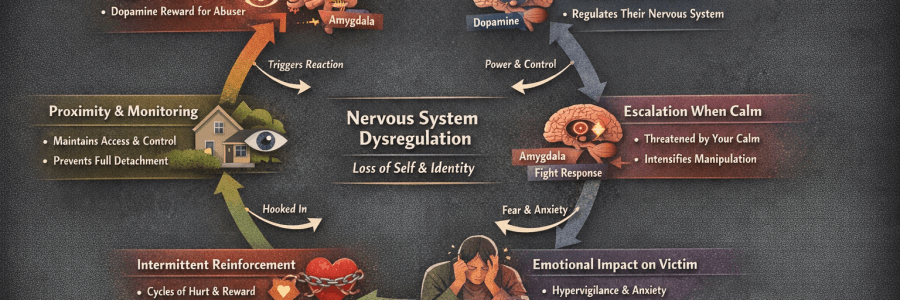
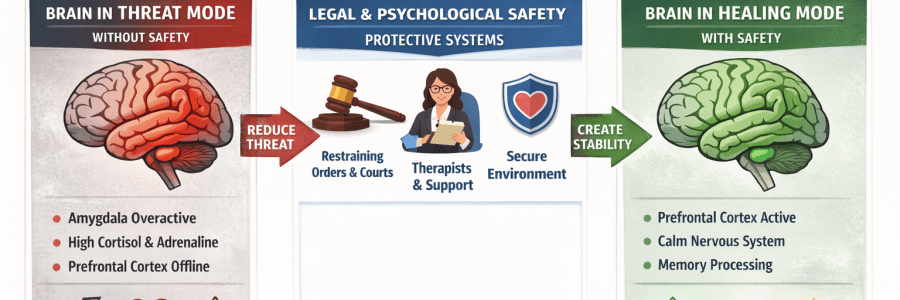
Forgiving an abuser while abuse is ongoing or unaccounted for is neurologically and psychologically impossible.

Forgiveness after abuse is not the same as forgiving a minor wrongdoing, and neuroscience and psychology explain why it’s often extremely difficult—sometimes impossible—without safety, repair, or accountability. Let’s break it down carefully. 🧠 Neuroscience & Psychology Behind Forgiving an Abuser 1️⃣ Trauma Hijacks the Brain Result: Even if you want to forgive, your body and brain defend themselves automatically. 2️⃣ Abuse… Read More Forgiving an abuser while abuse is ongoing or unaccounted for is neurologically and psychologically impossible.

When an Outsider Invents a Story to Break Your Relationship

The Neuroscience & Psychology Behind the Behavior When a third party deliberately creates false stories, distortions, or manipulations to damage a relationship, this is not accidental and rarely harmless. This behavior is driven by psychological insecurity, emotional dysregulation, control needs, and unresolved trauma patterns. The Core Psychological Drivers 1. Jealousy & Emotional Threat When someone feels emotionally threatened by… Read More When an Outsider Invents a Story to Break Your Relationship

Inventing Stories to Break Up a Relationship

The Psychology & Neuroscience Behind This Behavior When someone creates false narratives, distortions, or invented stories to damage or end a relationship, this behavior is rarely about truth. It is about control, fear, insecurity, and psychological survival strategies. This pattern is deeply rooted in attachment wounds, emotional immaturity, and threat-based brain responses. The Core Psychological Drivers 1. Fear… Read More Inventing Stories to Break Up a Relationship

Forgiveness, Misunderstandings, Communication & Language Barriers

A Neuroscience and Psychology Perspective Many of the deepest emotional wounds in human relationships are not caused by cruelty or malice — but by misunderstanding, miscommunication, and the limitations of language itself. Neuroscience and psychology show us that the human brain is designed first for survival, not connection. This means that in moments of emotional uncertainty, fear,… Read More Forgiveness, Misunderstandings, Communication & Language Barriers

The Most Common Red Flags Survivors Overlook

1. Early intensity & fast attachment “I’ve never felt this way before.”“You’re my soulmate.”“We’re so connected.” Feels romantic.Is actually emotional rushing + bonding pressure. Why survivors miss it:Because emotional starvation makes intensity feel like love. 2. Inconsistency Warm → cold → warm → distant → affectionate again. Creates emotional addiction. Why survivors miss it:Intermittent affection triggers dopamine… Read More The Most Common Red Flags Survivors Overlook

Safe vs Unsafe Attraction — How to Tell the Difference

🔴 UNSAFE ATTRACTION (Feels intense, magnetic, urgent — but dysregulating) Unsafe attraction often feels strong, but it activates stress, not safety. You may notice: In the body: This is often trauma bonding, not love. It’s your nervous system mistaking familiar danger for connection because that pattern was learned early. 🟢 SAFE ATTRACTION (Feels calm, steady, warm, grounding) Safe attraction often… Read More Safe vs Unsafe Attraction — How to Tell the Difference