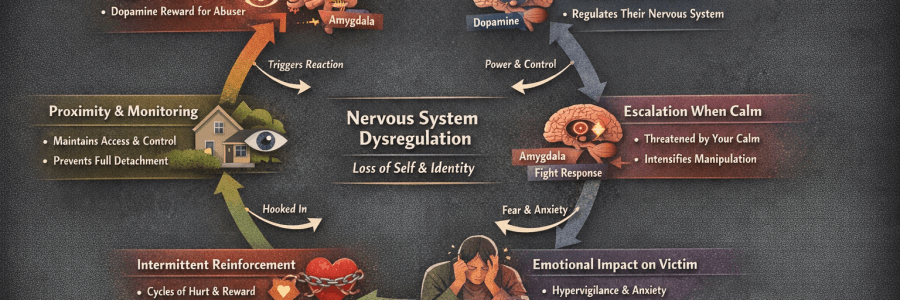
Nervous System Differences

Authentic Bonders vs Emotional Performers 1. Core Nervous System State 🟢 Authentic Bonder Baseline state: Regulation & Safety They operate from: Safety → Connection → Bonding 🔴 Emotional Performer Baseline state: Threat & Survival They operate from: Threat → Strategy → Survival 2. Emotional Experience vs Emotional Simulation 🟢 Authentic Bonder They feel emotions internally first,… Read More Nervous System Differences

🧠 Nervous System & Brain Processing

When someone wants a relationship but avoids communication, calls, video, socialising, crowds, and mutual conversation This pattern usually reflects nervous system regulation + attachment + threat processing, not just “personality”. Let’s break it down. 🧠 Nervous System & Brain Processing 1. Chronic Threat Mode (Amygdala Overactivation) Their brain is often stuck in high-alert mode. So their nervous system reacts with:… Read More 🧠 Nervous System & Brain Processing

Using Threats to Evade the Truth and Silence Someone

(What’s really happening) When someone responds to truth, evidence, or accountability with threats, this is not strength, confidence, or power. It is fear-based control. The Core Dynamic When confronted with truth, a psychologically healthy person may feel: But they stay in dialogue. When someone instead threatens, it means: Their nervous system cannot tolerate exposure, so they reach for power.… Read More Using Threats to Evade the Truth and Silence Someone

How to Break the Cycle in Your Relationships

The goal: stop repeating learned patterns, reclaim emotional safety, and build authentic connections. 1. Recognize the Pattern First Before you can change anything, you must identify it. Signs you may be repeating poisonous pedagogy dynamics: Step: Write down recurring relational patterns you notice in yourself and others. 2. Re-parent Yourself Miller emphasizes self-compassion and self-validation as healing tools. Daily Practices:… Read More How to Break the Cycle in Your Relationships

Safety-Based Interaction Strategy

(How to respond to each type without escalating harm) 1) Shame-Based Defensive Aggression Goal: Reduce threat + maintain boundaries + prevent escalation Best Strategy: How to Speak: “I’m not attacking you. I’m sharing my experience.” “Let’s pause this conversation.” “I’m stepping back for now.” What Works: What Backfires: Why: Their nervous system reads pressure as threat. 2) Narcissistic… Read More Safety-Based Interaction Strategy

When Your Truth Is Used Against You

This usually happens when honesty meets emotional insecurity, shame, or control-based relating. It does not mean you were wrong to be open.It means the recipient lacked emotional safety and integrity. What This Behavior Actually Means When someone uses your truth against you, it tells you: They see vulnerability as leverage, not connection. Healthy people think: “They trusted me.” Unsafe… Read More When Your Truth Is Used Against You

1. How To Spot Shame-Based Defensive Aggression Early

These signs show up long before big explosions. 🚩 Early Warning Signs 1. Overreaction to mild feedbackSmall observations → big emotional reactions→ disproportionate defensiveness→ irritation, sarcasm, shutdown, or subtle hostility 2. Zero curiosity about your experienceThey don’t ask: “What made you feel that way?” They say: “That’s ridiculous.” 3. Fragile self-imageThey: Underneath is identity fragility. 4. Blame reflexProblems… Read More 1. How To Spot Shame-Based Defensive Aggression Early

Shame-Based Defensive Aggression

(Why some people attack when exposed) This is what happens when deep shame is activated, and the person does not have the emotional capacity to tolerate it. Instead of processing, reflecting, or repairing —they flip into attack mode. The Core Mechanism Shame feels like existential threat to certain nervous systems. Not: “I made a mistake.” But: “I am a mistake.” So the… Read More Shame-Based Defensive Aggression