Neuroscience of EMDR and Somatic Therapies in Trauma Recovery

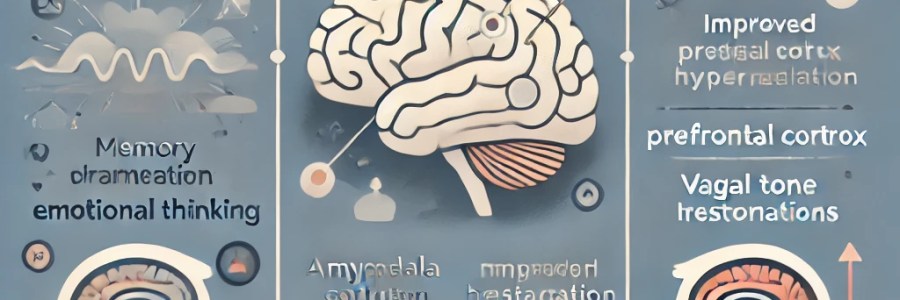
How EMDR and Somatic Therapies Facilitate Neural Recalibration Trauma leaves lasting imprints on neural circuits responsible for threat detection, emotional regulation, and self-reference. EMDR (Eye Movement Desensitization and Reprocessing) and somatic therapies (body-focused approaches) specifically target these disrupted networks, promoting neuroplasticity and functional recovery. 1. EMDR: Processing Trauma Through Bilateral Stimulation Mechanism: Neuroscience effects: Clinical… Read More Neuroscience of EMDR and Somatic Therapies in Trauma Recovery

How Trauma Disrupts the Ability to Identify What Is Healthy

IntroductionIndividuals with a history of abuse frequently report difficulty determining what is “right” or “healthy” in relationships. This is not a matter of poor judgment or weakness; it is the predictable neurobiological and psychological result of prolonged trauma exposure. Abuse alters threat-processing systems, attachment circuits, and self-referential networks in the brain, which collectively distort the… Read More How Trauma Disrupts the Ability to Identify What Is Healthy

How Abusive Fathers Impact Their Children and Grandchildren:

A Neuroscience & Epigenetics Explanation When a father is abusive — emotionally, physically, verbally, or psychologically — the damage does not stop with him. Modern neuroscience and epigenetics now confirm that trauma is inherited, not only through behaviour but also through biology. Children do not simply “grow out of it.”Generations absorb it. 1. The Child’s Brain… Read More How Abusive Fathers Impact Their Children and Grandchildren:

Why Trauma Survivors Can’t “Move On” While an Abusive Ex Still Controls the Environment: A Neuroscience and Legal Reality Check

When people ask, “Why aren’t you in a new relationship yet?” they rarely understand the full picture.For survivors of domestic abuse, “moving on” isn’t a simple emotional choice — it is a psychological, neurological, and legal process that cannot unfold while the ex-partner is still exerting practical or symbolic control. Here is the science and lived reality… Read More Why Trauma Survivors Can’t “Move On” While an Abusive Ex Still Controls the Environment: A Neuroscience and Legal Reality Check

Hippocampal Atrophy and Chronic Coercive Control:

A Legal and Safeguarding Briefing** For Courts, Social Services, Safeguarding Officers, and Legal Representatives Summary:Long-term exposure to coercive control, emotional deprivation, and relational intimidation produces well-documented neurological effects. These are not subjective experiences. They are measurable injuries that impact cognition, memory consistency, and threat appraisal — all of which are directly relevant to legal credibility,… Read More Hippocampal Atrophy and Chronic Coercive Control:

Hippocampal Atrophy in Chronic Domestic Abuse: Clinical Implications and Recovery Pathways

Professional Summary for Therapists, Advocates, and Educators Long-term interpersonal trauma—particularly coercive control, emotional deprivation, chronic unpredictability, and relational threat—produces well-documented neurobiological changes. These changes are not metaphorical. They are structural, functional, and measurable. One of the most clinically significant is hippocampal shrinkage. 1. Neurobiological Impact: What the Evidence Shows Hippocampal Atrophy Research spanning two decades (Bremner,… Read More Hippocampal Atrophy in Chronic Domestic Abuse: Clinical Implications and Recovery Pathways

What Long-Term Abuse Does to the Brain: My Story, My Proof, My Healing

(by Linda C J Turner) Most people think abuse leaves only emotional scars.They have no idea it physically reshapes the brain. Twelve years ago, an MRI scan showed hippocampal shrinkage — the part of the brain responsible for memory, emotional processing, and learning.My doctor in France pointed it out clearly:a visible sign of long-term trauma. At the time, I… Read More What Long-Term Abuse Does to the Brain: My Story, My Proof, My Healing

You Didn’t Leave for Someone Else. You Left for Your Life.

A Neuroscience Perspective on Walking Away From Decades of Abuse** People love simple stories:“She left him for someone else.”It’s tidy. It preserves the family narrative.It avoids the uncomfortable truth that abuse was happening in plain sight — emotional, physical, financial — and no one stopped it. But the brain doesn’t lie.The nervous system doesn’t lie.Your healing doesn’t… Read More You Didn’t Leave for Someone Else. You Left for Your Life.

When Trauma Makes Us Misread People: Relearning Trust and Choosing Safe Company

Trauma changes the way we interpret the world. It alters our nervous system, sharpens our senses, and teaches us to scan for danger even when none exists. But paradoxically, trauma can also make us misread situations, trust too quickly, or cling to the first sign of kindness we see. If you’ve ever felt like you… Read More When Trauma Makes Us Misread People: Relearning Trust and Choosing Safe Company

Breaking Free From Trauma Bonds: Why Complete Removal Is Essential — and How Our Trauma Centre Can Help

When you’re trapped in a toxic or abusive relationship, it often feels impossible to leave — even when the situation is harming you emotionally, mentally, and physically.This isn’t weakness.This is neurobiology. Trauma bonds are powerful, invisible chains that tie you to someone who hurts you. They form when cycles of fear, manipulation, unpredictability, and intermittent “kindness” cause your… Read More Breaking Free From Trauma Bonds: Why Complete Removal Is Essential — and How Our Trauma Centre Can Help