The Tyranny of Proof

In the shadows of human behavior, denial thrives. We twist reality, rationalize our actions, and gaslight others—yet one force remains relentlessly impartial: proof. Evidence doesn’t care about ego, fear, or lies. It exists as a tyranny—cold, absolute, and inescapable. 1️⃣ Psychology: Why Denial Feels Safer Than Truth 2️⃣ Neuroscience: The Brain That Lies to Itself The brain… Read More The Tyranny of Proof

“Deny, Deny, Deny… But the Evidence Doesn’t Lie”

In the theater of human behavior, some people live in denial—a psychological shield against accountability, guilt, or shame. Yet, the brain and the law have a way of cutting through the fog of excuses. 1️⃣ The Psychology of Denial 2️⃣ Neuroscience Behind “I Didn’t Do It” In short: the brain can literally convince itself of innocence, even while… Read More “Deny, Deny, Deny… But the Evidence Doesn’t Lie”

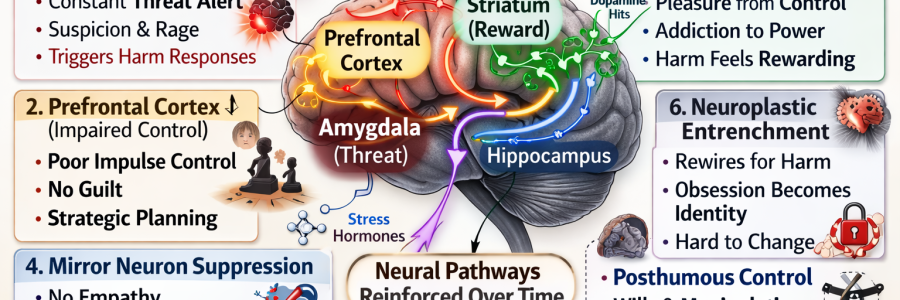
Brain Structure & Neurobiology

Prefrontal Cortex (PFC) Anterior Cingulate Cortex (ACC) Amygdala Reward System (Ventral Striatum / Nucleus Accumbens) 2️⃣ Psychology & Personality Factors Attachment & Early Environment Learned Behavior & Modeling Personality Traits 3️⃣ Epigenetics ✅ Key Takeaways In short: it’s a mix of biology, environment, early life experiences, and personality traits. The brain literally learns these patterns through repeated exposure and reinforcement.

 Social Learning & Mirror Neurons

The neuroscience of learned greed, manipulation, and dishonesty—basically, how teaching someone to take advantage of others can create a cycle where those behaviors get reflected back to you. Let’s break this down carefully: 1. Social Learning & Mirror Neurons 2. Reward System & Dopamine 3. Prefrontal Cortex & Moral Control 4. Empathy & Social Awareness 5. Karma-Like Reciprocity in the Brain… Read More  Social Learning & Mirror Neurons

Genetic and Heritable Factors

he neuroscience behind why a “Me, Me, Me” personality—self-centeredness or narcissistic traits—can appear to “run in the family.” Let’s break it down carefully: 1. Genetic and Heritable Factors 2. Brain Networks & Neurobiology 3. Environmental & Epigenetic Influences 4. The Neuroscience of “Running in the Family” ✅ Key Takeaway A “Me, Me, Me” pattern in families is usually:

🧠 Psychological Profiles of Family Manipulators

Family manipulators don’t look dangerous.They look helpful.They sound concerned.They present as responsible. But psychologically, their patterns are precise. Here are the most common profiles and behavioural traits: 1️⃣ The Strategic Controller (Machiavellian Profile) Highly calculated.Emotionally detached.Outcome-driven. Traits:• Plans several steps ahead• Collects information quietly• Controls access, narratives, and decisions• Uses people as instruments• Values power over connection Motto: “The ends… Read More 🧠 Psychological Profiles of Family Manipulators

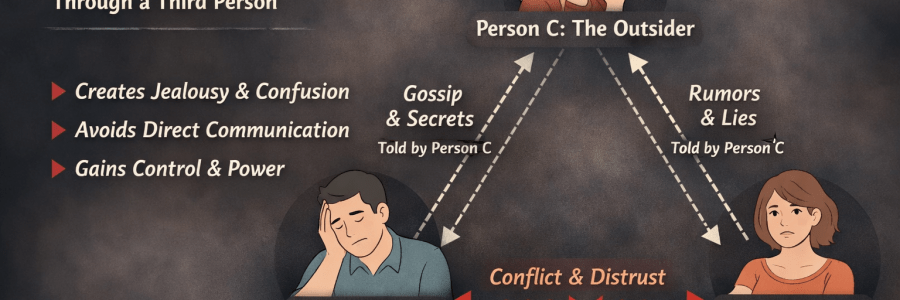
How to Recognise Divide-and-Conquer Tactics Early

(When a relative “steps in to help” but quietly takes control) 🚩 Early Red Flags of Divide & Conquer Manipulation 1. One-way communication They position themselves as the only messenger. “Let me handle it.”“I’ll pass things on.”“It’s better if messages go through me.” This allows:→ Filtering→ Distortion→ Control of narrative 2. Selective information sharing Different people receive different versions of… Read More How to Recognise Divide-and-Conquer Tactics Early

🧠 Manipulation Pattern Matrix — Emotional, Financial, Relational, Physical

Manipulation Pattern Matrix — an advanced, trauma-informed, neuroscience-backed framework that maps every manipulation tactic across emotional, financial, relational, and physical control. This is your ultimate detection and response tool for abusive or controlling behaviors. Tactic / Phrase Emotional Control Financial Control Relational Control Physical Control Nervous System Signal / Body Cue “If you loved me, you would…” ✅ Love-bombing / guilt ✅ Pressure… Read More 🧠 Manipulation Pattern Matrix — Emotional, Financial, Relational, Physical

🧠 Signs of Financial Escalation — What to Watch Out For

Here’s a trauma-informed, practical guide to spotting financial abuse escalation in relationships, families, or professional settings. It’s based on psychology, neuroscience, and real-world manipulation patterns, so you can recognize control before it becomes severe. 🟢 Phase 1 — Early Warning / Micro-Control What it looks like: Psychological tactic: Testing boundaries, creating dependencyBody signal: Unease, tension, subtle guilt 🟡 Phase 2 — Increased Pressure… Read More 🧠 Signs of Financial Escalation — What to Watch Out For

🧠 Advanced Manipulation Phrase Decoder

Advanced Financial & Emotional Manipulation Phrase Decoder — a neuroscience- and psychology-informed guide to decode what manipulators are really saying, so you can spot control tactics in real time. This combines emotional manipulation and financial exploitation, often used together by narcissists, covert abusers, and exploitative partners. Phrase / Statement Actual Meaning Manipulation Type Nervous System Signal “I’m doing this for you” I… Read More 🧠 Advanced Manipulation Phrase Decoder