Observed Behaviours / Patterns

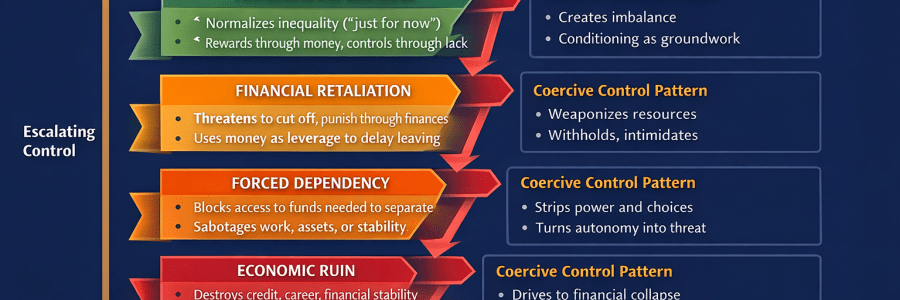
Example of Observed Behaviours / Patterns Behaviour Description Psychological Impact / Interpretation Threats regarding property and assets Lawyer communicated 65/35 split and potential full property claim if agreement not signed. Activates amygdala fear response, cortisol release, and loss-aversion bias, impairing rational decision-making. Demand to withdraw complaints/restraining orders Explicit request to dismiss prior legal protections. Induces moral conflict and prefrontal cortex… Read More Observed Behaviours / Patterns

NEUROSCIENCE OF “CONNECTION WITHOUT PROGRESSION”

1. The Dopamine–Oxytocin Trick: Emotional Bonding Without Action When someone checks in, calls, sends photos, or maintains friendly emotional contact, your brain releases: This creates a strong felt connection — even if nothing concrete happens. From their side, those same interactions give them enough emotional stimulation that their brain also feels: Result:Both people feel bonded…but neither brain… Read More NEUROSCIENCE OF “CONNECTION WITHOUT PROGRESSION”

Neuroscience Comparison Chart

Trusting Brain vs Manipulative Brain Neural Feature Trusting Brain Manipulative Brain (Dark-Triad Traits) Empathy Circuits (Anterior Insula, ACC) Highly active — can feel others’ emotions easily. Underactive — low resonance with others’ feelings; emotional detachment. Oxytocin Sensitivity Strong — bonding happens quickly; warmth feels natural. Low or strategically used — may mimic bonding to gain… Read More Neuroscience Comparison Chart

Why Highly Trusting People Are the Way They Are — Neuroscience Perspective

1. Your Brain Is Wired for Warmth, Not Suspicion Many trusting individuals have stronger activity in neural systems associated with: ⭐ Ventromedial Prefrontal Cortex (vmPFC) Responsible for: This creates a natural optimistic bias, making you more likely to assume honesty, kindness, and goodwill. ⭐ Oxytocin System You also tend to produce more oxytocin — the bonding… Read More Why Highly Trusting People Are the Way They Are — Neuroscience Perspective

Behavioral Choice Pathways: Neuroscience of Deliberate Actions

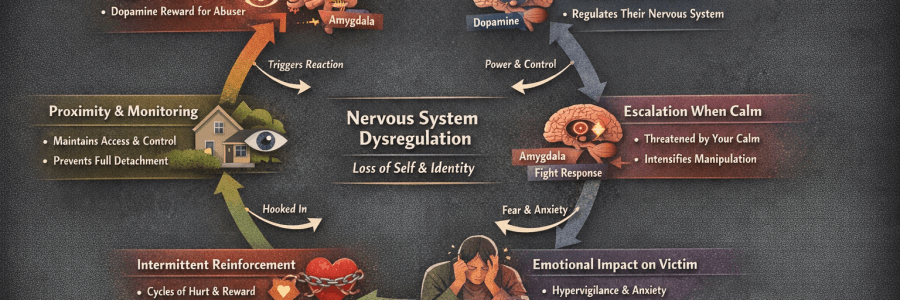
Here’s a neuroscience-informed explanation of behavioral choice pathways, specifically in the context of abusive or manipulative behavior. This framework emphasizes that abuse is a deliberate, neurologically reinforced choice rather than a symptom or accident. 1. Key Brain Circuits Involved Brain Region Function in Behavioral Choice Implication for Abuse Prefrontal Cortex (PFC) Executive function, planning, decision-making, inhibition Enables abuser… Read More Behavioral Choice Pathways: Neuroscience of Deliberate Actions

Medication, Behavior, and Abuse: Choice and Responsibility

Here’s a neuroscience-informed explanation addressing the relationship between medication, behavioral regulation, and abusive behavior, framed in terms of choice and accountability. 1. Abuse is a Choice, Not a Symptom 2. Role of Medications 3. Choosing Not to Take Medication 4. Psychological and Legal Implications Scenario Neuroscience Insight Accountability Abuse while on medication Reward circuits still drive pleasure from… Read More Medication, Behavior, and Abuse: Choice and Responsibility

Abuse: Choice vs Misconception of Mental Illness

Here’s a clear, neuroscience- and psychology-informed explanation distinguishing abuse as a deliberate choiceversus the common misconception that abuse is caused by mental illness, stress, or emotional instability. This is suitable for educational, clinical, or legal contexts. Abuse: Choice vs Misconception of Mental Illness Aspect Abuse as a Deliberate Choice Misconception: Caused by Mental Illness / Stress / Instability… Read More Abuse: Choice vs Misconception of Mental Illness

Abuse as a Deliberate Behavioral Pattern: A Neuroscience and Psychology Perspective

Introduction Abuse is often misunderstood in popular discourse as the result of stress, mental illness, or poor emotional regulation. Neuroscience and psychology research increasingly clarify that abuse is a conscious, deliberate behavior aimed at power and control rather than an accident or symptom. Understanding the underlying mechanisms helps survivors, professionals, and the legal system recognize patterns, predict… Read More Abuse as a Deliberate Behavioral Pattern: A Neuroscience and Psychology Perspective

Co-Dependent Individuals: Neuroscience and Psychology

Co-dependency refers to a pattern where an individual consistently prioritizes others’ needs over their own, often to the point of emotional, psychological, or even physical detriment. It’s commonly observed in relationships with emotionally unavailable, abusive, or high-conflict partners. 1. Brain Mechanisms in Co-Dependency A. Reward System Dysregulation B. Emotional Regulation C. Attachment Circuitry D. Stress Response… Read More Co-Dependent Individuals: Neuroscience and Psychology