🌌 Facing Loss and Impermanence: Psychology, Neuroscience, and Meaning

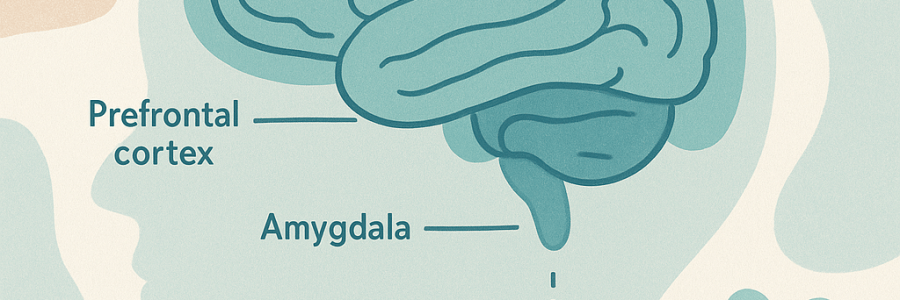
1. Existential Psychology Thinkers like Viktor Frankl and Irvin Yalom placed mortality at the center of psychological growth. Neuroscience link:When we avoid thinking about death, the brain activates the default mode network (mind-wandering, denial, self-protection). When we face mortality directly — through reflection, therapy, or even awe experiences — activity shifts toward networks linked with present-centered awareness and empathy (like the medial prefrontal cortex… Read More 🌌 Facing Loss and Impermanence: Psychology, Neuroscience, and Meaning

The Neuroscience of Living in Truth and Authenticity

To live in truth and authenticity is to live in alignment with who you really are—your values, your voice, your desires—rather than bending yourself to fit into the expectations, judgments, or control of others. It sounds simple, but many of us spend years living in survival mode, suppressing parts of ourselves in order to avoid… Read More The Neuroscience of Living in Truth and Authenticity

When People Lack Tact and Decency: A Neuroscientific Perspective

One of the hardest truths to face in human relationships is that not everyone operates with the same level of empathy, integrity, or respect. You can pour your energy into someone—supporting them through a divorce, listening patiently, building them up when they’re at their lowest—only to discover that they respond with arrogance, dishonesty, or even… Read More When People Lack Tact and Decency: A Neuroscientific Perspective

Knowing When It’s the Right One — The Neuroscience of Connection

Some people seem completely clueless about how to connect with a woman — not because they’re bad people, but because they’ve never tuned into what actually creates emotional chemistry.But for those of us who have felt that spark, we know: when it’s the right one, you don’t have to overthink it. They’re just always there in… Read More Knowing When It’s the Right One — The Neuroscience of Connection

The Psychology of Exposure: To Speak Out or Stay Silent

When betrayal runs deep, the pain is not just about the act itself—it’s about all the people who knew, stayed silent, and in some cases, actively participated.It’s about the friends who went out celebrating 16th October 2024 with the abuser the night he tried to break your arm hurting you.It’s about the people who enjoyed… Read More The Psychology of Exposure: To Speak Out or Stay Silent

When the Mask Slips: Greed, Betrayal, and the Freedom of Knowing the Truth

Sometimes the harshest truths arrive not in heated arguments, but in the quiet, cold moments when someone’s actions reveal who they truly are.When a son tries to lock you out of your own home…When a daughter turns away when you’re at your lowest, even suicidal…When children you’ve loved and cared for over three decades look… Read More When the Mask Slips: Greed, Betrayal, and the Freedom of Knowing the Truth

Greed, Betrayal, and the Strength to Walk Away

When property, money, and inheritance enter the equation, even long-standing relationships can fracture. What once felt like shared history and mutual care can turn into cold silence and calculated moves. From a psychological and neuroscience perspective, these moments are not just about the tangible loss—they strike at the core of trust, belonging, and identity. The… Read More Greed, Betrayal, and the Strength to Walk Away

The Dangerous Illusion of Being Above the Law

The belief in one’s own invincibility can be intoxicating. For some, this manifests as a quiet overconfidence; for others, it spirals into hubris so great that they openly disregard laws, court orders, and basic moral boundaries. Continuously breaking a restraining order, for example, is not simply a matter of poor judgment—it reflects a deep psychological… Read More The Dangerous Illusion of Being Above the Law

The Great Final Clearance Sale — Everything Must Go (Including the Abuser)

By: Someone Who’s Finally Had Enough There comes a time in every survivor’s life when you stop asking “Why did he do that?” and start asking “Why is his stuff still here?” So here we are: armed with a bin bag, a Spotify delete button, and the sudden realisation that neuroscience has been on our side all along.… Read More The Great Final Clearance Sale — Everything Must Go (Including the Abuser)