Can Untreated Attachment Issues Lead to Abuse?

A Neuroscience Perspective Attachment is the first language of the human brain. From the moment we are born, the way our caregivers respond to our cries, needs, and emotions literally wires our nervous system. When that attachment is secure, a child learns safety, regulation, and trust. But when early attachment is inconsistent, neglectful, or traumatic—and… Read More Can Untreated Attachment Issues Lead to Abuse?

🧠 Neuroscience of Adults Using Pornography to Self-Soothe

The neuroscience behind pornography use as self-soothing overlaps strongly with the brain’s stress, reward, and attachment systems. Here’s the breakdown: 🧠 Neuroscience of Adults Using Pornography to Self-Soothe 1. Stress & Emotional Pain Pathways 2. Reward & Dopamine System 3. Oxytocin & Bonding Short-Circuit 4. Prefrontal Cortex Regulation Weakening 🔄 The Cycle 🌱 Healing Perspective 👉 In short: pornography as self-soothing… Read More 🧠 Neuroscience of Adults Using Pornography to Self-Soothe

🧠 Why Some People Tear Down What Attracts Them: The Neuroscience Behind Insecurity

It’s common to notice that people are initially drawn to confidence, vibrancy, and authenticity. These qualities shine—they light up a room and make others feel alive. But for some, that same light can trigger insecurity, jealousy, or fear, leading them to put you down in an attempt to make you small. 1. The Mirror of Insecurity… Read More 🧠 Why Some People Tear Down What Attracts Them: The Neuroscience Behind Insecurity

🌹 The True Meaning of “Class”

When people call you classy, they aren’t just noticing your style. They’re recognizing a set of qualities that reflect inner strength and integrity. 1. Grace Under Pressure Psychologically, “class” often means you handle life’s challenges with dignity. Even when you’ve been through pain or trauma, you don’t let bitterness define you. Neuroscience shows that resilience—the brain’s ability… Read More 🌹 The True Meaning of “Class”

Believing in Yourself Again: The Neuroscience of Reclaiming Worth

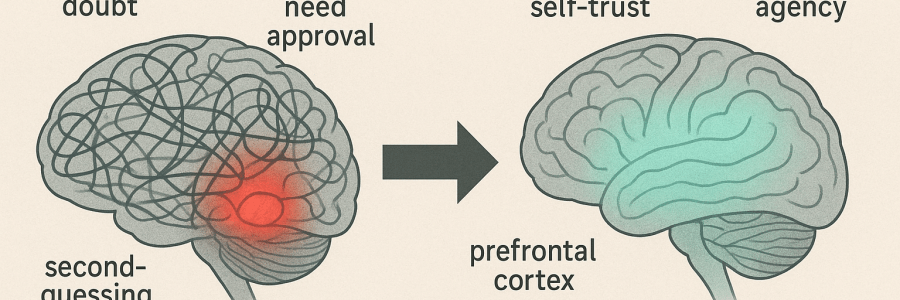
After years of being told cruel, diminishing things, genuine compliments can feel almost unbelievable at first. But the fact that multiple people are reflecting back “class,” confidence, and dignity shows how powerfully your inner healing is shining outward. Believing in Yourself Again: The Neuroscience of Reclaiming Worth When someone has spent years in an abusive environment, their… Read More Believing in Yourself Again: The Neuroscience of Reclaiming Worth

Why some abusers claim mental illness as a defense

Abusers sometimes argue that their behavior was “out of their control” due to a psychiatric disorder. The reasons include: From a psychological perspective, this is often a form of rationalization — a defense mechanism where the brain justifies behavior to reduce guilt. In neuroscience terms, areas like the prefrontal cortex (responsible for judgment and impulse control) and amygdala (emotional processing)… Read More Why some abusers claim mental illness as a defense

Impulse Control and Prefrontal Cortex Dysfunction

Understanding the mind of a sexual abuser from a neuroscience and psychological perspective is complex, because it involves biological, developmental, and social factors. While every individual is different, research does provide some insight into patterns of thought, brain functioning, and emotional regulation that are often observed in perpetrators. 1. Impulse Control and Prefrontal Cortex Dysfunction 2. Reward… Read More Impulse Control and Prefrontal Cortex Dysfunction

When You Meet Someone Who Truly Understands You: A Neuroscience Perspective 💛

There’s a rare kind of connection that goes beyond words—the kind where someone notices the small things, protects your boundaries, and can calm you just by being present. Neuroscience tells us this isn’t just poetic—it’s deeply biological. Your Nervous System Recognizes SafetyHumans are wired for connection. The polyvagal theory, proposed by Dr. Stephen Porges, explains that our… Read More When You Meet Someone Who Truly Understands You: A Neuroscience Perspective 💛

Executive Functioning

Self-deception and habitual lying are closely linked to several specific cognitive functions in the brain. Neuroscience research shows that lying, rationalizing, and deceiving yourself are not random; they rely on distinct neural circuits and cognitive processes. Here’s a detailed breakdown: 1. Executive Functioning The prefrontal cortex (PFC) is central here. It governs planning, decision-making, impulse control, and self-monitoring—all components… Read More Executive Functioning

Understanding Electromagnetic Waves and Brain Activity

The idea that human brains emit and receive ultra-low-frequency (ULF) electromagnetic waves, forming a global neural network connecting conscious minds, is a captivating and speculative concept. While this notion has been widely circulated on social media platforms like Facebook and Instagram, there is currently no peer-reviewed scientific evidence from Princeton University or any other reputable research… Read More Understanding Electromagnetic Waves and Brain Activity