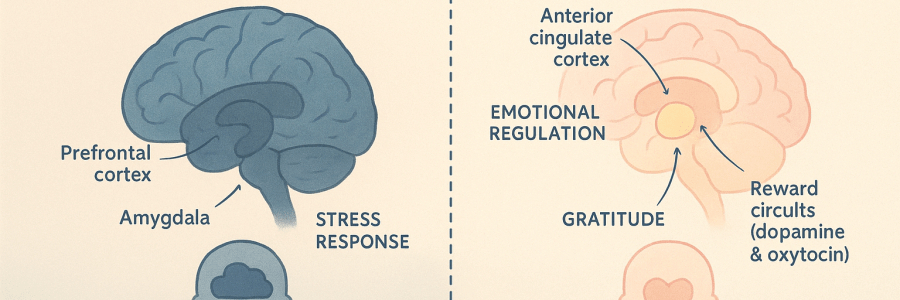
Should you pass the information to your lawyer?

Yes, if ALL of the following are true: Your lawyer’s role is precisely to hold information so you don’t have to. Why this is protective (neuroscience & psychology) 🧠 1. Cognitive offloading This is healthy delegation, not avoidance. 🧠 2. Containment reduces trauma activation Uncontained information keeps trauma circuits “open.” A lawyer provides: Your nervous system needs closure,… Read More Should you pass the information to your lawyer?

Disturbing information

Here is a clear, trauma-informed, neuroscience-aligned way to react when someone you barely know contacts you with a disclosure about your ex — something you didn’t want to know, but that should be reported. This approach protects your nervous system, your legal position, and the integrity of the information. 1. Regulate first — before responding Do nothing immediately. Neuroscience: What to do… Read More Disturbing information

“Does this information increase my safety or only my stress?”

harmful disclosure doesn’t look dramatic at first. Neuroscience shows it often erodes recovery quietly, through stress accumulation rather than acute distress. Here are the clear, evidence-based signs that disclosures are starting to harm your recovery. 1. Your nervous system stays activated after contact Key sign: the reaction doesn’t settle. Neuroscience: You may notice: If your body remains alert long after… Read More “Does this information increase my safety or only my stress?”

God’s Waiting Room: Embracing Impermanence and Meaning

“God’s Waiting Room” is a concept that captures a universal human truth: life is temporary, connections are fleeting, and endings — both small and large — are inevitable. While the term itself isn’t formally named in psychology, it resonates strongly across multiple disciplines and philosophies. 1. Existential Psychology Thinkers like Viktor Frankl and Irvin Yalom… Read More God’s Waiting Room: Embracing Impermanence and Meaning

“This Isn’t New — It’s the Same Game in a Different Arena”Why Long-Term Mind Games Continue After Separation

When you’ve lived with decades of psychological manipulation, the most destabilising part isn’t the behaviour itself. It’s the moment you realise:This is just a continuation of the same pattern. Different setting.Different language.Same impact on your nervous system. That recognition is not bitterness.It’s pattern recognition. What Kind of Person Does This? From a trauma-informed and neuroscience perspective,… Read More “This Isn’t New — It’s the Same Game in a Different Arena”Why Long-Term Mind Games Continue After Separation

How to Deal With This Without Going Crazy(A Trauma-Informed, Neuroscience-Based Guide)

First, an important reframe: If you feel anxious, angry, hyper-alert, exhausted, or mentally foggy in this situation, you are not “going crazy.”Your nervous system is responding normally to an abnormal level of prolonged uncertainty and control. The goal is not to “stay calm.”The goal is to stay regulated enough to function and protect yourself. 1. Stop Treating This… Read More How to Deal With This Without Going Crazy(A Trauma-Informed, Neuroscience-Based Guide)

When Divorce Becomes a Control Strategy: A Neuroscience Perspective

What happens when you file for divorce in 2024 and the other person says “no”?What happens when your solicitor receives no response for months?When you try to sell the house, put forward offers, and hear nothing?When “For Sale” signs are quietly removed in the night?And then—one year later—you are accused, sued, or taken to court… Read More When Divorce Becomes a Control Strategy: A Neuroscience Perspective

Just Being — When the Nervous System Finally Rests

There are moments in healing when life feels exactly as it should — not because everything is perfect, but because everything is aligned. When things begin to fall into place without force.When you hand control over to a higher power — however you understand that — and allow yourself to soften.When effort gives way to trust.… Read More Just Being — When the Nervous System Finally Rests

Why calm felt dangerous?

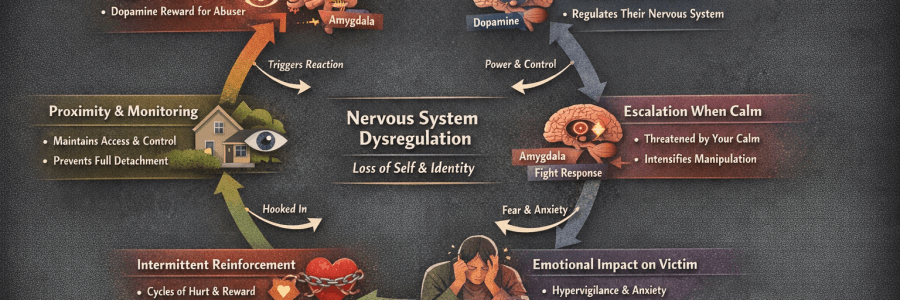
This is one of the hardest and most important transitions after long-term abuse.Distrusting calm wasn’t a flaw — it was adaptive. Now your nervous system needs help updating its rules. I’ll explain why calm felt dangerous, then how to retrain trust in it using neuroscience, not positive thinking. 1. Why calm used to feel unsafe (this matters) In abusive environments, calm… Read More Why calm felt dangerous?