Pushing your buttons

When someone openly admits they push your buttons “to see you react,” it’s not accidental or unconscious — it’s deliberate and rewarding to them. Here’s what’s happening neurologically and psychologically. 1. They Are Regulating Themselves Through Your Reaction For some people, especially those with coercive, antagonistic, or narcissistic traits, other people’s emotional reactions function as a… Read More Pushing your buttons

Identity destabilizes without an audience

When proximity stops working, some abusers escalate not because they want more connection — but because their primary regulation strategy has failed. What follows is not emotion-driven in the way healthy grief is; it’s a threat response. Here’s the neuroscience and psychology behind that escalation. 1. Proximity Was Their Regulator — Its Loss Feels Like Threat For… Read More Identity destabilizes without an audience

Abusers do not seek connection — they seek regulation.

When an abuser leaves reminders, resurfaces after long no-contact, or engineers moments where you “happen” to see them, there is a very specific neuropsychological mechanism at play. I’ll break it down clearly and calmly. The Core Truth Abusers do not seek connection — they seek regulation. They use you to regulate their nervous system, identity, and sense of… Read More Abusers do not seek connection — they seek regulation.

The Withdrawal Phase Is Neurological, Not Emotional

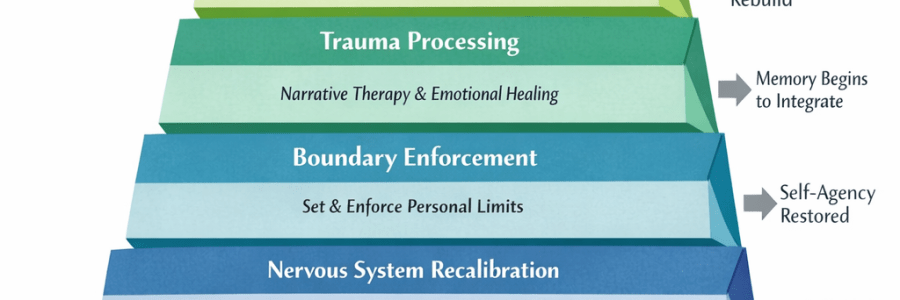
No-contact works not because it’s harsh, but because it gives the brain the conditions it needs to rewire. Neurologically, it interrupts addiction-like circuits, stabilizes the nervous system, and allows neuroplastic change to occur. Here’s what’s actually happening in the brain. 1. No-Contact Stops the Reward–Withdrawal Loop In trauma bonds and unstable long-term relationships, contact triggers: Every message,… Read More The Withdrawal Phase Is Neurological, Not Emotional

Why calm truth destabilises abusers more than anger

1. Anger keeps the abuser in control of the nervous-system dance Abusers are neurologically accustomed to high arousal states: From a brain perspective, anger keeps both people in the same threat loop.The abuser knows this terrain well — they have practiced it for years. Calm removes that loop. 2. Calm truth shuts down projection Projection only works… Read More Why calm truth destabilises abusers more than anger

From survival mode to safety mode

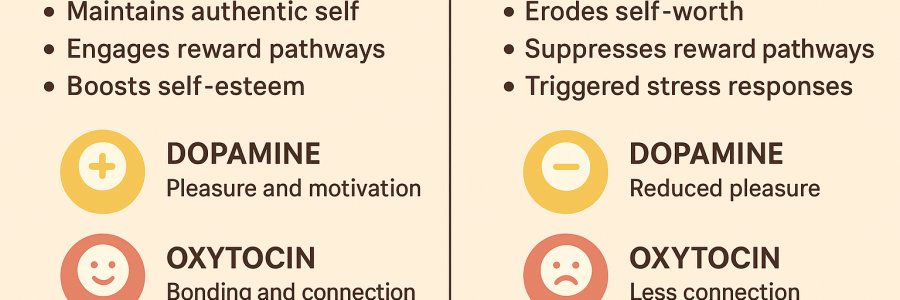
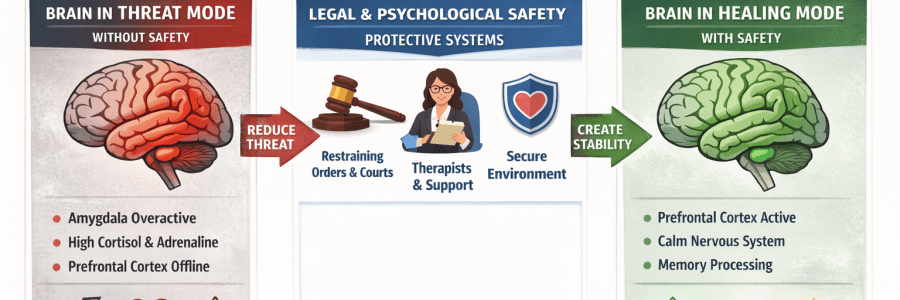
1. From survival mode to safety mode For decades, your brain and body were likely dominated by the threat system: Neuroscience shows that long-term emotional abuse keeps the amygdala (threat detector) overactive, while the prefrontal cortex (reasoning, reflection, calm decision-making) gets suppressed. What you’re feeling now — peace, wholeness, comfort — signals a shift into parasympathetic dominance, often called rest and digest.… Read More From survival mode to safety mode

Immediate nervous system reset

Putting yourself first after disengaging from someone who is dumping distressing information is essential for nervous system recovery. Here’s a structured, neuroscience- and psychology-informed plan for grounding and stabilizing yourself in the days immediately after: 1. Immediate nervous system reset 🔹 Deep breathing 🔹 Grounding with senses 🔹 Body scan 2. Protect your digital space 3. Structure your… Read More Immediate nervous system reset

Why blocking and stopping contact protects your sanity (neuroscience & psychology)

🧠 1. Your brain did not consent to this role Unsolicited disclosure recruits your nervous system without permission. Neuroscience: You are closing an open stress loop. 🧠 2. Ongoing contact creates “false responsibility” Psychology shows that once contact continues, the brain begins to feel: Even if you intellectually reject this, your nervous system doesn’t. Blocking prevents role… Read More Why blocking and stopping contact protects your sanity (neuroscience & psychology)

Practical and safe approach

Passing the information to your psychologist and discussing it is generally a very safe and effective choice, from both psychology and neuroscience perspectives, because it allows you to process the material without carrying it alone, and it protects your nervous system. Here’s the reasoning: 1. Psychologists are trained containers for trauma 2. Processing without absorbing responsibility 3.… Read More Practical and safe approach