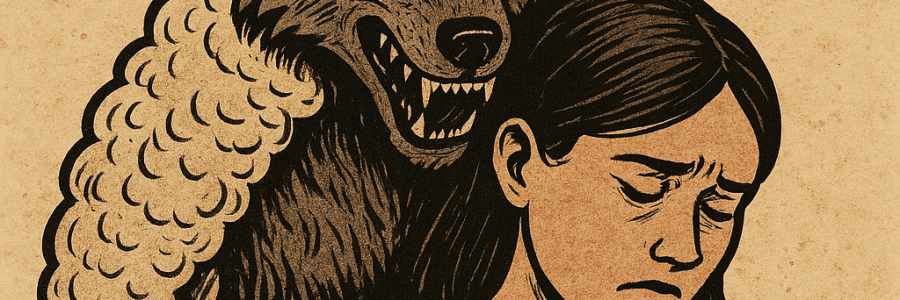
Predatory Abusers

Abusers are indeed often drawn to environments or individuals where they can go unnoticed or operate with little resistance. A culture or family structure that either tolerates or doesn’t intervene in abusive behaviors becomes a breeding ground for this kind of exploitation. The lack of outside intervention, from friends, family, or community, allows the abuser to maintain their power without any real accountability. This is why, in some situations, abuse can be passed down from generation to generation. In some families or cultures, abuse may be normalized or even expected, making it harder for individuals to break free or for others to recognize the signs.

There’s a chilling cycle of control at play, where the abuser deliberately isolates the victim from others who might intervene—whether it’s through gaslighting, creating doubts about the victim’s perceptions, or turning others in the family or community against them. They might even play the victim themselves, ensuring that any suspicions or challenges to their behavior are dismissed. This creates an environment where cruelty and manipulation can thrive without being questioned.… Read More Predatory Abusers

Change in abusive individuals is rare

Change in abusive individuals is rare, but it’s not entirely out of the question. Acknowledging abuse and engaging in therapeutic change involves a deep, often painful process that requires self-awareness, empathy, and a willingness to fundamentally alter long-established patterns of behavior. In many cases, abusers fail to take responsibility for their actions, which makes rehabilitation unlikely without their active participation. However, when they do take those crucial steps, the chances for change increase—though the path is long and difficult.… Read More Change in abusive individuals is rare

Financially Motivated Abuse: Why Change Is Rare

Deep-Seated Entitlement:
Financial abusers often feel entitled to control their partner’s resources, believing they deserve access to money, assets, or even their partner’s labor. This entitlement is difficult to unlearn without significant self-awareness and effort.

Reinforcement of Behavior:
If financial abuse has historically provided the abuser with success (e.g., maintaining control, achieving material gain), they’re less likely to see it as wrong or feel compelled to change.

Lack of Genuine Accountability:
Financial abusers often rationalize their behavior as necessary or justified. Without acknowledging the harm caused, true change becomes nearly impossible.

Cultural and Societal Norms:
In some cases, cultural or societal norms around money and gender roles may enable financial abuse. These norms can make the abuser feel validated, further reducing the likelihood of change… Read More Financially Motivated Abuse: Why Change Is Rare

The cycle of abuse will repeat

The Honeymoon Phase:
Initially, the abuser often presents as charming, attentive, and ideal. This “love-bombing” phase is designed to quickly build emotional dependence and trust. For some, this period lasts weeks or months before cracks begin to show.

Signs of Control:
Abusers tend to reveal their controlling tendencies subtly at first—dictating small decisions, isolating their partner from friends, or using passive-aggressive comments. These early behaviors often appear within a few months.

Trigger Points:
Abuse frequently reemerges when the abuser feels a loss of control. This can happen during disagreements, when the partner asserts independence, or if the relationship deepens and expectations shift.… Read More The cycle of abuse will repeat

The Facade of Fairness: How Abusers Continue to Manipulate Post-Divorce

The Public Persona vs. The Hidden Reality

Abusers are adept at creating a facade that portrays them as reasonable, loving, or even the victim. To friends, family, and the broader community, they present themselves as someone who simply wants the best for their ex-partner and family. They use this image to gain sympathy and discredit any accusations of wrongdoing.

However, behind closed doors, their actions paint a very different picture. These individuals lie, manipulate, and sabotage in ways that are often invisible to outsiders. Their covert schemes may include financial ruin, emotional destabilization, or attempts to alienate their former partner from mutual connections.… Read More The Facade of Fairness: How Abusers Continue to Manipulate Post-Divorce

Post-Divorce Abuse: When Control and Cruelty Persist

While post-divorce abuse can feel like an endless battle, it’s important to remember that abusers rely on fear and control to maintain their power. By seeking support, setting boundaries, and focusing on rebuilding a life free from their influence, survivors can reclaim their strength and independence. The road may be long, but with time and perseverance, healing is not only possible but inevitable. Despite outward declarations of love to friends and acquaintances, these abusers’ actions tell a very different story. Their efforts are not about reconciliation but about punishment and control. They weaponize love as a tool to maintain their image and manipulate others while continuing their covert campaign of cruelty.… Read More Post-Divorce Abuse: When Control and Cruelty Persist

Turning the Corner: A Journey Toward Healing and Hope

As the sun sets on 2024, I find myself reflecting on a year of profound transformation. This has been a year of confronting the past, embracing the present, and preparing for a future filled with gratitude and resilience. The journey has not been easy, but it has been worth every step. With the unwavering support of family, friends, and two exceptional therapists—one in France and one in Spain—I’ve found my way back to myself.… Read More Turning the Corner: A Journey Toward Healing and Hope

Strangulation: A Lethal Form of Abuse and Its Long-Term Impact on Victims

Fear of Intimacy: The act of strangulation is deeply personal and invasive, often leaving victims with a profound fear of physical closeness, even in safe relationships.

Isolation: The shame and fear associated with the abuse can cause victims to withdraw from friends and family, leaving them isolated and vulnerable to further harm.

Work and Social Challenges: Cognitive impairments, anxiety, and depression can make it difficult for victims to maintain employment or engage in social activities.… Read More Strangulation: A Lethal Form of Abuse and Its Long-Term Impact on Victims

Leaving a Legacy of Cruelty: The Impact of Meanness on Relationships and Future Generations

When someone consistently chooses cruelty and meanness over kindness and compassion, their legacy becomes one of pain, broken relationships, and long-lasting emotional scars. The impact of such behavior ripples outward, affecting ex-partners, siblings, children, grandchildren, and even the broader community. This legacy is not just about the harm caused during the person’s lifetime but also about the enduring effects on those left to pick up the pieces.… Read More Leaving a Legacy of Cruelty: The Impact of Meanness on Relationships and Future Generations