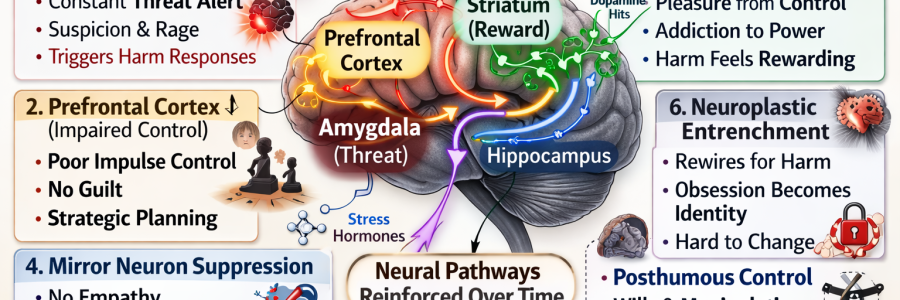
Real-World Behavioral Examples – Dark Triad Traits

1. Machiavellianism — The Strategic Manipulator Core pattern: Calculated, deceptive, emotionally detached, controlling. Common behaviors: Relationship examples: Typical impact on partners:Confusion, self-doubt, emotional exhaustion, anxiety, hyper-vigilance 2. Narcissism — The Ego-Centered Taker Core pattern: Entitlement, superiority, validation-seeking, lack of empathy. Common behaviors: Relationship examples: Typical impact on partners:Low self-esteem, emotional neglect, walking on eggshells, loneliness 3. Psychopathy — The Emotionally… Read More Real-World Behavioral Examples – Dark Triad Traits

Emotional Neglect

Emotional neglect occurs when: Writing letters pouring your heart out — and having them ignored or thrown away — is a classic example of emotional neglect. Psychological meaning: “My inner world does not matter.” Over time, this deeply impacts: 2️⃣ Unidirectional Emotional Labour This describes the effort of emotional expression and relationship maintenance happening only on one side. You… Read More Emotional Neglect

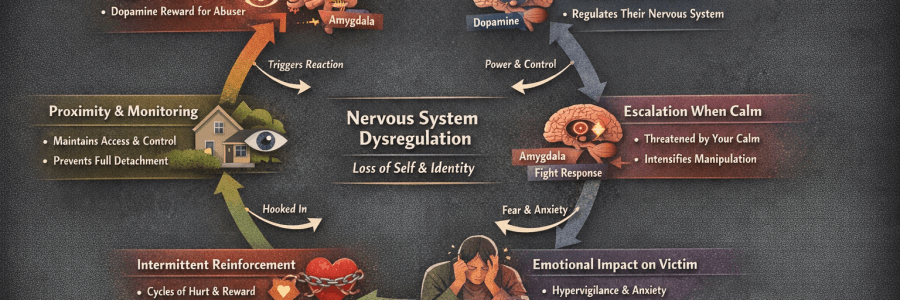
How Survivors Rebuild Identity After Psychological Erosion

Psychological erosion happens slowly. It is not one event — it is thousands of small moments of: Over time, the nervous system adapts to survival, and identity becomes secondary. 🧩 Phase 1: Survival Identity (Before Healing) When someone lives in chronic emotional stress, the brain prioritises safety over authenticity. This creates a survival self: Neurologically: So identity slowly erodes: You stop… Read More How Survivors Rebuild Identity After Psychological Erosion

The Four Horsemen of Relationship Breakdown (Gottman Method)

John Gottman identified four communication patterns that predict relationship failure with over 90% accuracy.They are called The Four Horsemen because once they dominate a relationship, emotional safety collapses. These four patterns are: 1️⃣ Criticism – Attacking the person, not the behaviour What it sounds like: Psychological impact: Criticism attacks identity, not actions.It tells the nervous system: “You are the problem.” Neuropsychology: Criticism activates… Read More The Four Horsemen of Relationship Breakdown (Gottman Method)

Neuroscience & Psychology Perspective – living in a parallel universe

1. Cognitive Dissonance & Denial Systems (on their side) If his relatives are still sending cards addressed to Mr & Mrs, 17 months after separation, this strongly suggests: In simple terms: Their brains are protecting them from discomfort by freezing reality in time. 2. Family System Psychology — “Homeostasis” In family psychology, systems resist change. When a long-term… Read More Neuroscience & Psychology Perspective – living in a parallel universe

🌿 Why Emotionally Unavailable People Cannot Truly See Others

This is a deep and important psychological truth, and understanding it can bring enormous clarity, peace, and emotional release. Because once you truly grasp this, you stop taking being unseen personally — and that changes everything. 1. Because They Are Disconnected From Their Own Inner World Emotionally unavailable people are not fully connected to themselves. They: If someone cannot access their… Read More 🌿 Why Emotionally Unavailable People Cannot Truly See Others

🌿 Why Being Truly Seen Is Essential for Intimacy

This is a profound psychological truth, and understanding it changes how you experience relationships forever. Let’s go gently and deeply into why being truly seen is essential for intimacy. 1. Because Intimacy Means “Into Me You See” The word intimacy literally comes from: “Into-me-see.” True intimacy is: Allowing someone access to your inner emotional world — and being received there.… Read More 🌿 Why Being Truly Seen Is Essential for Intimacy

🚨 How to Spot Emotional Unavailability Early

Spotting emotional unavailability early can save years of confusion, pain, and emotional depletion. Here’s a clear, practical guide to recognizing emotional unavailability before you get attached. 1. Inconsistent Communication Early signs: What it means: They like connection — but fear emotional closeness. Healthy: 2. Avoidance of Emotional Topics They: You’ll notice: Conversations stay pleasant but not deep. 3. Strong Independence + Emotional Distance They… Read More 🚨 How to Spot Emotional Unavailability Early