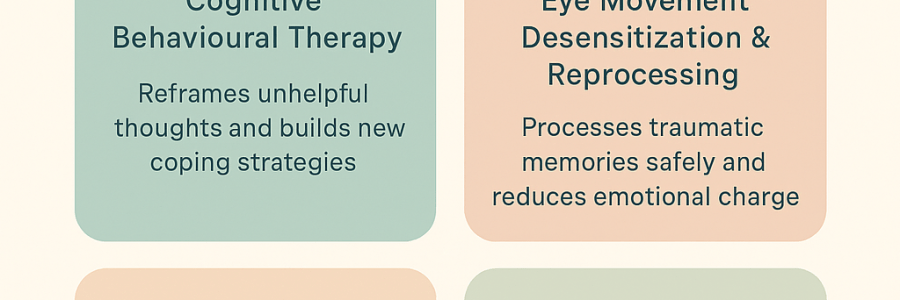
Giving yourself time — and finding the right therapy — changes everything.

When you’ve spent decades being told you’re guessing, overthinking, getting it wrong, or imagining things, you eventually stop trusting your own judgement. Not because it’s flawed — but because you’ve been trained to doubt it. You start second-guessing your instincts.You question your memory.You wonder if you are the problem. Then you begin the right kind of therapy.… Read More Giving yourself time — and finding the right therapy — changes everything.

Neuroscience-Informed Trauma Bond Resistance: Overview

Key Concepts / Mechanisms Practical Implications Neurobiology of Trauma Bonds Explains how the brain forms strong attachments even in harmful relationships. – Dopamine system (nucleus accumbens): reward spikes during intermittent affection.– Oxytocin system: strengthens bonding, trust, and attachment.– Amygdala & HPA axis:hyperarousal, fear, and stress responses.– Prefrontal cortex suppression:rational decision-making is reduced during emotional manipulation. – Recognize neurochemical dependence.– Understand physiological… Read More Neuroscience-Informed Trauma Bond Resistance: Overview

Neuroscience-Informed Guide to Trauma-Bond Resistance

1. Understanding the Neurobiology of Trauma Bonds Trauma bonds form when intermittent reinforcement (alternating kindness and abuse) hijacks the brain’s reward and stress systems: Result: Even when abused, your brain craves connection, creating a powerful attachment. 2. Key Psychological Mechanisms 3. Strategies to Build Resistance (Neuroplastic Approach) A. Strengthen Prefrontal Cortex Engagement Activates rational decision-making, reduces impulsive reactivity.… Read More Neuroscience-Informed Guide to Trauma-Bond Resistance

Forensic Psychological Explanation: Interaction Between Dark-Trait Individuals and Empathetic Persons

1. Introduction This report summarizes the interaction patterns between individuals exhibiting dark personality traits (Sadism, Machiavellianism, Psychopathy, Narcissism) and highly empathetic or conscientious partners. The purpose is to explain the mechanisms of attraction, behavioral influence, and potential emotional harm in a way suitable for legal review, psychological evaluation, or expert testimony. 2. Core Concepts Concept… Read More Forensic Psychological Explanation: Interaction Between Dark-Trait Individuals and Empathetic Persons

Why Dark-Trait Individuals Seek Out Empathic, Strong, Caring People

This is the other half of the equation, and it’s backed by research. 1. They Target Those Who Are Empathically Generous From a Machiavellian/sadistic/psychopathic perspective, the ideal partner is someone who: This makes the empathetic partner: ➡️ easier to control➡️ easier to manipulate➡️ less likely to leave immediately This is not a weakness — it’s a strength exploited. 2.… Read More Why Dark-Trait Individuals Seek Out Empathic, Strong, Caring People

Why Empathetic, Kind, High-Integrity People Are Attracted to These Types

This is not a flaw.It’s predictable based on psychological and neurological dynamics. 1. Complementary Wiring (Neuroscience) Dark-trait individuals tend to have: Empathetic individuals tend to have: ➡️ The two systems “lock into” each other.One person needs to dominate, the other needs to heal/understand. This creates a powerful neurochemical bond. 2. Dark Traits Mimic Healthy Attachment at First These personalities use love-bombing, mirroring,… Read More Why Empathetic, Kind, High-Integrity People Are Attracted to These Types

Perpetrator Behavior

(Behavior → Emotional Harm → Legal Relevance) Perpetrator Behavior Emotional / Psychological Harm to Victim Legal Relevance / Evidentiary Value Chronic manipulation, deceit, gaslighting Confusion, self-doubt, anxiety, impaired decision-making; erosion of self-trust. Demonstrates coercive control; pattern of psychological abuse; undermines victim’s ability to consent or make free decisions. Humiliation, degradation, mocking distress Shame, fear, trauma… Read More Perpetrator Behavior

🕯️ Charm, Sex & the Lure: The Neuroscience and Psychology of Seduction-as-Manipulation

People of any gender can use charm and sex as a strategy — intentionally or unconsciously — to gain power, control, or resources from others. Because these tactics hijack the brain’s bonding and reward systems, they can feel intoxicating and convincing. Understanding the science behind them helps survivors reclaim clarity, protect themselves, and heal. 1)… Read More 🕯️ Charm, Sex & the Lure: The Neuroscience and Psychology of Seduction-as-Manipulation

💰 “So… Who Owns the House?” — The Neuroscience of Financial Curiosity in Early Relationships

🧠 The Brain Behind the Questions When someone begins asking intrusive money questions —Who owns your home?Do you have debts?What kind of car is that? —you’re not just seeing curiosity. You’re witnessing their reward and threat systems at work. Two neural circuits explain this behavior: 💡 The Psychology of Early Financial Probing There are usually three psychological drivers behind this… Read More 💰 “So… Who Owns the House?” — The Neuroscience of Financial Curiosity in Early Relationships