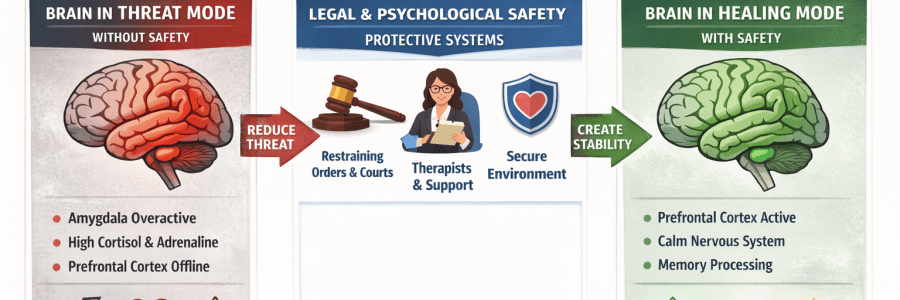
“Does this information increase my safety or only my stress?”

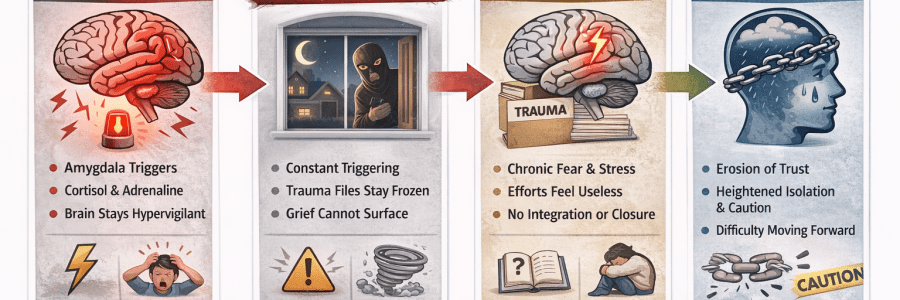
harmful disclosure doesn’t look dramatic at first. Neuroscience shows it often erodes recovery quietly, through stress accumulation rather than acute distress. Here are the clear, evidence-based signs that disclosures are starting to harm your recovery. 1. Your nervous system stays activated after contact Key sign: the reaction doesn’t settle. Neuroscience: You may notice: If your body remains alert long after… Read More “Does this information increase my safety or only my stress?”

Why Attention Drops When Survivors Begin to Heal

Trauma Recovery, Post-Abuse Dynamics & the Nervous System For people who have lived through long-term abuse, the shift you’re noticing is not just social — it’s neurobiological and relational. When you were in survival mode, your nervous system, identity, and relationships were organized around threat, appeasement, and endurance. As you heal, that entire structure changes. And not everyone… Read More Why Attention Drops When Survivors Begin to Heal

Judgement

“What You See Is Not What Is Happening” Why People Jump to Assumptions — Neuroscience & Psychology 1. The brain is a pattern-completion machine The human brain evolved to make fast judgments, not accurate ones. When people see: the brain automatically fills in the gaps using past social templates: “Couple.” “Affair.” “Relationship.” This is driven by the hippocampus and predictive… Read More Judgement

Why People Engage More With Struggle Than With Joy

A Neuroscience & Psychology Perspective Many people notice a puzzling pattern on social media and in real life:When you’re struggling, sharing pain, or “not doing well,” engagement pours in.When you’re healing, happy, confident, or visibly thriving—attention drops off. This is not accidental, and it is not about your worth. 1. The Brain Is Wired to… Read More Why People Engage More With Struggle Than With Joy

Are you shocked -NO!

What you are describing is actually a very mature, self-protective response, and neuroscience strongly supports the approach you’re taking. I’ll explain why “not wanting to know,” while still redirecting disclosures to authorities, is psychologically sound—not avoidance. 1. Why your brain says “I’d rather not know” After prolonged trauma, the nervous system prioritises survival and stability, not curiosity. Neuroscience:… Read More Are you shocked -NO!