There are more kind people in this world than cruel ones.
But it doesn’t always feel that way.
Cruelty is louder. It leaves sharper memories. It takes up more emotional space. Kindness, by contrast, is often quieter—steady, consistent, and easy to overlook unless we are paying attention.
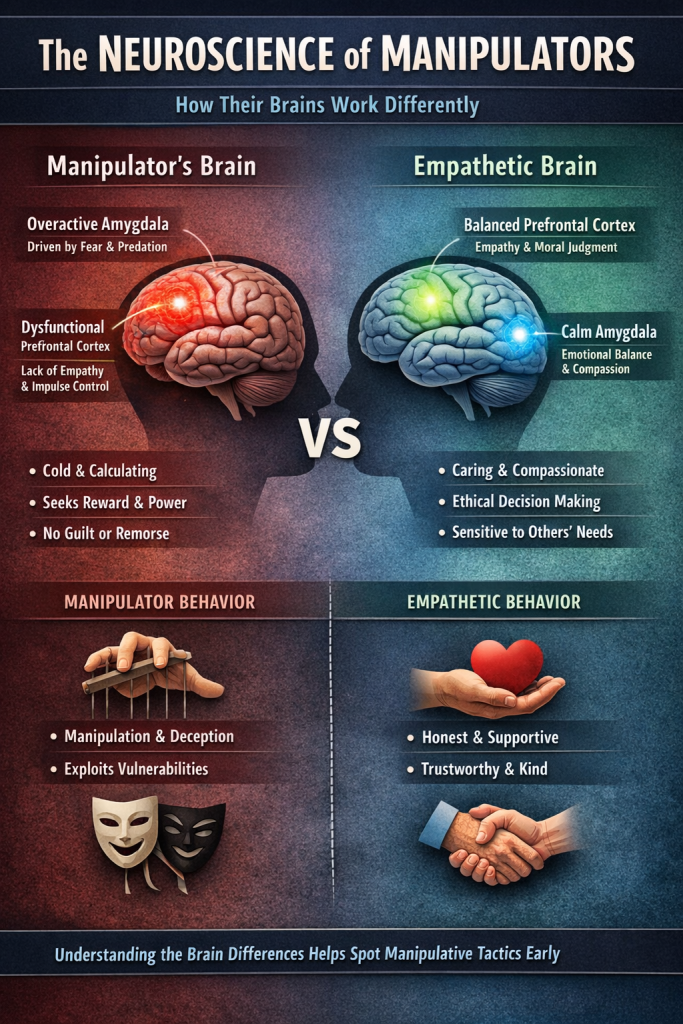
And yet, beneath every interaction—every reaction, every pause, every word—the brain is making decisions. Not abstract moral declarations, but real-time biological processes shaped by wiring, experience, and state.
The Brain Is Always Choosing a Response
At any moment, the brain is balancing two broad systems:
- A fast, reactive system driven by emotion, threat, and survival
- A slower, reflective system capable of empathy, perspective, and self-control
When people act impulsively, shut down, or lash out, it is often the reactive system leading.
When people pause, consider, and respond with care, the reflective system is active.
Kindness lives in that space between impulse and action—the moment where regulation creates choice.
Empathy: The Core Mechanism Behind Kindness
Kindness depends heavily on empathy—the ability to understand or feel another person’s emotional state.
When empathy is active:
- We recognise suffering in others
- We feel connection rather than distance
- We are more likely to help rather than harm
When empathy is reduced—through stress, emotional shutdown, burnout, or learned defensive patterns—people can become detached or insensitive without fully processing impact.
This is not a moral switch. It is a neurological state.
Why Kindness Becomes a Habit
The brain reinforces what it repeats.
Acts of kindness activate reward circuits linked to dopamine and social bonding. Helping others can create a sense of connection, meaning, and internal reward.
But repetition matters:
- Repeated kindness strengthens prosocial pathways
- Repeated hostility or emotional withdrawal can also become automatic patterns if reinforced over time
This is how behaviour becomes identity—not instantly, but gradually through repetition and reinforcement.
Stress, Survival, and the Shrinking of Choice
When the brain perceives threat—whether physical or emotional—it shifts into survival mode.
In that state:
- Emotional regulation decreases
- Patience reduces
- Perception narrows
People are more likely to react defensively or harshly—not always because they intend harm, but because the brain prioritises protection over connection.
This does not excuse harm, but it explains why kindness becomes harder under pressure.
How Harmful Behaviour Is Justified
Most people do not see themselves as cruel. Instead, the mind creates internal narratives that reduce discomfort around harmful actions.
Psychologist Albert Bandura described this as moral disengagement—the process by which people mentally separate their actions from their moral standards.
It can sound like:
- “They deserved it.”
- “I had no choice.”
- “It’s not my responsibility.”
These thoughts reduce emotional conflict and make harmful behaviour easier to repeat.
Important Distinction: Understanding Is Not Excusing
It is important to be precise here.
Antisocial Personality Disorder is a clinical diagnosis describing patterns of behaviour and emotional processing. It is not a synonym for cruelty, and it is not an explanation for abuse.
Cruelty and abuse are behaviours—specific actions that cause harm.
A diagnosis is not a moral category, and it does not define what a person will or will not do.
Understanding psychological patterns should never be used to erase responsibility for harm.
Boundaries, Not Emotional Shutdown
Cruelty from others can shift the nervous system into protection mode. In that state, trust feels unsafe and openness feels risky. This is a normal protective response.
But protection can become prolonged defence.
There is a difference between:
- Boundaries: clarity, self-protection, emotional safety
- A closed heart: emotional withdrawal, disconnection, and long-term shutdown
Boundaries are regulated.
A closed heart is often a nervous system still stuck in survival.
Healing does not require reopening yourself to harm. It requires learning to stay open with discernment.
Do Not Let Cruelty Define You
Cruelty can make people want to shut down emotionally. That is understandable. But what protects you in one season can limit you in another.
Don’t let someone else’s behaviour harden you into a permanent state of emotional distance.
Set boundaries—clear ones.
Protect your peace—fully.
But don’t close your heart completely.
Because the brain is capable of change.
With safety, consistency, and time, systems that shut down can reopen. Trust can rebuild. Connection can return. The capacity to feel love is not gone—it is often just paused under protection.
The Bottom Line
Kindness is not weakness. It is not naivety. It is a regulated, conscious choice that requires awareness, empathy, and self-control.
Cruelty is not always a fixed identity—it is often a pattern shaped by threat, learning, and reinforcement. But understanding this does not remove accountability for harm.
And most importantly:
There are more kind people in this world than cruel ones.
But the brain will always notice the painful ones first.
So choose carefully:
- who you trust
- what you accept
- what you repeat
- and what you allow to shape you
Because while you cannot control every behaviour you encounter, you can choose how you respond—and who you become in the process.