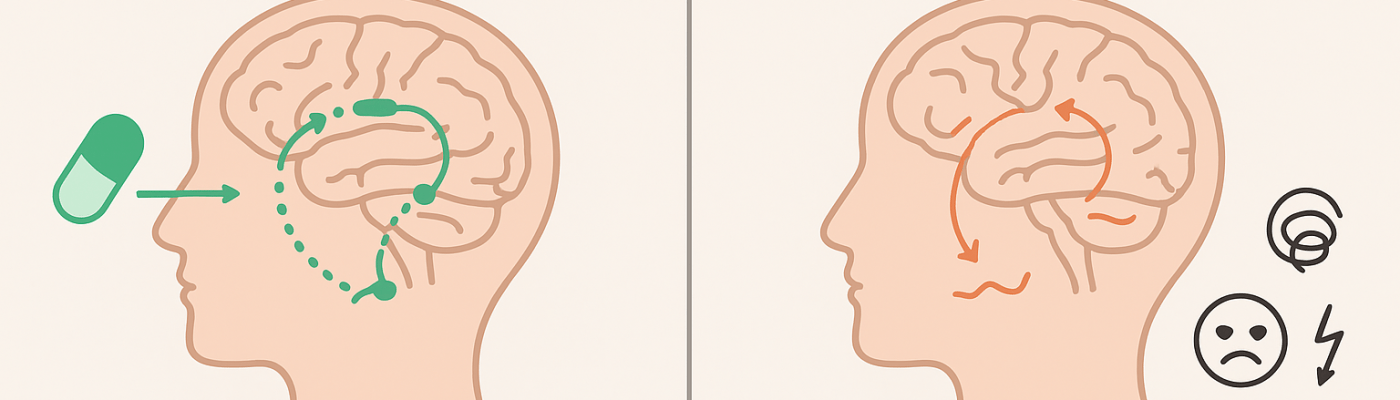
Neuropharmacology is the study of how drugs and chemicals influence the brain and nervous system, altering mood, perception, cognition, and behavior. It sits at the intersection of neuroscience, medicine, and psychology, revealing how substances interact with neurons and circuits.
🧠 How Neuropharmacology Works
- Targeting Neurotransmitters
- Neuropharmacology examines how drugs influence neurotransmitters — the brain’s chemical messengers.
- Examples:
- Dopamine: affects reward, motivation, and pleasure.
- Serotonin: affects mood, sleep, and appetite.
- GABA & Glutamate: regulate inhibition and excitation in the brain.
- Receptor Interactions
- Drugs bind to specific receptors on neurons, either activating them (agonists) or blocking them (antagonists).
- This changes the neuron’s activity, influencing behavior, perception, and cognition.
- Short-Term vs Long-Term Effects
- Acute use may alter mood, attention, or alertness.
- Chronic use can lead to neuroplastic changes, tolerance, or dependence.
🧠 Applications
- Mental Health: antidepressants, antipsychotics, anxiolytics.
- Neurological Disorders: Parkinson’s, epilepsy, Alzheimer’s.
- Addiction Research: understanding reward pathways and drug dependence.
- Cognitive Enhancement: exploring drugs that influence attention, memory, or learning.
🧠 Why It Matters
Neuropharmacology helps us understand how chemicals shape behavior and cognition, guiding treatments for mental illness, addiction, and neurological disorders. It also informs public health policies, drug safety, and the development of new therapies.
 Linda C J Turner | Trauma Therapist & Emotional Healing Specialist