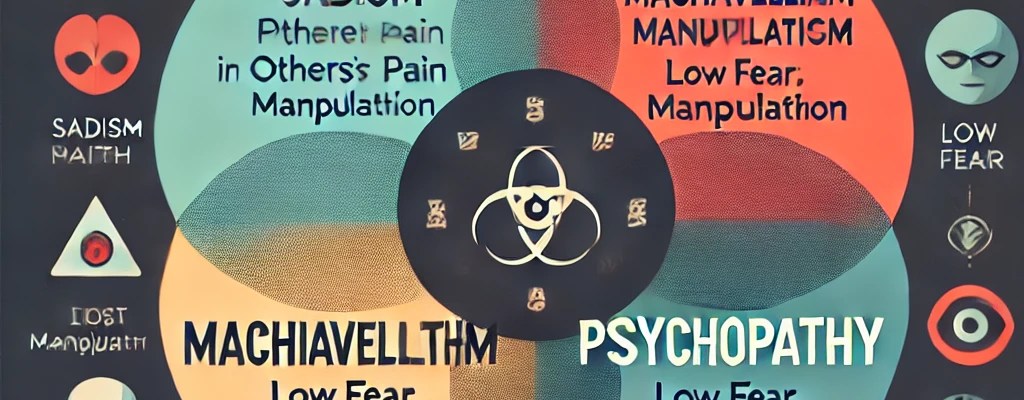
Not everyone who harms others enjoys it—but when they do, there are specific brain and psychological mechanisms involved.
1. Reward system activation (they feel good doing it)
Cruel or controlling behaviour can activate the brain’s reward circuitry, especially pathways involving dopamine.
Dominating someone can create a sense of power and stimulation Getting a reaction (fear, distress, submission) becomes reinforcing Over time, the brain learns: “This behaviour = reward”
In some individuals, power itself becomes addictive
2. Reduced empathy response
Key brain areas linked to empathy—like the amygdala and parts of the prefrontal cortex—can be underactive or function differently.
They may under-read or not emotionally register distress Or they cognitively understand it, but don’t feel it
This creates a dangerous gap:
They see the impact—but don’t experience the internal brake that stops most people
3. Conditioning and learned behaviour
If someone has learned (especially early in life) that:
control = safety dominance = respect vulnerability = weakness
Then harmful behaviour becomes a default survival strategy
If it works repeatedly (they get compliance, attention, or power), it becomes reinforced.
4. Emotional regulation through control
For some, controlling others regulates their own internal state:
Reduces anxiety Masks insecurity or shame Creates a temporary sense of stability
So cruelty isn’t random—it’s functional for them
5. Traits linked to Antisocial Personality Disorder and related patterns
In individuals with ASPD traits:
There is often low fear response Reduced sensitivity to punishment Increased impulsivity and thrill-seeking
This can make risky, harmful, or dominating behaviours feel:
exciting stimulating or simply “normal”
6. Sadistic tendencies (when suffering itself becomes rewarding)
In some cases, people experience pleasure specifically from others’ distress.
This is linked to:
Strong reward activation when witnessing suffering Detachment from the victim’s humanity A sense of superiority or control
The truth most people struggle to accept
These behaviours are not always about anger.
They can be about:
stimulation power reward habit
Which is why appealing to their empathy often doesn’t work—because that system isn’t driving their behaviour in the first place.
The grounded takeaway
The important question isn’t:
“Why are they like this?”
It’s:
“What does this pattern do to me if I stay exposed to it?”
Because when cruelty is rewarding for someone,
it tends to escalate—not resolve—over time.
 Linda C J Turner | Trauma Therapist & Emotional Healing Specialist