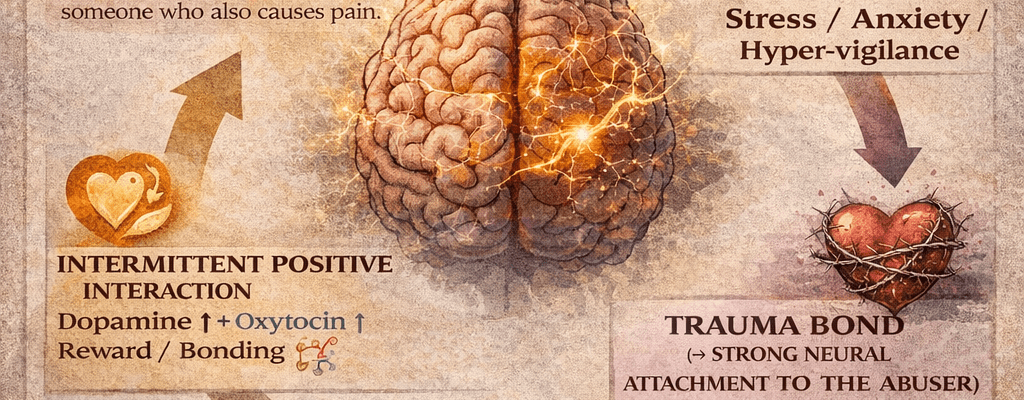
The “abuse cycle in the brain” is one of the most revealing ways neuroscience explains why survivors often stay in abusive relationships for years and why leaving can feel physically and emotionally painful, almost like withdrawal from an addiction.
Here’s the breakdown from a neuroscience perspective:
1. Dopamine – The Reward System
- During intermittent positive interactions (affection, apologies, or rare kindness), the brain releases dopamine, the “reward chemical.”
- Dopamine spikes create anticipation and craving, reinforcing the bond even if the overall relationship is harmful.
- The survivor’s brain learns to focus on small rewards and hope for them to return.
2. Cortisol – Chronic Stress
- Abusive interactions trigger cortisol, the stress hormone.
- Cortisol heightens vigilance, fear, and anxiety.
- Over time, the brain becomes hyper-alert, always scanning for danger.
- This contributes to emotional exhaustion but also keeps the survivor “attached” because their nervous system is constantly engaged.
3. Oxytocin – Bonding Hormone
- During rare moments of reconciliation or closeness, oxytocin is released.
- Oxytocin promotes trust and emotional bonding.
- Combined with dopamine, it creates a “trauma bond”, where the brain links emotional highs with the same person who causes pain.
4. Neural Pathways Reinforce the Cycle
- Positive spikes (dopamine + oxytocin) → reward pathways light up
- Negative spikes (cortisol, fear, stress) → threat pathways light up
- The brain creates strong associative circuits, where the abuser becomes both source of pain and relief.
- Leaving feels like withdrawal from both dopamine and oxytocin, which is why the nervous system reacts physically and emotionally.
5. The Addiction Analogy
This cycle mirrors addiction neuroscience:
- Intermittent reward + stress = compulsive seeking behavior
- The brain becomes conditioned to tolerate abuse for brief relief moments
- Breaking the bond requires neurochemical recalibration, which takes time and intentional healing.
Diagram: Abuse Cycle in the Brain
[Abusive Incident]
       ↓
Cortisol ↑ → Stress / Anxiety / Hyper-vigilance
       ↓
Intermittent Positive Interaction
       ↓
Dopamine ↑ + Oxytocin ↑ → Reward / Bonding
       ↓
Trauma Bond Strengthened
       ↓
Brain Craves Attachment Despite Danger
       ↓
Leaving = Withdrawal (Emotional + Physical)
       ↓
Healing Requires Rewiring Neural Circuits
💡 Key insight:
Even though leaving is the safest and healthiest choice, the survivor’s brain chemistry is still craving reward and emotional relief, which explains why it often feels so difficult to break free initially.
 Linda C J Turner | Trauma Therapist & Emotional Healing Specialist