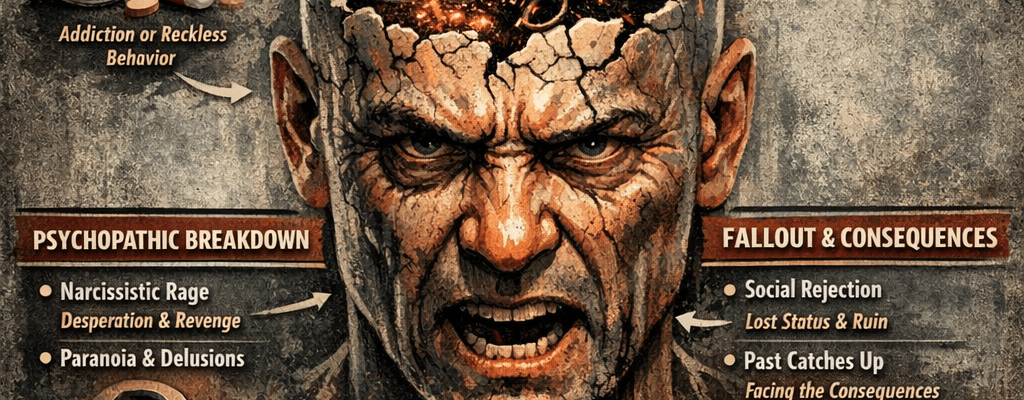
A clear, compassionate guide (psychology + neuroscience) for survivors and supporters
When a person with strong narcissistic traits finally loses the control, attention, or relationship they depended on, their reactions are often intense, confusing, and sometimes dangerous. Understanding the typical psychological and neurological patterns can help survivors protect themselves, anticipate behaviors, and begin to heal.
Why this moment matters
For many narcissistic personalities, their sense of self depends on external validation and control. When someone important to them — a partner, family member, employee, or friend — leaves, it isn’t merely a breakup of a relationship. It can feel like the collapse of the identity they built around domination, admiration, or influence. Their responses follow somewhat predictable psychological and brain-based pathways.
Stage 1 — Immediate denial and minimization
Typical behaviors: gaslighting, denial, rewriting events, promises to change.
Why it happens (psychologically): Admitting the loss would be an intolerable blow to their fragile self-image. Denial is the first defense: it buys time and sometimes entices the other person back.
What to watch for: dramatic apologies that sound rehearsed, sudden charm, insistence that the break is temporary, or promises of “proof” that everything is your fault.
Stage 2 — Narcissistic rage and attempts to punish
Typical behaviors: angry outbursts, threats, legal intimidation, smear campaigns, public shaming, sudden vindictive acts.
Why it happens (neuroscience): The amygdala and threat systems react as if the self is under attack; cortisol and adrenaline spike. The prefrontal cortex’s regulation can be weakened, producing impulsive, hostile responses. Rage serves two goals: to intimidate (regain control) and to restore wounded pride.
What to watch for: escalation after boundary-setting, attempts to provoke you publicly, or to damage your reputation or livelihood.
Stage 3 — Escalation into manipulation and recruitment
Typical behaviors: triangulation (reaching out to children, family, friends, co-workers), spinning partial truths to enlist allies, stalking or surveillance.
Why it happens: Losing someone publicly undermines the narrative of superiority. Recruiting others helps rebuild social proof and isolate the former partner or target.
What to watch for: sudden calls/messages to mutual contacts, attempts to turn others against you, or “leaks” of personal information.
Stage 4 — Smear campaigns and legal/financial weaponization
Typical behaviors: spreading lies online, false allegations, exploitative legal filings, withholding finances, contesting custody or assets.
Why it happens: Smear and legal tactics can appear justified to the narcissist (they believe they’re “setting the record straight”), and they may be willing to burn resources to win or punish.
What to watch for & do: preserve records (messages, emails), get legal advice early, avoid responding publicly, and keep interactions documented and minimal.
Stage 5 — Obsessive monitoring or attempts to regain control
Typical behaviors: persistent contact, spying, showing up at places you go, monitoring social media, proxy communications.
Why it happens: The brain’s reward loops (dopamine) can reinforce attempts to re-establish contact; obsession keeps the narcissist emotionally engaged even without consent.
What to watch for: repeat violations of boundaries. Strengthen digital privacy, change passwords, consider safety planning if behavior becomes threatening.
Stage 6 — Possible collapse, depression, or self-destructive behavior
Typical behaviors: withdrawal, despair, substance misuse, impulsive choices, or in some cases, attempts to self-harm (rare but possible in acute collapse).
Why it happens (neuroscience): when external sources of validation vanish, the fragile identity that depended on them can destabilize. Stress hormones remain high, and emotional regulation fails.
What to watch for: sudden changes in lifestyle, displays of deep shame or emptiness. These shifts can reduce outward hostility but may increase unpredictability.
Stage 7 — Long tail: ongoing manipulation vs. eventual adaptation
Two long-term paths commonly occur:
- Continued campaign: sustained attempts to control or punish (smear, legal harassment, intermittent contact).
- Slow adaptation: the person seeks new sources of supply (new relationships, rebranding) or — less commonly — therapy and genuine change.
For survivors: long-term safety planning and support are essential during the “long tail.”
Practical safety and recovery steps (for survivors)
- Prioritize safety first. If you ever feel threatened, contact local authorities or emergency services. Document threats and unwanted contacts.
- Document everything. Save texts, emails, social posts, voicemails, and witnesses’ names. Photographs and timestamps help if matters go legal.
- Limit contact. Use no-contact or minimal, strictly documented communication. Block where appropriate. Let third parties (lawyers, mediators) handle necessary exchanges.
- Secure your digital life. Change passwords, enable two-factor authentication, tighten privacy on social platforms, review location-sharing permissions.
- Get legal advice early. Even an initial consultation can clarify options and protect your rights (custody, finances, harassment protection).
- Build a support network. Trusted friends, family, and professionals reduce isolation — and narcissists often try to isolate targets.
- Therapy and trauma-informed care. Working with a therapist who understands narcissistic abuse or coercive control helps process trauma, rebuild boundaries, and restore identity.
- Self-care is not optional. Chronic stress affects your health. Good sleep, movement, grounding practices, and consistent therapy reduce cortisol and rebuild wellbeing.
How to help a loved one going through this
- Believe them and validate their experience. Isolation is common.
- Help them preserve evidence and accompany them to appointments if safe.
- Encourage professional support (legal and mental health).
- Avoid confronting the narcissist on their behalf in ways that escalate risk.
A note on change: can narcissists genuinely heal?
Some individuals with narcissistic traits can develop better self-awareness and healthier behavior with long-term, motivated therapy (e.g., schema therapy, psychodynamic approaches, DBT-informed work). Genuine change is rare and slow — and it requires the person to admit fault and engage consistently in deep work. Don’t base your safety or healing on the hope of their transformation.
Final, practical reassurance
Losing you may trigger dramatic, frightening, or confusing behaviors from a narcissistic person — but those reactions are driven by fear, shame, and the need to regain control. They are not a reflection of your worth or responsibility. Prioritize your safety, document the behavior, get support, and focus on rebuilding your life and identity away from the abuse.
 Linda C J Turner | Trauma Therapist & Emotional Healing Specialist