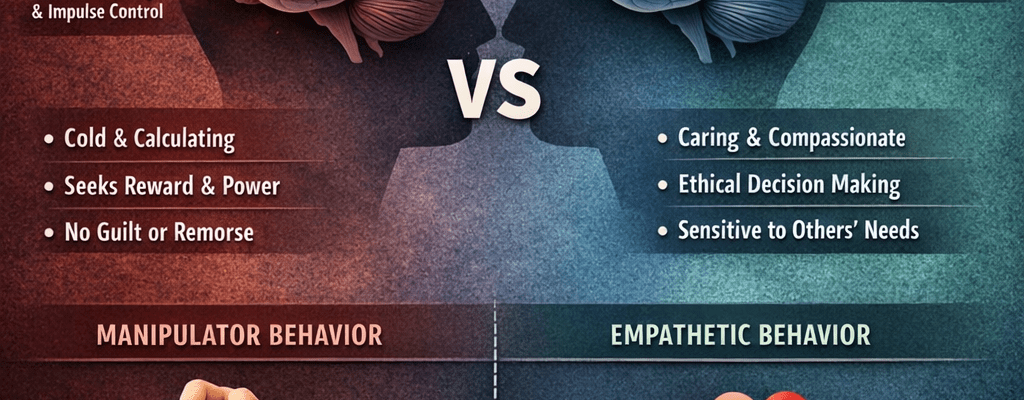
Sadly, some people in positions of trust—like certain legal professionals—exploit older relatives by pressuring them to sign documents or wills in their favor. Understanding how manipulative minds work can help families recognize and prevent these situations.
1. The Manipulator’s Brain
Neuroscience shows that manipulative individuals often have distinct brain patterns:
- Overactive Amygdala: Makes them hyper-alert to opportunities and weaknesses in others.
- Dysfunctional Prefrontal Cortex: Weak moral reasoning and poor impulse control allow them to exploit situations without remorse.
- Reward System Activation: Manipulating someone can trigger a dopamine “pleasure response,” reinforcing exploitative behavior.
Behavioral Patterns:
- Cold, calculating, and strategic
- Focused on personal gain or power
- Exploits vulnerabilities of elderly or dependent individuals
2. The Empathetic Brain
By contrast, empathetic individuals have:
- Balanced prefrontal cortex and amygdala activity, supporting moral reasoning and emotional regulation.
- A reward system activated by cooperation, kindness, and fairness.
Behavioral Patterns:
- Ethical and caring
- Supports and respects others’ autonomy
- Makes decisions that consider the needs of all parties
3. Red Flags for Families
Watch for signs that someone may be manipulating an older relative:
- Pressure to sign documents quickly
- Isolation from other family members or advisors
- Sudden changes in financial or legal arrangements
- Overly persuasive or charming behavior with hidden motives
4. Protective Strategies
- Stay Involved: Family members should remain informed about legal and financial matters.
- Independent Advice: Ensure the senior has access to impartial legal counsel.
- Documentation: Keep copies of all documents, communications, and transactions.
- Boundaries: Encourage the senior to delay signing anything they feel unsure about.
🔹 Key Takeaway
Understanding the neuroscience of manipulators helps families spot warning signs early. Combining awareness with vigilance and independent advice is the best defense against those who exploit trust and vulnerability.
 Linda C J Turner | Trauma Therapist & Emotional Healing Specialist