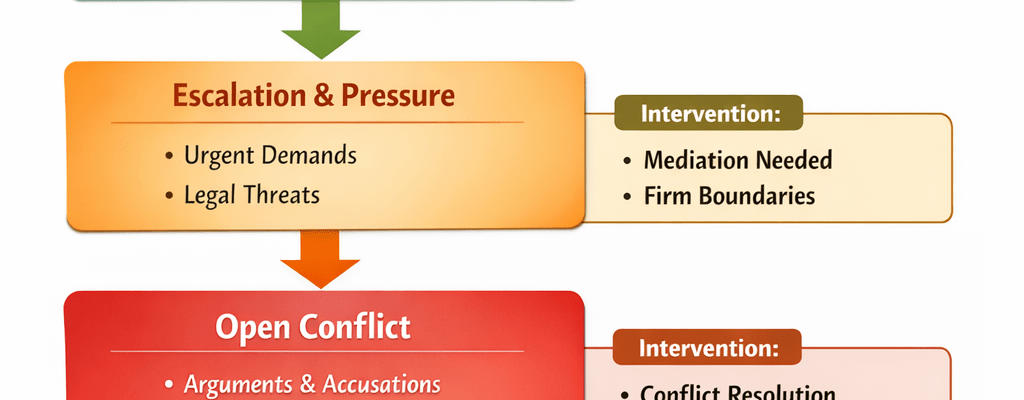
Stage 1: Awareness & Anxiety
- Trigger: News of inheritance or changes in will.
- Behavior: Subtle tension, whispering, overchecking legal info.
- Psychology: Fear of loss, early competitive thinking.
- Intervention: Stay calm, document communications, clarify facts.
↓
Stage 2: Strategic Maneuvering
- Trigger: Perceived threat to “their share.”
- Behavior: Forming alliances, lobbying relatives, subtle undermining, emotional appeals.
- Psychology: Zero-sum thinking; early manipulation.
- Intervention: Neutral third-party involvement, set clear communication rules.
↓
Stage 3: Escalation & Pressure
- Trigger: Stakes feel immediate.
- Behavior: Urgent messages, emotional blackmail, legal threats, dramatic claims.
- Psychology: Emotional dysregulation, fight-or-flight activation.
- Intervention: Mediation, firm boundaries, legal counsel if needed.
↓
Stage 4: Open Conflict
- Trigger: Everyone perceives scarcity; fear peaks.
- Behavior: Arguments, public accusations, legal disputes, overt manipulation.
- Psychology: Cognitive biases reinforce self-justification; aggression rises.
- Intervention: Structured negotiation, conflict resolution strategies, limit personal engagement.
↓
Stage 5: Aftermath & Long-Term Impact
- Behavior: Fractured relationships, lingering resentment, potential long-term family rifts.
- Psychology: Trust erosion; emotional fallout persists.
- Intervention: Family therapy, ongoing boundaries, and reconciliation only if safe.
💡 Key Takeaways:
- Early stages are subtle but predictive—catching behaviors early prevents escalation.
- Neutral parties are critical once pressure starts to mount.
- Emotional awareness + documentation + clear boundaries = most effective protection.
 Linda C J Turner | Trauma Therapist & Emotional Healing Specialist