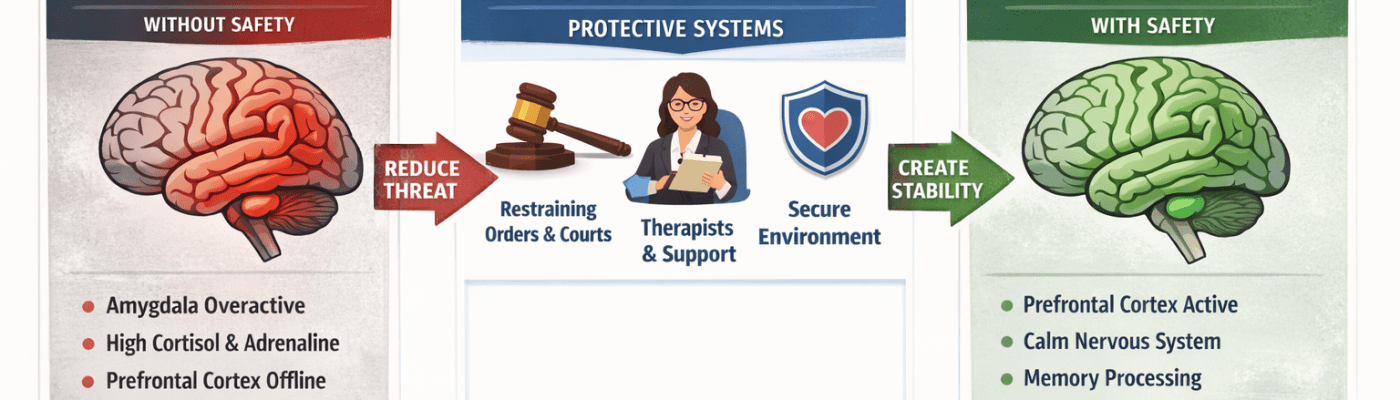
An extinction burst occurs when a learned cruel or controlling behaviour no longer produces the expected reward (reaction, submission, compliance).
Duration
| Phase | Typical Duration | Description |
|---|---|---|
| Initial Burst | Minutes → hours | Immediate spike in intensity after boundary is enforced or silence is introduced. |
| Secondary Burst | 1–3 days | Abuser may try repeated escalation, switching tactics or targets to restore reward. |
| Tertiary/Residual Burst | 1–2 weeks | Spasmodic attempts at control; behaviour is less coherent, more desperate. |
| Collapse / Extinction | Variable: weeks → months | Reward loop fails; behaviour stabilises or redirects; neurological exhaustion sets in. |
Note: Individual differences, age, and intensity of past reinforcement affect the timeline.
- Highly reinforced cruelty → longer bursts
- Older abuser / chronic pattern → slower collapse
⚠️ 2️⃣ How to Recognise When Danger is Highest
Danger is highest during the peak of the extinction burst, which usually occurs within the first hours to first few days after boundaries or silence are enforced.
Key Warning Signs
- Intensity spikes suddenly: shouting, threats, or rapid escalation
- Novel or unpredictable tactics: love-bombing, smearing, or legal intimidation
- Impulsivity increases: reckless messages, breaking rules, or violating boundaries
- Emotional dysregulation: rage, panic, frantic attempts to provoke a response
- Fixation: repeated calls, messages, or attempts to monitor your behavior
🧠 Neurological reason: The brain is in “reward-seeking panic,” trying to restore dopamine and control.
Rule of thumb:
The more desperate and erratic the behaviour, the closer to the neurological peak of danger.
✅ 3️⃣ Escalation-Response Checklist (Survivor-Focused)
This is a practical, actionable guide for protecting yourself during bursts of escalation.
Step 1: Recognise the Burst
- Identify sudden spikes in aggression, threats, or control attempts
- Note any pattern changes or escalation beyond usual behavior
Step 2: Remove Engagement
- Do not react verbally or emotionally
- Avoid arguments, explanations, or “justifying” your actions
- Silence is protective
Step 3: Enforce Physical and Emotional Boundaries
- Leave the immediate environment if possible
- Limit access to communications or social platforms
- Avoid prolonged exposure to the abuser
Step 4: Activate Support Systems
- Notify trusted friends, family, or security contacts
- Inform legal counsel or protection authorities if necessary
- Keep records of escalation (messages, emails, witnesses)
Step 5: Protect Evidence
- Document threats, harassment, or legal manipulations
- Keep secure copies of financial, communication, or legal records
- Log timing, context, and intensity of behaviour
Step 6: Stabilise Your Own Nervous System
- Grounding techniques (breathing, touch, movement)
- Mindfulness or short meditative practices
- Stepwise decompression before engaging in further decisions
Step 7: Monitor Duration
- Expect the peak to last minutes to hours
- Secondary bursts may occur over days, with residual activity for 1–2 weeks
- Maintain boundaries consistently until behaviour stabilises
🔑 Summary
- Extinction bursts are biologically predictable, not personal.
- Peak danger occurs immediately after reward removal and can last minutes → hours, with residual spikes.
- Silence + boundaries neutralise the reward, forcing neurological recalibration.
- Survivor safety depends on recognition, non-engagement, documentation, and support systems.
 Linda C J Turner | Trauma Therapist & Emotional Healing Specialist