Repetition Compulsion in Psychodynamic Therapy

Definition:Repetition compulsion is a concept introduced by Sigmund Freud in psychoanalytic theory. It refers to the tendency of individuals to repeat behaviors, situations, or relationships that mirror unresolved conflicts or traumatic experiences from the past, often unconsciously. How It Manifests Example:A person who grew up with inconsistent parental care may unconsciously seek partners who are emotionally unavailable,… Read More Repetition Compulsion in Psychodynamic Therapy

When Families Know About Abuse

One of the reasons many survivors don’t speak out sooner is simple:they already know they won’t be supported. In some families, the abuse isn’t a secret.It has been seen before.Hints have been dropped.Incidents have been witnessed, minimised, or quietly explained away. Instead of intervening, the family: This silence isn’t neutral.It’s a choice. Why This Keeps… Read More When Families Know About Abuse

When Families Know About Abuse — and Choose Silence

One of the reasons many survivors don’t speak out sooner is simple:they already know they won’t be supported. In some families, the abuse isn’t a secret.It has been seen before.Hints have been dropped.Incidents have been witnessed, minimised, or quietly explained away. Instead of intervening, the family: This silence isn’t neutral.It’s a choice. Why This Keeps… Read More When Families Know About Abuse — and Choose Silence

“This Isn’t New — It’s the Same Game in a Different Arena”Why Long-Term Mind Games Continue After Separation

When you’ve lived with decades of psychological manipulation, the most destabilising part isn’t the behaviour itself. It’s the moment you realise:This is just a continuation of the same pattern. Different setting.Different language.Same impact on your nervous system. That recognition is not bitterness.It’s pattern recognition. What Kind of Person Does This? From a trauma-informed and neuroscience perspective,… Read More “This Isn’t New — It’s the Same Game in a Different Arena”Why Long-Term Mind Games Continue After Separation

When Divorce Becomes a Control Strategy: A Neuroscience Perspective

What happens when you file for divorce in 2024 and the other person says “no”?What happens when your solicitor receives no response for months?When you try to sell the house, put forward offers, and hear nothing?When “For Sale” signs are quietly removed in the night?And then—one year later—you are accused, sued, or taken to court… Read More When Divorce Becomes a Control Strategy: A Neuroscience Perspective

🧠 Why a Psychologist’s Shock Is Neurologically Significant

When a trained psychologist is visibly shocked, it tells you something important about the severity and objectivity of what you endured. This is not about validation through emotion. It’s about clinical reality breaking through professional neutrality. 🧠 Why a Psychologist’s Shock Is Neurologically Significant Psychologists are trained to: So when their face gives it away, something unusual is happening at a… Read More 🧠 Why a Psychologist’s Shock Is Neurologically Significant

Aggressive Communication

What Those Statements Actually Are Examples: These are NOT: These ARE: Why This Is Not Just “Unfiltered Honesty” 1. They Target Identity, Not Behavior Unfiltered honesty can still focus on actions: “This task wasn’t completed.” Your examples focus on who the person is: 📍 The brain experiences this as a social threat, activating the same neural pathways as physical danger. 2.… Read More Aggressive Communication

Why family members often enable abuse

This is a crucial piece of the picture — and one that causes survivors enormous secondary harm. Psychology and neuroscience explain family enabling very clearly. 1. Threat to the family identity Families function as identity systems, not just groups of individuals. When abuse is acknowledged, it threatens: The brain treats this as an existential threat, activating the amygdala. Under… Read More Why family members often enable abuse

Do abusers ever look outside the box and imagine it happening to their own loved ones?

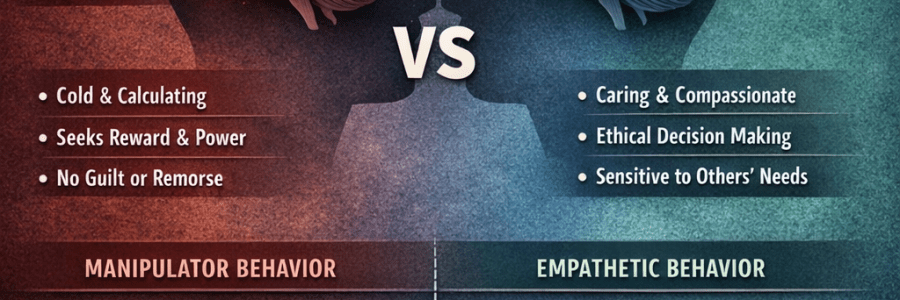
Most do not — and when they do, it is usually abstract, not empathic. 1. Empathy is compartmentalised, not absent Contrary to popular belief, many abusers are not “emotionless.” They can show selective empathy — especially toward people they identify with or feel ownership over (their mother, daughter, family name). Neuroscience shows this as compartmentalisation in the brain: So… Read More Do abusers ever look outside the box and imagine it happening to their own loved ones?