Freedom After Decades of Abuse: The Neuroscience of Choice and Self-Determination

IntroductionSurvivors of long-term abuse often experience a profound psychological weight. Decades of emotional, physical, or relational trauma can shape not only beliefs and behaviors but also neural architecture. Emerging from such a context into a space of autonomy—symbolized here by “having no ring on your finger”—can trigger complex emotional, cognitive, and neurobiological responses. Psychological Perspective… Read More Freedom After Decades of Abuse: The Neuroscience of Choice and Self-Determination

Minimization and Denial by Family Members

Common psychological phenomenon in families of abuse survivors, and it has both neuroscientific and social-psychological dimensions. Here’s a clear breakdown: 1. Minimization and Denial by Family Members Even if there’s a documented history of serious abuse (e.g., previous wife harmed), they may ignore or dismiss it because acknowledging it would require action or confronting uncomfortable truths.… Read More Minimization and Denial by Family Members

Neuroscience of EMDR and Somatic Therapies in Trauma Recovery

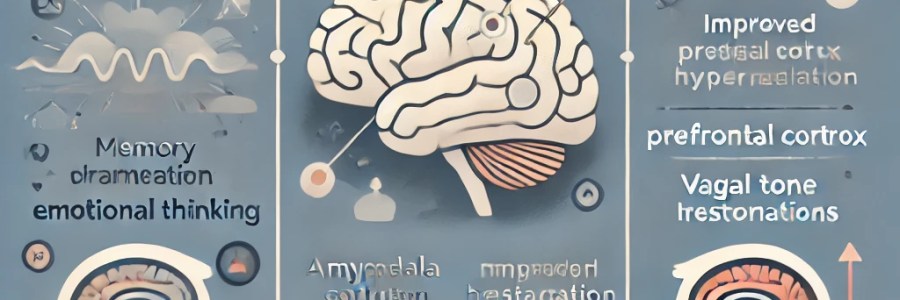
How EMDR and Somatic Therapies Facilitate Neural Recalibration Trauma leaves lasting imprints on neural circuits responsible for threat detection, emotional regulation, and self-reference. EMDR (Eye Movement Desensitization and Reprocessing) and somatic therapies (body-focused approaches) specifically target these disrupted networks, promoting neuroplasticity and functional recovery. 1. EMDR: Processing Trauma Through Bilateral Stimulation Mechanism: Neuroscience effects: Clinical… Read More Neuroscience of EMDR and Somatic Therapies in Trauma Recovery

What Long-Term Abuse Does to the Brain: My Story, My Proof, My Healing

(by Linda C J Turner) Most people think abuse leaves only emotional scars.They have no idea it physically reshapes the brain. Twelve years ago, an MRI scan showed hippocampal shrinkage — the part of the brain responsible for memory, emotional processing, and learning.My doctor in France pointed it out clearly:a visible sign of long-term trauma. At the time, I… Read More What Long-Term Abuse Does to the Brain: My Story, My Proof, My Healing

When Trauma Makes Us Misread People: Relearning Trust and Choosing Safe Company

Trauma changes the way we interpret the world. It alters our nervous system, sharpens our senses, and teaches us to scan for danger even when none exists. But paradoxically, trauma can also make us misread situations, trust too quickly, or cling to the first sign of kindness we see. If you’ve ever felt like you… Read More When Trauma Makes Us Misread People: Relearning Trust and Choosing Safe Company

Breaking Free From Trauma Bonds: Why Complete Removal Is Essential — and How Our Trauma Centre Can Help

When you’re trapped in a toxic or abusive relationship, it often feels impossible to leave — even when the situation is harming you emotionally, mentally, and physically.This isn’t weakness.This is neurobiology. Trauma bonds are powerful, invisible chains that tie you to someone who hurts you. They form when cycles of fear, manipulation, unpredictability, and intermittent “kindness” cause your… Read More Breaking Free From Trauma Bonds: Why Complete Removal Is Essential — and How Our Trauma Centre Can Help

Recalibrating at Your Own Pace: Why “Just Move On” Is the Worst Advice People Give After Abuse

One of the strangest things about healing from abuse is not the trauma itself — it’s the people around you who suddenly become experts on your life. “Just move on.”“You should be over it by now.”“You’ll be remarried in a year!”“Don’t let it bother you.”“Just forget it.” Just. Just. Just.As if healing were a light switch.As if… Read More Recalibrating at Your Own Pace: Why “Just Move On” Is the Worst Advice People Give After Abuse