1. Why abusers mistake silence for submission

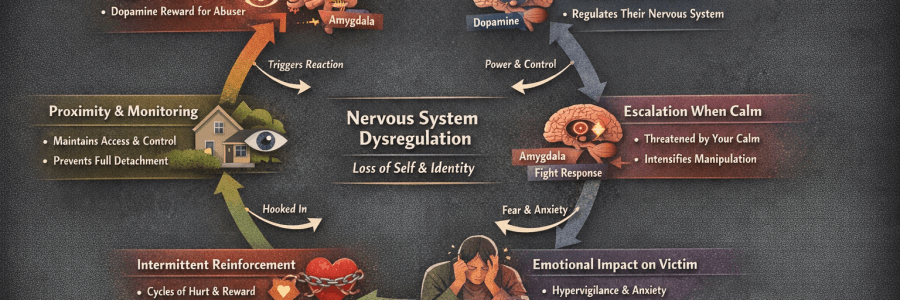
Abusers are trained by cause–effect feedback. Earlier in the relationship: So when silence appears, their brain runs an old rule: “Silence means it’s working.” But post-flip silence is not fear-based.It is attachment shutdown. The misread happens because: So they escalate to “wake you up”: When none of it works, panic sets in. What they feel as loss of controlyou are… Read More 1. Why abusers mistake silence for submission

The exact moment the survival exit flips

The “survival exit” does not flip during the worst abuse. It flips during clarity. That’s the part most people misunderstand. What happens before the flip Before the switch, the person is still in attachment mode, even if they are suffering. Neurologically, they are operating from: Their nervous system still believes: “This relationship is dangerous, but it is also necessary.” As long… Read More The exact moment the survival exit flips

Why coercive control always backfires in the end

Abuse, control, and manipulation are often used with one goal in mind:to stop someone from leaving. But biologically and psychologically, they do the opposite. They trigger survival escape, not attachment. The survival switch that cannot be controlled When a person is subjected to: their nervous system eventually stops trying to fix the relationship and switches to escape mode. At… Read More Why coercive control always backfires in the end

After the Exit: What Happens to Them — and What’s Returning to You

Leaving a coercive, exploitative relationship doesn’t just end proximity.It changes the entire neurological and psychological system that held the abuse in place. What follows explains five things that often emerge after separation — and why each one is a sign of recovery, not damage. 1. Why Abusers Unravel After Separation Abuse is not sustained by confidence — it is sustained… Read More After the Exit: What Happens to Them — and What’s Returning to You

🧠 WHY ABUSERS RUSH MARRIAGE AND RELOCATION

This pattern is so consistent that clinicians, domestic-abuse assessors, and family courts treat it as a major red flagrather than a coincidence. I’ll explain it cleanly and calmly, from both a psychological and neuroscience perspective. The short answer Because speed collapses your ability to evaluate, and distance collapses your ability to escape. Together, they lock control into place. 1. RUSHED MARRIAGE = LEGAL +… Read More 🧠 WHY ABUSERS RUSH MARRIAGE AND RELOCATION

Threat Detection

This manoeuvre has a name and a function. What this tactic is called It sits at the intersection of: In domestic-abuse and coercive-control literature, it’s often described as“restricting the victim’s social world to control the narrative.” What’s really happening psychologically When someone says something like: “I don’t think it’s a good idea for your sister-in-law… Read More Threat Detection

🧭 HOW TO EXIT FAST-INTIMACY GRACEFULLY

(Nervous system → behaviour → language → outcome) 1️⃣ FIRST: REGULATE BEFORE YOU SPEAK Fast intimacy triggers sympathetic arousal (urgency, pressure, obligation). Before responding: You’re signaling down-regulation. This alone often dissolves the dynamic. 2️⃣ NAME THE PACE — NOT THE PERSON Never say: These trigger shame and escalation. Instead, anchor in your nervous system. Gentle pacing language: Secure people… Read More 🧭 HOW TO EXIT FAST-INTIMACY GRACEFULLY

PACING INTIMACY SO MUTUALITY EMERGES

Here is a clear, practical map for pacing intimacy so mutuality has time to reveal itself, instead of intensity doing the work. This isn’t about holding back or playing games — it’s about letting two nervous systems rise together. 🧭 PACING INTIMACY SO MUTUALITY EMERGES (Nervous system → behaviour → outcome) 1️⃣ THE CORE PRINCIPLE (THIS MATTERS) Intimacy should… Read More PACING INTIMACY SO MUTUALITY EMERGES

🧠 TRAUMA BONDING vs 🧠 TRUE INTIMACY

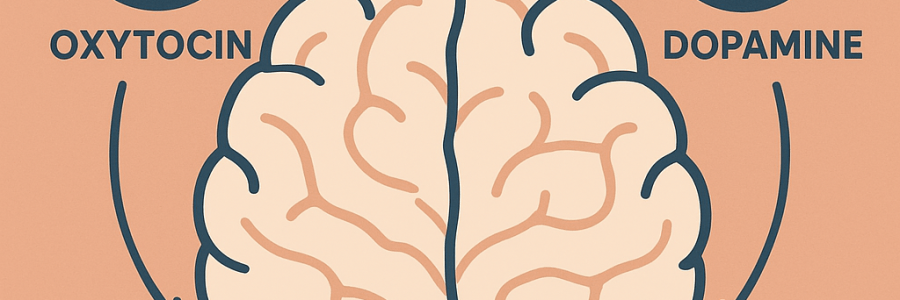
(Why fast feels deep — but isn’t) 1️⃣ THE NEUROCHEMISTRY TRICK 🧠 Trauma bonding brain This cocktail creates: Urgency + intensity + emotional fusion Your brain mistakes relief for connection. 🧠 True intimacy brain This creates: Safety + curiosity + gradual trust It feels calmer — sometimes even “boring” at first. 2️⃣ SPEED IS THE FIRST GIVEAWAY 🚩… Read More 🧠 TRAUMA BONDING vs 🧠 TRUE INTIMACY

HOW TO SPOT RECIPROCITY CAPACITY EARLY

Below is a clear framework for spotting reciprocity capacity early, before you give time, care, labour, money, or emotional energy. 🔍 HOW TO SPOT RECIPROCITY CAPACITY EARLY (Brain → behaviour → signal) 1️⃣ MICRO-RECIPROCITY TESTS (SAFE & LOW COST) These are tiny, neutral tests that reveal nervous-system wiring without confrontation. Example tests: 🧠 What’s happening neurologically: ✅ Reciprocity capacity looks… Read More HOW TO SPOT RECIPROCITY CAPACITY EARLY