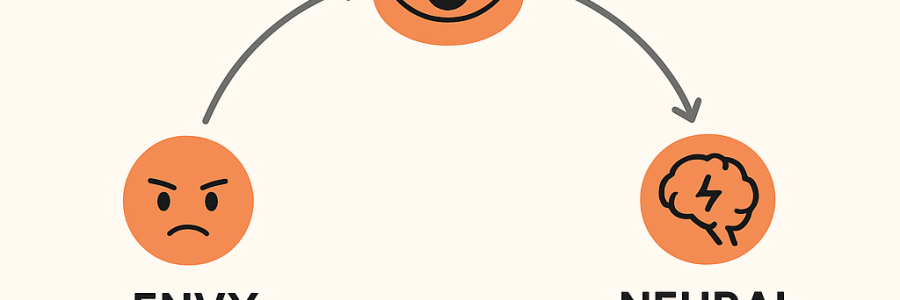
What “messing up” in trauma really is

When you’re traumatised, your nervous system is not choosing behaviour — it’s protecting you. So what looks like “wrecking the relationship” is often: None of this is character failure.It’s unhealed threat memory meeting intimacy. Why trauma sabotages something that matters Trauma does three things in relationships: 1. It mistakes closeness for danger When connection deepens, the body remembers:… Read More What “messing up” in trauma really is

1. Why abusers mistake silence for submission

Abusers are trained by cause–effect feedback. Earlier in the relationship: So when silence appears, their brain runs an old rule: “Silence means it’s working.” But post-flip silence is not fear-based.It is attachment shutdown. The misread happens because: So they escalate to “wake you up”: When none of it works, panic sets in. What they feel as loss of controlyou are… Read More 1. Why abusers mistake silence for submission

Safety Signals Are Undermined

When family members join in the abuse — sending threatening emails, insults, or manipulative messages — it creates a compound trauma effect. This goes far beyond emotional pain: it directly affects the nervous system, memory processing, and psychological recovery. Here’s a neuroscience- and psychology-informed breakdown. 1️⃣ Safety Signals Are Undermined Normal function: Family is usually the “safe base” for emotional… Read More Safety Signals Are Undermined

Safety is the soil of healing

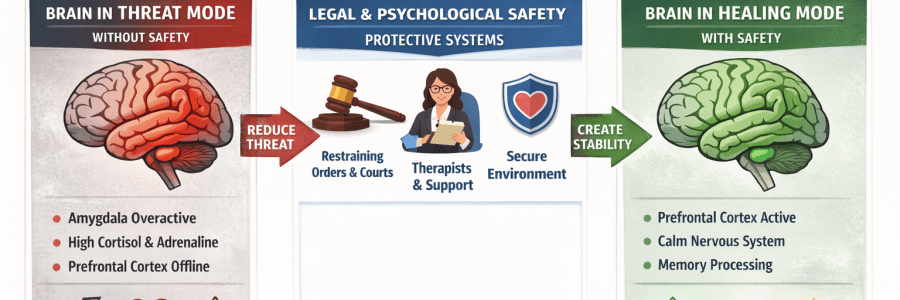
When someone continuously breaks a restraining order, it’s not just a legal violation — it’s a direct assault on the nervous system, and it profoundly affects trauma recovery. I’ll break it down using neuroscience and psychology, step by step. 1️⃣ SAFETY SIGNALS ARE DESTROYED Neuroscience Impact: The nervous system never settles, so healing pauses or reverses. 2️⃣ TRAUMA MEMORY REMAINS… Read More Safety is the soil of healing

Why Attention Drops When Survivors Begin to Heal

Trauma Recovery, Post-Abuse Dynamics & the Nervous System For people who have lived through long-term abuse, the shift you’re noticing is not just social — it’s neurobiological and relational. When you were in survival mode, your nervous system, identity, and relationships were organized around threat, appeasement, and endurance. As you heal, that entire structure changes. And not everyone… Read More Why Attention Drops When Survivors Begin to Heal

Minimization and Denial by Family Members

Common psychological phenomenon in families of abuse survivors, and it has both neuroscientific and social-psychological dimensions. Here’s a clear breakdown: 1. Minimization and Denial by Family Members Even if there’s a documented history of serious abuse (e.g., previous wife harmed), they may ignore or dismiss it because acknowledging it would require action or confronting uncomfortable truths.… Read More Minimization and Denial by Family Members

Understanding High DASH Scores and MARAC High-Risk Classification

1. What the Scores Indicate 2. Neuroscience Perspective 3. Psychological Perspective 4. Implications for Safety and Intervention Key Takeaway: A DASH score of 21/27 and high-risk MARAC classification reflects serious, multi-faceted risk. Neuroscience shows that victims’ brains are in a chronic stress state, while perpetrators are neurologically and psychologically primed for escalation. Immediate, coordinated intervention is essential to… Read More Understanding High DASH Scores and MARAC High-Risk Classification