Sexual Compatibility vs. Emotional Compatibility Matrix
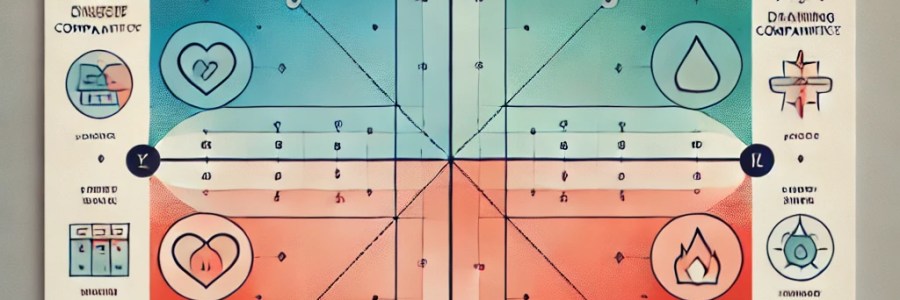
Axes 📊 The 4 Quadrants 🟥 Quadrant 1 — LOW Emotional / LOW Sexual Compatibility “The Draining Relationship” Characteristics Psychology Long-term outcome:❌ Not sustainable. This is where people feel trapped, invisible, or chronically unhappy. 🟧 Quadrant 2 — LOW Emotional / HIGH Sexual Compatibility “The Chemistry Trap” Characteristics Psychology Long-term outcome:⚠️ High drama, low stability.Great… Read More Sexual Compatibility vs. Emotional Compatibility Matrix
Neuroscience Behind Reduced Mirror-Neuron Activity (Expanded)

Reduced mirror-neuron activation doesn’t mean someone is “bad” — it means their brain processes emotional signals differently.Below is a fuller breakdown of how this happens and why. 1. Avoidant Attachment Styles People with avoidant attachment learned early that emotional closeness felt unsafe or overwhelming. Brain mechanisms: Behavioural effects: Avoidance is a protective reflex, not a conscious decision.… Read More Neuroscience Behind Reduced Mirror-Neuron Activity (Expanded)

Mirror Neuron System & Empathy: Why Some People Don’t “Feel” What You Feel

What Are Mirror Neurons? Mirror neurons are brain cells that activate both when you perform an action and when you observe someone else doing it.They also activate when you see: This system helps your brain simulate what another person is experiencing. In simple terms:Mirror neurons are the foundation of natural, automatic empathy. When Mirror Neuron Activity Is Reduced People with reduced… Read More Mirror Neuron System & Empathy: Why Some People Don’t “Feel” What You Feel

The Hidden Nature of Perpetrators

1. The “Mask of Normalcy” This is sometimes called “the façade of normalcy”, which conceals abusive behaviours behind closed doors. 2. Why People Don’t Believe It 3. Psychological Tactics That Hide Abuse 4. Neuroscience and Behavioural Explanation 5. Implications Summary Many perpetrators appear normal, competent, and likable externally while engaging in severe abuse in private. Cognitive… Read More The Hidden Nature of Perpetrators

Neuroscience and Psychology Behind “Walls” and Letting Go

1. The Closed-Off Partner – Emotional Walls 2. The Persistent Partner – Reaching Out 3. Letting Go – Choosing Yourself 4. Emotional Freedom 5. Love Needs a Home, Not a Fortress Summary When someone “won’t let you in,” their behaviour is often: Letting go is not failure — it is a conscious, adaptive choice to protect your… Read More Neuroscience and Psychology Behind “Walls” and Letting Go

Psychological Profile of This Behaviour (Property Damage After Disputes)

This pattern of behaviour — demanding entitlement to an asset and then the asset being vandalised soon after — aligns with psychological traits commonly observed in coercive control, retaliatory aggression, and entitlement-based conflict. Individuals who engage in this pattern typically show high sensitivity to perceived loss, rejection, or humiliation, which triggers a disproportionate emotional reaction. When they… Read More Psychological Profile of This Behaviour (Property Damage After Disputes)

Why Someone Demands “Half the Car” and Then the Car Gets Vandalised Twice

When an ex-partner insists they are entitled to “half the car,” and soon after the car is keyed, damaged, repaired, and then keyed again within days, that pattern is not a coincidence.In coercive or abusive dynamics, this behaviour is often a form of retaliation, property intimidation, and psychological punishment. Below is the breakdown. 1. Retaliation for Losing Control… Read More Why Someone Demands “Half the Car” and Then the Car Gets Vandalised Twice

Observed Behaviours / Patterns

Example of Observed Behaviours / Patterns Behaviour Description Psychological Impact / Interpretation Threats regarding property and assets Lawyer communicated 65/35 split and potential full property claim if agreement not signed. Activates amygdala fear response, cortisol release, and loss-aversion bias, impairing rational decision-making. Demand to withdraw complaints/restraining orders Explicit request to dismiss prior legal protections. Induces moral conflict and prefrontal cortex… Read More Observed Behaviours / Patterns

NEUROSCIENCE OF “CONNECTION WITHOUT PROGRESSION”

1. The Dopamine–Oxytocin Trick: Emotional Bonding Without Action When someone checks in, calls, sends photos, or maintains friendly emotional contact, your brain releases: This creates a strong felt connection — even if nothing concrete happens. From their side, those same interactions give them enough emotional stimulation that their brain also feels: Result:Both people feel bonded…but neither brain… Read More NEUROSCIENCE OF “CONNECTION WITHOUT PROGRESSION”