When Relief Feels Like Love

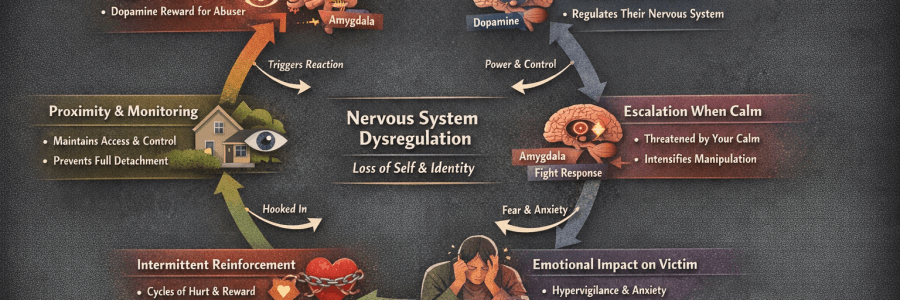
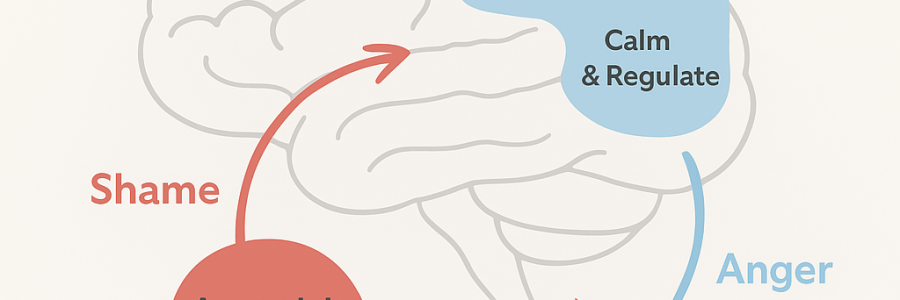
When you’ve experienced emotional neglect, betrayal, or manipulation, your body adapts before your mind does. Your attachment system—designed to seek safety and predictability—lowers its standards. What once counted as “basic decency” starts to feel like security. The nervous system quietly revises the rules. In this state, not being hurt can register as being loved. When someone is merely… Read More When Relief Feels Like Love

Why Chasing Non-Responsive Partners is Unhealthy: A Neuroscience Perspective

1. The Stress Response and Uncertainty Result: You feel anxious, obsessed, and caught in a loop — waiting for approval or contact. 2. Mirror Neurons and Emotional Empathy 3. The Reward System and Intermittent Reinforcement 4. Prefrontal Cortex vs. Emotional Hijacking 5. Cognitive Patterns That Maintain the Loop These cognitive patterns strengthen neural circuits tied to attachment… Read More Why Chasing Non-Responsive Partners is Unhealthy: A Neuroscience Perspective

Neurochemistry of Secure Couples

1. Key Brain Regions Region Role in Secure Attachment Activation Effects Amygdala Threat detection, fear response Downregulated → reduced anxiety, fear of abandonment Prefrontal Cortex Decision-making, emotional regulation Active → logical problem-solving, calm response to conflict Anterior Cingulate Cortex Social pain, empathy Regulated → enhances empathy, attunement Insula Interoception, emotional awareness Active → reads own… Read More Neurochemistry of Secure Couples

Neuroscience Behind Reduced Mirror-Neuron Activity (Expanded)

Reduced mirror-neuron activation doesn’t mean someone is “bad” — it means their brain processes emotional signals differently.Below is a fuller breakdown of how this happens and why. 1. Avoidant Attachment Styles People with avoidant attachment learned early that emotional closeness felt unsafe or overwhelming. Brain mechanisms: Behavioural effects: Avoidance is a protective reflex, not a conscious decision.… Read More Neuroscience Behind Reduced Mirror-Neuron Activity (Expanded)

Neuroscience Behind People Who Leave You Hanging

1. Avoidant Attachment & Threat Perception People who disappear, delay responses, or keep you waiting often have an avoidant attachment style.To them, closeness feels threatening — their amygdala (fear center) misinterprets emotional intimacy as loss of control or loss of independence. Brain mechanism: So the silence or unpredictability is not deep thinking — it’s avoidance triggered by fear.… Read More Neuroscience Behind People Who Leave You Hanging

Neuroscience and Psychology Behind “Walls” and Letting Go

1. The Closed-Off Partner – Emotional Walls 2. The Persistent Partner – Reaching Out 3. Letting Go – Choosing Yourself 4. Emotional Freedom 5. Love Needs a Home, Not a Fortress Summary When someone “won’t let you in,” their behaviour is often: Letting go is not failure — it is a conscious, adaptive choice to protect your… Read More Neuroscience and Psychology Behind “Walls” and Letting Go

Coercive Legal Tactics: Neuroscience & Psychology

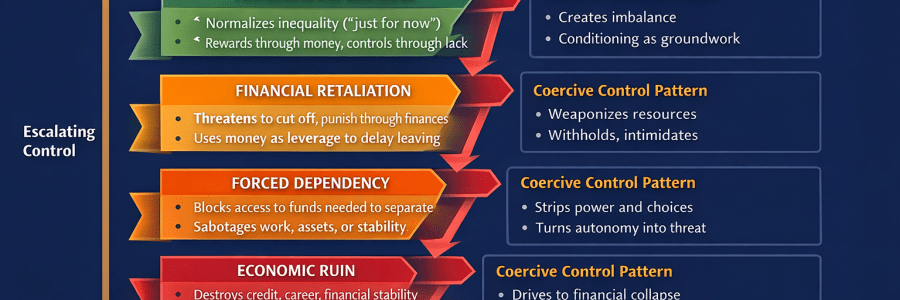
Let’s unpack this. 1. Coercive Control: Psychological Mechanism Definition:Coercive control is a pattern of behaviour intended to dominate, intimidate, and control another person. It can be subtle (manipulation, threats) or overt (legal or physical threats). Mechanisms at play here: 2. Legal Threats as Psychological Weapons 3. Why People Fall Into Pressure Traps From a neuroscience… Read More Coercive Legal Tactics: Neuroscience & Psychology

Why Highly Trusting People Are the Way They Are — Neuroscience Perspective

1. Your Brain Is Wired for Warmth, Not Suspicion Many trusting individuals have stronger activity in neural systems associated with: ⭐ Ventromedial Prefrontal Cortex (vmPFC) Responsible for: This creates a natural optimistic bias, making you more likely to assume honesty, kindness, and goodwill. ⭐ Oxytocin System You also tend to produce more oxytocin — the bonding… Read More Why Highly Trusting People Are the Way They Are — Neuroscience Perspective