🧠 1. What happens in the brain (neuroscience perspective)
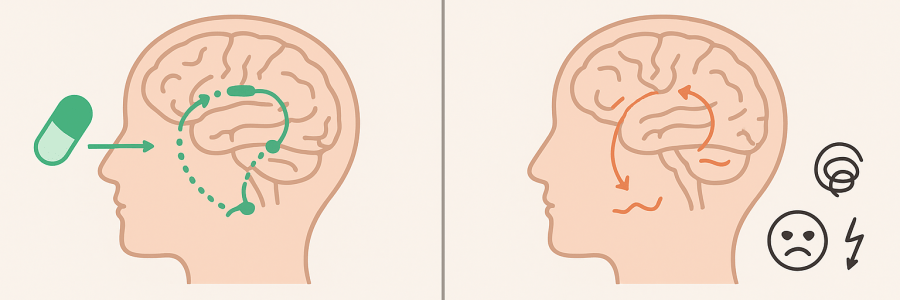
Antipsychotic medication (used for conditions like schizophrenia, schizoaffective disorder, or severe bipolar disorder) works by regulating dopamine and sometimes serotonin activity in key brain circuits — especially those involving: When you’ve been on these medications for years, your brain adapts to their presence: So, if someone suddenly stops taking the medication, the brain’s chemistry rebounds — dopamine activity can spike unpredictably.This “dopamine… Read More 🧠 1. What happens in the brain (neuroscience perspective)

Moral Equilibrium and the Brain: Regret, Empathy, and Compassion

Moral equilibrium is the inner drive to restore balance when someone feels that actions or decisions have violated their own or societal moral standards. It’s the part of us that says, “I wish I had acted differently.” Psychological Perspective From a psychological standpoint, people often experience moral regret when they recognize that an opportunity to act with empathy… Read More Moral Equilibrium and the Brain: Regret, Empathy, and Compassion

Why they switch to insults — psychology

If intimidation (threats, legal bluster, looming consequences) doesn’t get the response the abuser wants, they often switch to insults and verbal abuse. Here’s a clear, short psychology + neuroscience explanation and practical guidance you can use. Why they switch to insults — psychology Why insults hurt — neuroscience (brief, cautious) Practical steps you can take

Defense Mechanisms

1. Compartmentalization 2. Cognitive Dissonance 3. Trauma and Family Dynamics 4. Emotional Blind Spots 5. Social and Moral Pressures In short: The mind and brain are remarkably capable of holding contradictions. Someone can care deeply about child welfare in society while being psychologically, emotionally, or neurologically “blind” to abuse in their own family. Fear, shame, loyalty, cognitive dissonance, trauma, and… Read More Defense Mechanisms

The Neuropsychology of Reclaiming Power: How Survivors Rebuild Confidence, Intuition, and Emotional Strength After Trauma

Trauma, whether from abuse, manipulation, or prolonged adversity, often leaves survivors feeling disempowered, hyper-vigilant, and emotionally fragmented. Neuroscience and psychology help explain why reclaiming personal power is both a complex and achievable process. 1. The Brain Under Trauma 2. Emotional Rebuilding 3. Reclaiming Confidence 4. Strengthening Intuition 5. Emotional Resilience 6. Practical Strategies for Reclaiming… Read More The Neuropsychology of Reclaiming Power: How Survivors Rebuild Confidence, Intuition, and Emotional Strength After Trauma

The Neuroscience of Redemption and Repair — For the Abused

When the truth finally surfaces and the mask of manipulation falls, the person who endured years — sometimes decades — of deceit and emotional abuse enters one of the most complex psychological phases: recovery. It’s not just emotional. It’s neurological.Your brain, after long exposure to manipulation, control, or fear, must literally rewire itself back to safety and… Read More The Neuroscience of Redemption and Repair — For the Abused

When the Lies Catch Up: The Neuroscience of a Life Built on Deception

For years, some people manage to live in a world of manipulation — lying, cheating, plotting — without apparent consequence. But the human brain is not designed to sustain deception forever. Eventually, the mind, the body, and reality itself begin to close in. 🧠 The Neuroscience: Stress, Fear, and ExposureChronic deceit activates the brain’s amygdala and prefrontal cortex,… Read More When the Lies Catch Up: The Neuroscience of a Life Built on Deception

Being the “Easy-Going One”: The Neuroscience of Over-Tolerating Bad Behavior

People often say, “You’re so understanding,” “You’re easy-going,” or “Nothing seems to bother you.”But sometimes, that calm exterior isn’t peace — it’s over-tolerance, a nervous system trained to keep the peace even when you’re hurting. 🧠 The Brain Behind Being “Laid-Back” When you grow up or live in environments where conflict feels unsafe, your brain learns to minimize tension to stay protected. This… Read More Being the “Easy-Going One”: The Neuroscience of Over-Tolerating Bad Behavior

🧠 Neuroscience of Rediscovery

Rediscovering yourself after years of being shaped by someone else’s influence. From a neuroscience and psychological perspective, what you’re describing is a genuine process of neural and emotional liberation — your brain is literally rewiring for autonomy, pleasure, and connection. Here’s how that works: 🧠 Neuroscience of Rediscovery 💬 Psychological Perspective 🌱 Simple Practices to Strengthen This Growth