How Abusive Fathers Impact Their Children and Grandchildren:

A Neuroscience & Epigenetics Explanation When a father is abusive — emotionally, physically, verbally, or psychologically — the damage does not stop with him. Modern neuroscience and epigenetics now confirm that trauma is inherited, not only through behaviour but also through biology. Children do not simply “grow out of it.”Generations absorb it. 1. The Child’s Brain… Read More How Abusive Fathers Impact Their Children and Grandchildren:

What Fathers Teach Their Sons When They Abuse Their Wives:

A Neuroscience Explanation of Intergenerational Harm** When a boy grows up watching his father mistreat, belittle, or abuse his mother, the lesson is not just emotional — it is neurological. His brain wires itself around what he witnesses every day. Neuroscience shows that children’s brains are shaped more by their environment than their genetics. So a father’s… Read More What Fathers Teach Their Sons When They Abuse Their Wives:

You Can’t Raise a Daughter While Disrespecting Women: The Neuroscience Behind It

A father can give the right warnings, speak the right words, and tell his daughter to “be careful of men,” but none of it can override the emotional blueprint she forms from watching how he treats women — especially her mother. Modern neuroscience and developmental psychology agree on one thing:children learn far more from the… Read More You Can’t Raise a Daughter While Disrespecting Women: The Neuroscience Behind It

What This Letter Really Means (plain, honest interpretation)

1. “Please don’t divorce me… let’s sort this out, just you and me” This is an attempt to isolate you— to keep lawyers, courts, or outside support away so he can regain influence over your decisions. When someone doesn’t want “anyone else involved,” it’s because outside people protect you, and they know it. 2. “You don’t need legal protection… Read More What This Letter Really Means (plain, honest interpretation)

Misattribution of Arousal: A Neuroscience Perspective

1. The Body Responds — Same Physiology for Fear and ExcitementWhen your body experiences intense situations — like standing on a high suspension bridge, skydiving, or even public speaking — your autonomic nervous system (ANS) kicks in: These are raw physiological signals, signaling arousal but not specifying its cause. The brain only knows “something intense is happening,” not… Read More Misattribution of Arousal: A Neuroscience Perspective

Reclaim Your Space — A Neuroscience & Psychological Perspective

When you remove the remnants of an abusive relationship and take control of your living space, you are doing much more than tidying up. You are engaging in a profound act of neurobiological and psychological self-reclamation. The space you inhabit directly interacts with your brain, body, and nervous system — influencing how safe, calm, and empowered… Read More Reclaim Your Space — A Neuroscience & Psychological Perspective

Letting Go!

Life has a strange way of opening up only when your nervous system stops running in survival mode.When you’re anxious, fearful, or desperate, your brain goes into threat response — fight, flight, or freeze.In that state, you can’t see clearly, you can’t choose calmly, and you can’t receive anything new.Your whole system is focused on protecting you,… Read More Letting Go!

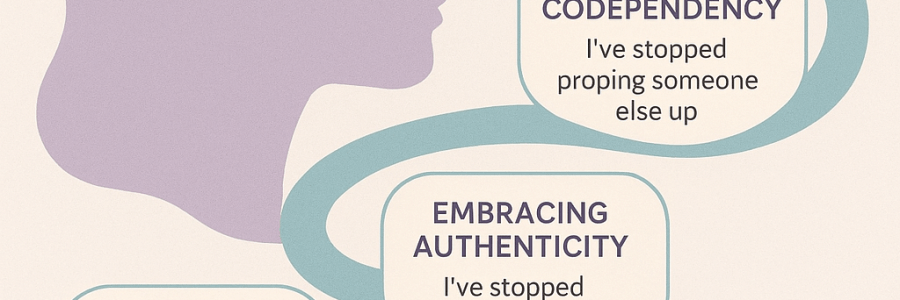
A Year of Freedom: What It Really Looks Like When You Finally Get Your Life Back

People say I’ve changed this past year.They say I look lighter… happier… me again.I didn’t understand what they meant at first — because when you’ve lived inside control for decades, freedom doesn’t feel like freedom.It feels like confusion.It feels like guilt.It feels like you’re doing something wrong. But this year, everything shifted. I shop now without panic… Read More A Year of Freedom: What It Really Looks Like When You Finally Get Your Life Back