Brain Structure & Neurobiology

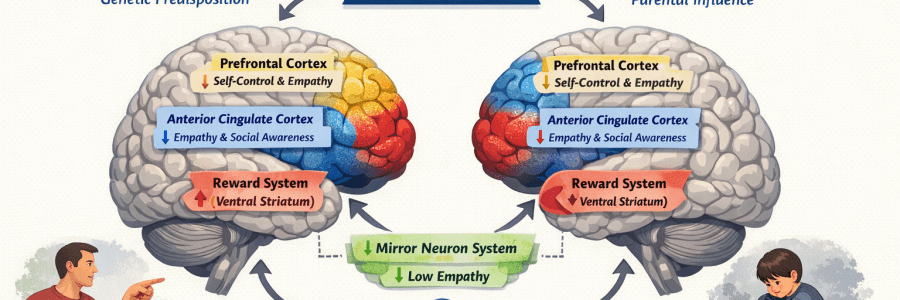
Prefrontal Cortex (PFC) Anterior Cingulate Cortex (ACC) Amygdala Reward System (Ventral Striatum / Nucleus Accumbens) 2️⃣ Psychology & Personality Factors Attachment & Early Environment Learned Behavior & Modeling Personality Traits 3️⃣ Epigenetics ✅ Key Takeaways In short: it’s a mix of biology, environment, early life experiences, and personality traits. The brain literally learns these patterns through repeated exposure and reinforcement.

 Social Learning & Mirror Neurons

The neuroscience of learned greed, manipulation, and dishonesty—basically, how teaching someone to take advantage of others can create a cycle where those behaviors get reflected back to you. Let’s break this down carefully: 1. Social Learning & Mirror Neurons 2. Reward System & Dopamine 3. Prefrontal Cortex & Moral Control 4. Empathy & Social Awareness 5. Karma-Like Reciprocity in the Brain… Read More  Social Learning & Mirror Neurons

Genetic and Heritable Factors

he neuroscience behind why a “Me, Me, Me” personality—self-centeredness or narcissistic traits—can appear to “run in the family.” Let’s break it down carefully: 1. Genetic and Heritable Factors 2. Brain Networks & Neurobiology 3. Environmental & Epigenetic Influences 4. The Neuroscience of “Running in the Family” ✅ Key Takeaway A “Me, Me, Me” pattern in families is usually:

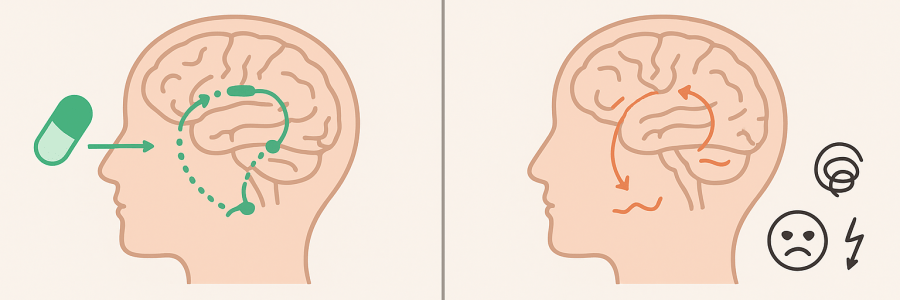
What Happens When Antipsychotic Medication Is Stopped Suddenly?

Stopping antipsychotic medication abruptly is medically risky.It can cause serious physical, psychological, and neurological effects. This is called antipsychotic withdrawal syndrome and rebound psychosis risk. 🧠 Why Sudden Stopping Is Dangerous Antipsychotic medications change brain chemistry over time, especially dopamine regulation. When stopped suddenly:👉 The brain cannot instantly rebalance👉 Dopamine activity rebounds sharply👉 This can cause severe symptom relapse or worsening 🚨 Possible… Read More What Happens When Antipsychotic Medication Is Stopped Suddenly?

Anxiety vs Paranoia vs Delusions vs Psychosis

(And why doctors ask about war zones / military service) 1️⃣ Anxiety Core emotion: Fear, worry, anticipation Anxiety is a heightened fear response to perceived threat — usually based on real-life stress or danger. Key features: Reality testing: ✅ IntactThe person knows their fear may be irrational but struggles to control it. Example:“I know I’m probably safe, but I can’t stop feeling… Read More Anxiety vs Paranoia vs Delusions vs Psychosis

🧠 Psychological Profiles of Family Manipulators

Family manipulators don’t look dangerous.They look helpful.They sound concerned.They present as responsible. But psychologically, their patterns are precise. Here are the most common profiles and behavioural traits: 1️⃣ The Strategic Controller (Machiavellian Profile) Highly calculated.Emotionally detached.Outcome-driven. Traits:• Plans several steps ahead• Collects information quietly• Controls access, narratives, and decisions• Uses people as instruments• Values power over connection Motto: “The ends… Read More 🧠 Psychological Profiles of Family Manipulators

How to Recognise Divide-and-Conquer Tactics Early

(When a relative “steps in to help” but quietly takes control) 🚩 Early Red Flags of Divide & Conquer Manipulation 1. One-way communication They position themselves as the only messenger. “Let me handle it.”“I’ll pass things on.”“It’s better if messages go through me.” This allows:→ Filtering→ Distortion→ Control of narrative 2. Selective information sharing Different people receive different versions of… Read More How to Recognise Divide-and-Conquer Tactics Early

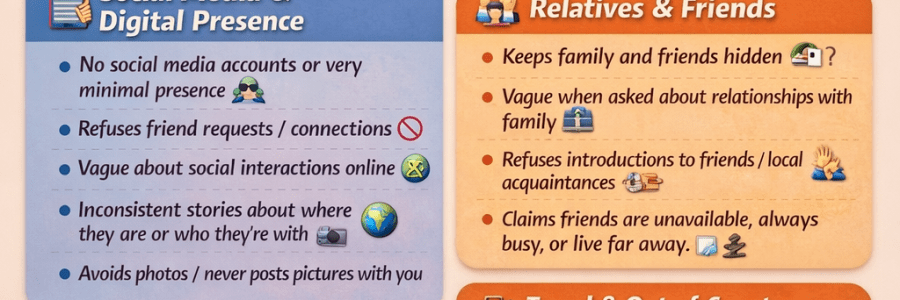
Red Flags Cheat Sheet: Secretive & Unavailable Partners

1️⃣ Lifestyle & Availability Pattern: Suggests avoidance of accountability and physical verification of their life. 2️⃣ Social Media & Digital Presence Pattern: Hides social footprint to avoid scrutiny and keep a secret identity. 3️⃣ Employment & Financial Transparency Pattern: May indicate financial instability or potential exploitation risk. 4️⃣ Relatives & Friends Pattern: Avoids accountability through isolation and secrecy. 5️⃣… Read More Red Flags Cheat Sheet: Secretive & Unavailable Partners

Ultimate Catfisher / Romance Scammer Phrase Bank

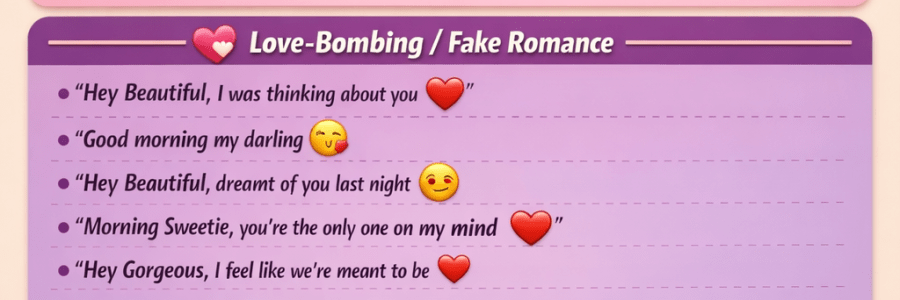
Here’s the ultimate Catfisher / Romance Scammer Phrase Bank: 100+ real-world examples scammers use before meeting anyone. I’ve organized them by type so you can instantly spot patterns in chats. 1️⃣ Overly Familiar / Pet Names Pattern: Instant intimacy before any real connection. 2️⃣ Love-Bombing / Fake Romance Pattern: Pushes emotional closeness fast. 3️⃣ Generic / Safe Compliments Pattern: Could be sent… Read More Ultimate Catfisher / Romance Scammer Phrase Bank