Secure Attachment: Benefits vs. Vulnerabilities

💚 The Benefits (These Are Very Strong) Secure attachment creates one of the most resilient emotional foundations a person can have. 1. Higher trust and healthy bonding Securely attached people: This makes relationships smoother, warmer, and more stable. 2. Better emotional regulation Their nervous system is less reactive.They can soothe themselves, communicate calmly, and repair… Read More Secure Attachment: Benefits vs. Vulnerabilities
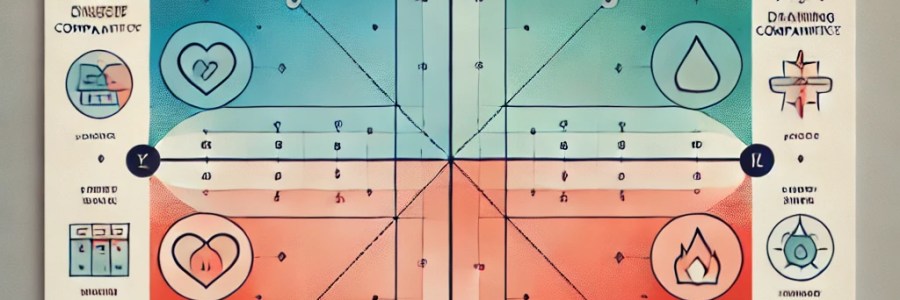
Sexual Compatibility vs. Emotional Compatibility Matrix

Axes 📊 The 4 Quadrants 🟥 Quadrant 1 — LOW Emotional / LOW Sexual Compatibility “The Draining Relationship” Characteristics Psychology Long-term outcome:❌ Not sustainable. This is where people feel trapped, invisible, or chronically unhappy. 🟧 Quadrant 2 — LOW Emotional / HIGH Sexual Compatibility “The Chemistry Trap” Characteristics Psychology Long-term outcome:⚠️ High drama, low stability.Great… Read More Sexual Compatibility vs. Emotional Compatibility Matrix

Mirror Neuron System & Empathy: Why Some People Don’t “Feel” What You Feel

What Are Mirror Neurons? Mirror neurons are brain cells that activate both when you perform an action and when you observe someone else doing it.They also activate when you see: This system helps your brain simulate what another person is experiencing. In simple terms:Mirror neurons are the foundation of natural, automatic empathy. When Mirror Neuron Activity Is Reduced People with reduced… Read More Mirror Neuron System & Empathy: Why Some People Don’t “Feel” What You Feel

NEUROSCIENCE OF “CONNECTION WITHOUT PROGRESSION”

1. The Dopamine–Oxytocin Trick: Emotional Bonding Without Action When someone checks in, calls, sends photos, or maintains friendly emotional contact, your brain releases: This creates a strong felt connection — even if nothing concrete happens. From their side, those same interactions give them enough emotional stimulation that their brain also feels: Result:Both people feel bonded…but neither brain… Read More NEUROSCIENCE OF “CONNECTION WITHOUT PROGRESSION”

Neuroscience Comparison Chart

Trusting Brain vs Manipulative Brain Neural Feature Trusting Brain Manipulative Brain (Dark-Triad Traits) Empathy Circuits (Anterior Insula, ACC) Highly active — can feel others’ emotions easily. Underactive — low resonance with others’ feelings; emotional detachment. Oxytocin Sensitivity Strong — bonding happens quickly; warmth feels natural. Low or strategically used — may mimic bonding to gain… Read More Neuroscience Comparison Chart

I Left My Abusive Husband Over a Year Ago — And Honestly, I’ve Never Had This Much Fun in Decades

Leaving an abusive man is a bit like taking off a pair of shoes that never fit:you don’t realise how much they were cutting off your circulation until your toes start dancing again. For years, I lived in a world where joy was rationed, laughter was suspicious, and fun was only allowed if it made… Read More I Left My Abusive Husband Over a Year Ago — And Honestly, I’ve Never Had This Much Fun in Decades

Self-Assessment Questions: Am I Co-Dependent?

Here’s a self-reflection guide with questions to help you assess whether you might exhibit co-dependent patterns. These are grounded in psychology and behavioral science. Answer honestly, in a non-judgmental way — this is for self-awareness, not diagnosis. Self-Assessment Questions: Am I Co-Dependent? 1. Relationship Dynamics 2. Emotional Regulation 3. Self-Identity and Self-Worth 4. Patterns in Relationships 5. Boundaries… Read More Self-Assessment Questions: Am I Co-Dependent?