Being in the here and now + trusting divine timing = emotional freedom.

When you shift into presence, your nervous system settles. The brain steps out of threat-mode, and your body finally feels safe. Neuroscience shows that mindful presence activates the prefrontal cortex and calms the amygdala, allowing clarity, peace, and emotional balance to return. And faith — whether spiritual, intuitive, or simply deep trust in life — gives meaning to… Read More Being in the here and now + trusting divine timing = emotional freedom.

Briefcase of Secrets

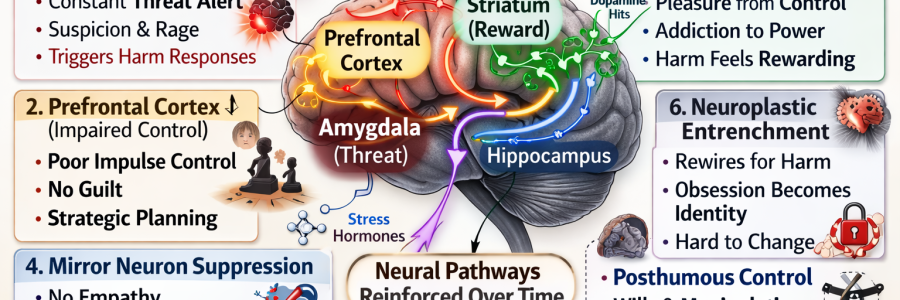
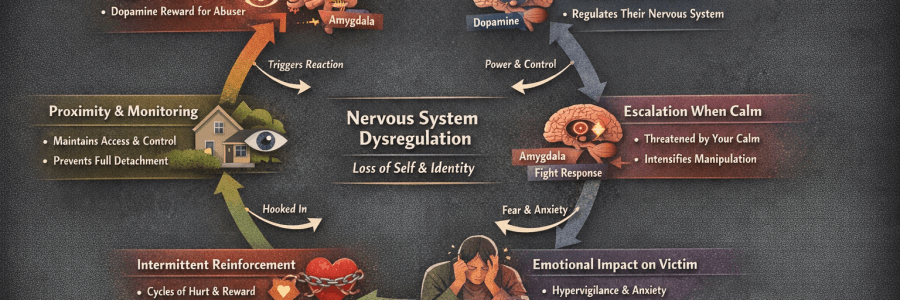
Neuroscience and psychology show that when someone spends decades “carrying a locked briefcase of secrets” — grudges, manipulations, resentments — their brain literally becomes wired to maintain it. It’s a heavy cognitive and emotional load: From a neuroscience perspective, the neural circuits for threat, control, and reward for manipulation strengthen over time, making it increasingly hard to “unlock… Read More Briefcase of Secrets

Neuroscience of a Lifelong Obsession with Harm

1. Hyperactive Threat Circuits 2. Prefrontal Cortex Dysfunction 3. Reinforced Reward Pathways 4. Mirror Neuron Suppression 5. Neuroplastic Entrenchment 6. Stress and Cortisol Loop 7. Death and Posthumous Influence 💡 Summary Insight:A person who obsesses over harming others develops a brain wired for control, vigilance, and manipulation. Empathy circuits weaken, reward pathways reinforce harm, and stress systems… Read More Neuroscience of a Lifelong Obsession with Harm

Aftermath & Long-Term Impact

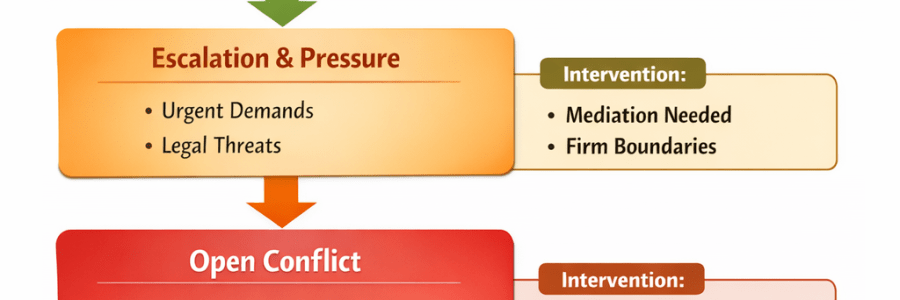
In inheritance or high-stakes family conflicts, people often follow a predictable escalation pattern. Understanding it helps you anticipate moves, protect yourself, and even de-escalate tension. 1. Initial Anxiety & Awareness 2. Strategic Maneuvering 3. Escalation & Pressure 4. Open Conflict 5. Aftermath & Long-Term Impact How to Anticipate or Manage These Behaviors Inheritance conflicts are… Read More Aftermath & Long-Term Impact

Psychological Regression

People become frantic, competitive, or even aggressive when they think an inheritance—or any significant reward—is slipping away. Psychologically, this taps into a few predictable human behaviors: These patterns are very common in family inheritance disputes. People literally “run and push” in figurative terms, sometimes even legally or financially, when they feel they might lose out.