🧠 When You Know What You Don’t Want:
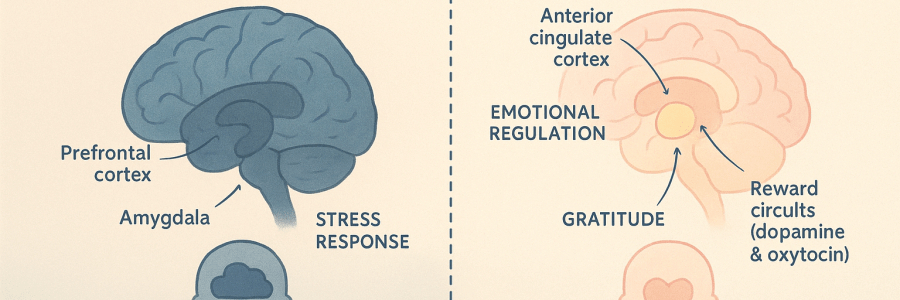
The Neuroscience of Rebuilding Direction and Desire There comes a time when you’re certain of what no longer fits — relationships, environments, or versions of yourself that feel constraining — yet you’re not quite sure what comes next.That in-between space can feel confusing or even empty. But from a psychological and neuroscientific perspective, it’s one… Read More 🧠 When You Know What You Don’t Want:

🧘‍♀️ The Power of Solitude: How Time Alone Rewires the Brain for Clarity and Authentic Living

In a world that constantly demands attention — partners, family, social media, work — time alone can feel uncomfortable, even wrong. Yet solitude is not loneliness; it’s the space where your true self recalibrates. Psychologically and neurologically, time alone is essential to understand who you are and what you truly want from life. 🧠 The Neuroscience… Read More 🧘‍♀️ The Power of Solitude: How Time Alone Rewires the Brain for Clarity and Authentic Living

🧠 Maintaining Your Lifestyle Without Compromising Your Self-Worth

The Psychology of Standards, Identity, and Financial Control There’s a profound difference between being spoilt and being cultured in quality.Some of us were raised to appreciate the finer things — not as excess, but as expressions of care, beauty, and dignity. When you grow up with standards, you’re not demanding; you’re maintaining a learned sense of what feels… Read More 🧠 Maintaining Your Lifestyle Without Compromising Your Self-Worth

Tactical Guide: Presenting a Psychologist’s Report in Court

1️⃣ Structure the Report Clearly Tip: Number each section and use headings — judges and lawyers appreciate clear navigation. 2️⃣ Focus on Objectivity 3️⃣ Evidence Points to Include Tip: Courts value multiple sources of evidence that reinforce the psychologist’s conclusions. 4️⃣ Anticipate Challenges 5️⃣ Presentation in Court 6️⃣ Protective Measures 7️⃣ Recommended Phrasing Techniques ✅ Key Takeaway: The strongest report is neutral,… Read More Tactical Guide: Presenting a Psychologist’s Report in Court

1️⃣ Understand the Purpose of the Report

A psychologist’s report can serve multiple functions in a divorce: Courts value objective, fact-based analysis over opinionated or emotional statements. 2️⃣ Work Closely With Your Lawyer 3️⃣ Focus on Objectivity Manipulative spouses often attack the credibility of psychological evidence. To counter this: 4️⃣ Document Manipulative Patterns 5️⃣ Anticipate Challenges Manipulative spouses may: To mitigate this: 6️⃣ Submission Process 7️⃣ Protect Yourself Psychologically High-conflict divorces can… Read More 1️⃣ Understand the Purpose of the Report

⚖️ Legal View (Court’s Perspective)

If a spouse is taking legal advice from a struck-off solicitor, this is not viewed favourably by the court. 🧠 Psychological View (Behavioural & Motivational Meaning) From a psychological and relational standpoint, this behaviour can signal several underlying patterns: 🧩 How Courts Integrate These Impressions Judges are not psychologists, but they do notice behaviour patterns.If a spouse repeatedly: the court may… Read More ⚖️ Legal View (Court’s Perspective)

A. Lawyer changes

When one partner in a Spanish divorce keeps changing lawyers and re-framing their story, it tends to have both legaland psychological layers. Here’s how it works and what you can do: ⚖️ 1. The Legal Side (Spain) A. Lawyer changes In Spain, a party may change their abogado (lawyer) or procurador (court representative) at any time.Each change must be formally notified to the court. It doesn’t stop… Read More A. Lawyer changes

⚖️ 1. Legal Perspective: Divorce Filings in Spain

✅ If you already filed first When one spouse files for divorce in Spain, that filing initiates the legal process — it becomes the active case.If your partner files a year later, the court generally will not open a new, separate case. Instead, the judge will usually: Spain’s legal system doesn’t allow two divorce cases for the same marriage to run simultaneously. The… Read More ⚖️ 1. Legal Perspective: Divorce Filings in Spain

When They Threaten You with Court to Control You

The psychology behind false defamation claims and emotional manipulation Sometimes, the people who shout the loudest about “defamation” are the very ones who’ve been spreading rumours themselves. When someone makes damaging or unkind comments about their own family and then threatens to take you to court for simply repeating or acknowledging them, it’s rarely about truth —… Read More When They Threaten You with Court to Control You

Weaponising “Defamation”: When Legal Threats Become Emotional Control

In high-conflict situations — especially around divorce, family disputes, or separation — it’s not unusual for one person to threaten “I’ll take you to court for defamation” when something unflattering or uncomfortable is said.But often, these threats aren’t about justice or truth. They’re about control, fear, and power. ⚖️ 1. The Legal Smoke Screen In genuine defamation cases, the… Read More Weaponising “Defamation”: When Legal Threats Become Emotional Control