The core principle

Therapy is for truth.Law is for proof.Public statements are for boundaries. You do not owe full truth to every arena. 1. What to keep THERAPEUTIC ONLY  These are essential for healing but usually not necessary or wise to share publicly or legally. Keep in therapy: 📌 Why: ✔️ You can show the messages to your psychologist❌ You don’t need to turn your pain into… Read More The core principle

Harassing someone with PTSD who is already dealing with domestic violence

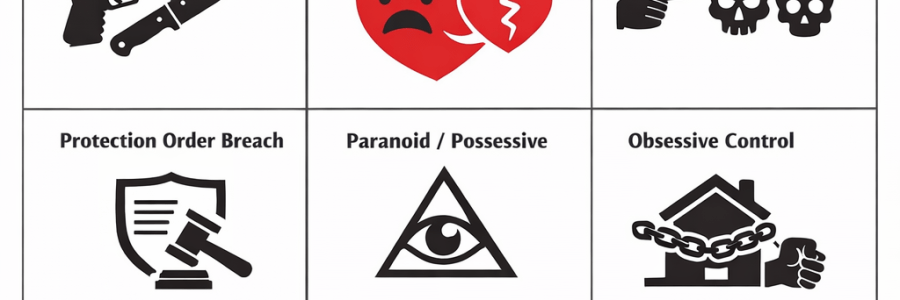
Plain truth Harassing a person who is known (or should reasonably be known) to have PTSD and is escaping or recovering from domestic violence is not “just harassment”.It is an aggravating form of psychological abuse. It compounds trauma and recreates the dynamics of coercive control. Why this is treated more seriously 1. Foreseeable harm When someone: …then continued harassment is… Read More Harassing someone with PTSD who is already dealing with domestic violence

Entitlement isn’t confidence gone wrong

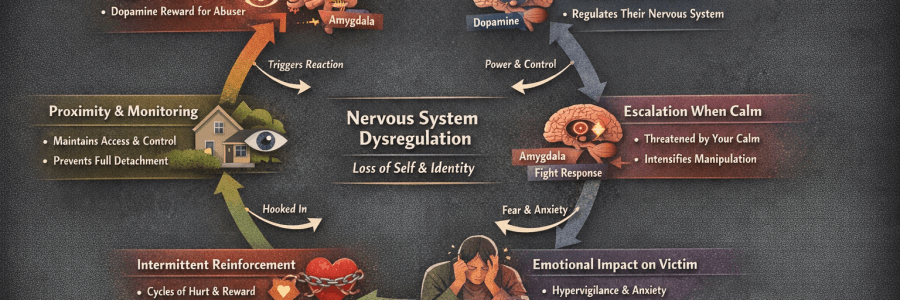
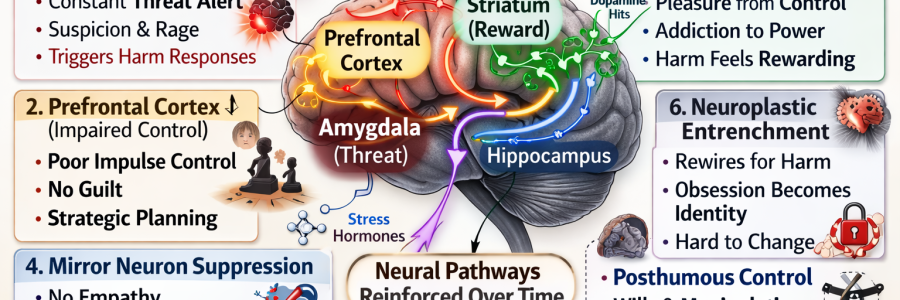
Entitlement isn’t confidence gone wrong — it’s powerlessness wrapped in dominance strategies. Here’s what’s happening under the hood, clinically and neurologically. 1. Core wound: unstable self-worth (developmental layer) Early experiences of: can leave the brain with a fragile self-model: “I’m not inherently secure or valued.” This lives largely in implicit memory (right hemisphere, limbic system), not conscious thought. So the… Read More Entitlement isn’t confidence gone wrong

The Neurophysiology of Trauma

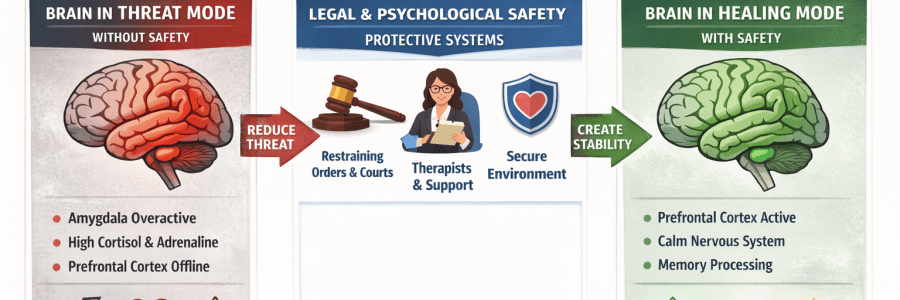
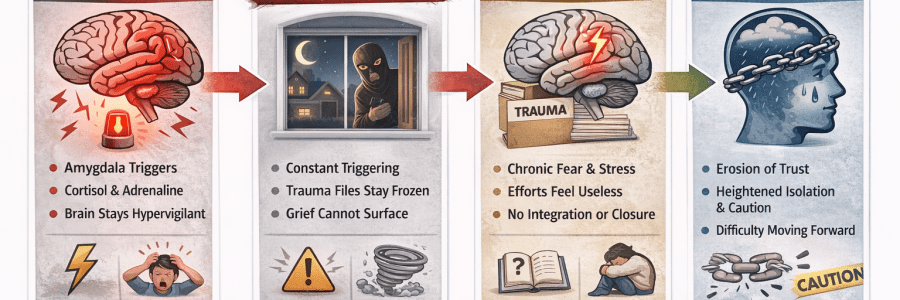
Trauma is not just psychological—it physically changes the brain and body. Key Brain Structures Involved Structure Role in Trauma Amygdala Detects threats; hyperactive in trauma → fear, hypervigilance, emotional reactivity Hippocampus Contextualizes memories; trauma can reduce volume → fragmented, intrusive memories Prefrontal Cortex (PFC) Executive function, emotional regulation; trauma → impaired top-down control Anterior Cingulate Cortex… Read More The Neurophysiology of Trauma

What Is Trauma‑Informed Care?

At its core, trauma‑informed care (TIC) means understanding how trauma affects a person’s brain, body, behaviour, and relationships — and using that understanding to shape how support is offered. Instead of asking: “What’s wrong with you?”A trauma‑informed approach asks:“What happened to you, and how can we help you feel safe?” This shift changes how people are seen,… Read More What Is Trauma‑Informed Care?

Grooming of minors

What it is:A deliberate process where an adult (or older youth) builds trust with a child to prepare them for sexual exploitation. How it happens: Key legal point:👉 Grooming itself is a crime, even before any sexual images, contact, or abuse occur. Intent matters, not whether the child “agreed” or understood. Sextortion of minors What it is:Using sexual images, videos, or messages… Read More Grooming of minors

Memory & Trauma Processing

Alcohol can have a profound and often counterproductive impact on trauma recovery, both neurologically and psychologically. Here’s a detailed breakdown: 1. Nervous System Impact Trauma leaves the nervous system hypervigilant. Alcohol: 2. Memory & Trauma Processing Essentially, alcohol blocks the brain from integrating the trauma safely. 3. Emotional Dysregulation 4. Interpersonal Impact 5. Risk of Re-traumatization 6. Why… Read More Memory & Trauma Processing

What “messing up” in trauma really is

When you’re traumatised, your nervous system is not choosing behaviour — it’s protecting you. So what looks like “wrecking the relationship” is often: None of this is character failure.It’s unhealed threat memory meeting intimacy. Why trauma sabotages something that matters Trauma does three things in relationships: 1. It mistakes closeness for danger When connection deepens, the body remembers:… Read More What “messing up” in trauma really is

Trauma Bonding vs Healthy Attraction

(How it feels in the body, mind, and nervous system) 🧠 Nervous System Trauma Bonding Healthy Attraction Key question:Do they regulate me — or do I regulate myself? ❤️ Emotional Experience Trauma Bonding Healthy Attraction Key question:Is this intensity or intimacy? 🧱 Boundaries Trauma Bonding Healthy Attraction Key question:Am I staying aligned with myself? 🔄… Read More Trauma Bonding vs Healthy Attraction

Mind and Body

Meeting someone new while you’re still in trauma doesn’t mean you’re “doing it wrong” — but it does shape the relationship in very specific ways, whether people realise it or not. Let’s break it down gently and honestly. What trauma does to connection (even with good people) When you’re still in trauma recovery, your nervous system… Read More Mind and Body