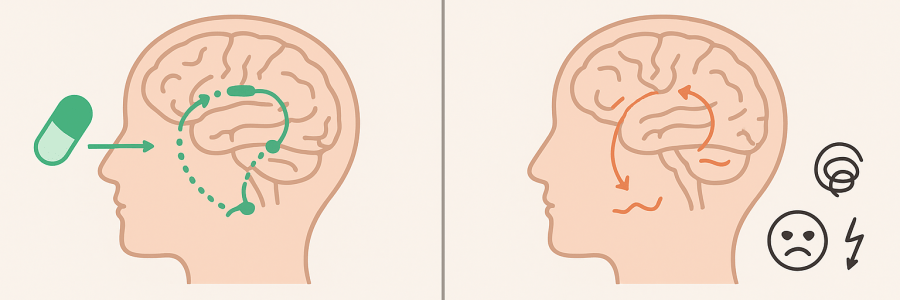
Why Whistleblowers Are Often Scapegoated

(Psychology, Neuroscience & Social Dynamics) 1. Whistleblowers Threaten the System — Not Just the Abuser In dysfunctional systems (families, workplaces, communities, institutions), the primary goal becomes preserving stability, not truth. When someone speaks out, they don’t just expose: They expose the entire system of silence that allowed it. This threatens: So the system unconsciously shifts from: “What… Read More Why Whistleblowers Are Often Scapegoated

Fear of Discovery

Wiped computers, locked phones, sudden security changes, and hidden documents are classic indicators of concealment. But neuroscience, psychology, and law all agree on this: Concealment ≠ proof of a specific crime.Concealment = behavioral red flag that requires professional investigation. What Those Behaviors Psychologically Indicate When someone suddenly: It usually signals fear of discovery. Psychologically, this reflects:… Read More Fear of Discovery

Understanding Grooming, Manipulation & Predatory Psychology

(Education = Prevention + Protection) 1) Warning Signs of Grooming Behavior Grooming is a gradual, strategic process designed to create trust, emotional dependence, secrecy, and compliance. Early Behavioral Signs: Later Stage Signs: Grooming always moves slowly, deliberately, and invisibly. 2) Psychological Profiles of Sexual Predators There is no single type, but several consistent psychological patterns appear. Core Traits: Common Psychological Types:… Read More Understanding Grooming, Manipulation & Predatory Psychology

Why Liars Fear Truth-Tellers

(Psychology + Neuroscience + Power Dynamics) At the core, truth-tellers threaten the psychological survival system of liars. Not their reputation.Not their image.Their identity. 1. Truth Exposes the False Self Many chronic liars do not simply lie about events —they live inside a constructed identity. They carefully build: Truth-tellers naturally see through inconsistencies. And this triggers ego collapse fear. If… Read More Why Liars Fear Truth-Tellers

When They Repeatedly Threaten to Replace You

The Neuroscience & Psychology of Power, Control, and Emotional Evasion When someone repeatedly says they will go abroad to “find someone who will do anything and everything for them,” discusses it openly with friends, searches flights and accommodation, and then denies it when confronted, this is not casual talk. This is psychological positioning. And neuroscience explains exactly… Read More When They Repeatedly Threaten to Replace You

The Psychology & Neuroscience of Love-Bombing

What it is, why it works, and what it often predicts Love-bombing is the rapid delivery of intense affection, attention, praise, promises, and emotional closeness early in a relationship. It feels intoxicating, validating, and deeply bonding. But neuroscience shows this isn’t accidental — it is neurochemical manipulation, whether conscious or unconscious. 1. Dopamine & Attachment Hijacking Love-bombing… Read More The Psychology & Neuroscience of Love-Bombing

Beware the Family Who Worships Image Over Integrity

A Neuroscience and Psychology Perspective Beware entering a family system that places image, status, and appearance above truth, ethics, and emotional responsibility. Because sooner or later, the very moral code they use to impress the outside world will be turned inward — and used against you. At first, such families can appear impressive.Successful. Respected. Polished.They… Read More Beware the Family Who Worships Image Over Integrity

When Accusation Becomes Confession: A Reflection on Projection, Power, and Truth

There is a particular kind of accusation that reveals more about the accuser than the accused.Especially when the charge is money-grabbing — delivered loudly, publicly, and without a shred of evidence — by someone whose own history contains proven financial crimes. This is not irony.This is psychology. When people point fingers, it is worth remembering the old… Read More When Accusation Becomes Confession: A Reflection on Projection, Power, and Truth

1) A Psychological Profile of Premeditated Abusers

Understanding the Psychology of Conscious Harm and Strategic Self-Protection Not all abuse is impulsive. Some abusers know exactly what they are doing. They are aware of their patterns.They recognise their cycles.They anticipate escalation.And instead of choosing healing, accountability, or change — they choose strategy. This is the psychology of premeditated abuse. 1. Core Psychological Traits Premeditated abusers typically… Read More 1) A Psychological Profile of Premeditated Abusers

The Cost of Living From the False Self

A Jungian & Trauma-Informed Perspective The false self is not a lie.It is a survival adaptation. It forms when authenticity feels unsafe — when belonging, attachment, approval, or protection require performance, compliance, emotional suppression, or self-erasure. In Jungian terms, this becomes the persona: the socially acceptable mask we wear to survive, adapt, and belong. In trauma… Read More The Cost of Living From the False Self