The Prefrontal Cortex: Impulse Control Breakdown
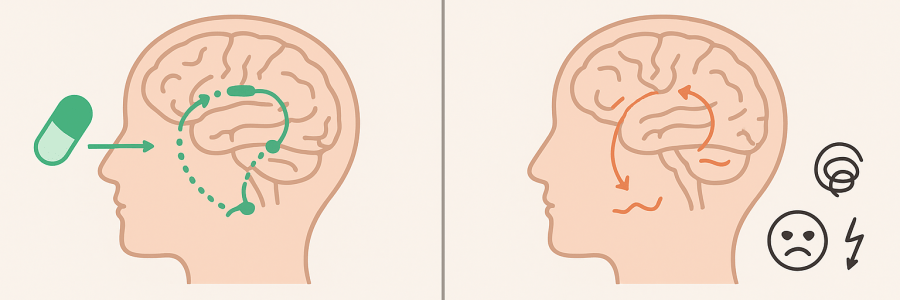
When someone repeatedly breaks a restraining order or keeps pursuing a victim despite the risk of arrest, they’re often driven by a combination of neurological dysfunction, emotional dysregulation, and learned behavior patterns — not simply “wanting punishment,” but an inability to regulate their impulses or tolerate loss of control. Let’s unpack what’s happening in their brain, step… Read More The Prefrontal Cortex: Impulse Control Breakdown

Love Has No Age: The Neuroscience of Living in the Moment

Yesterday, someone told me, “We’re too old for relationships.”Later that same day, another voice said the opposite — “It depends on where you are in your healing, and what feels right for you.” And that’s the truth: it always depends on where your heart and mind are in their journey. From a psychological view, healing reshapes the… Read More Love Has No Age: The Neuroscience of Living in the Moment

Why They Stay Close: The Psychology of Obsessive Proximity After a Breakup

Even after the relationship ends — after the messages, the threats, even a restraining order — some people still won’t go away.They linger nearby, rent close to your home, “coincidentally” appear in places they know you go, or find indirect ways to stay connected. It feels irrational. It is.But beneath the chaos, psychology and neuroscience reveal a… Read More Why They Stay Close: The Psychology of Obsessive Proximity After a Breakup

When Hate Replaces Love: The Psychology Behind an Ex Who Can’t Let Go

One year after a breakup — even after a restraining order — some people still can’t walk away.Their behavior moves beyond heartbreak into something darker: obsession, rage, and control.You can see it in their eyes — the love they once claimed has mutated into hate.But hate, in neuroscience, is just love turned toxic inside a dysregulated brain. 🧠 1.… Read More When Hate Replaces Love: The Psychology Behind an Ex Who Can’t Let Go

🧠 Understanding OCD: The Neuroscience and Psychology Behind It

Obsessive-Compulsive Disorder (OCD) isn’t about being “neat,” “organized,” or “a perfectionist.” It’s a complex neuropsychological condition involving intrusive thoughts (obsessions) and repetitive behaviors or mental rituals (compulsions) that people feel driven to perform in order to reduce anxiety or prevent something bad from happening. 🧩 The Brain Circuits Involved Modern neuroscience shows that OCD involves dysregulation in specific brain circuits, particularly… Read More 🧠 Understanding OCD: The Neuroscience and Psychology Behind It

One-sided or exploitative relationships

A classic pattern of one-sided or exploitative relationships, and both psychology and neuroscience give powerful insight into why these dynamics feel so draining and confusing. Here’s a breakdown that connects behaviour, brain science, and emotional impact 👇 ⚖️ 1. The Psychology of One-Sided Relationships People who make everything about what you can do for them often show traits linked to narcissistic or emotionally avoidant patterns:… Read More One-sided or exploitative relationships

Tactical Guide: Presenting a Psychologist’s Report in Court

1️⃣ Structure the Report Clearly Tip: Number each section and use headings — judges and lawyers appreciate clear navigation. 2️⃣ Focus on Objectivity 3️⃣ Evidence Points to Include Tip: Courts value multiple sources of evidence that reinforce the psychologist’s conclusions. 4️⃣ Anticipate Challenges 5️⃣ Presentation in Court 6️⃣ Protective Measures 7️⃣ Recommended Phrasing Techniques ✅ Key Takeaway: The strongest report is neutral,… Read More Tactical Guide: Presenting a Psychologist’s Report in Court

1️⃣ Understand the Purpose of the Report

A psychologist’s report can serve multiple functions in a divorce: Courts value objective, fact-based analysis over opinionated or emotional statements. 2️⃣ Work Closely With Your Lawyer 3️⃣ Focus on Objectivity Manipulative spouses often attack the credibility of psychological evidence. To counter this: 4️⃣ Document Manipulative Patterns 5️⃣ Anticipate Challenges Manipulative spouses may: To mitigate this: 6️⃣ Submission Process 7️⃣ Protect Yourself Psychologically High-conflict divorces can… Read More 1️⃣ Understand the Purpose of the Report