Abuse and the Holidays: Why Vigilance Matters

Abuse doesn’t take a holiday — in fact, it often intensifies during holidays like Christmas or birthdays. Many victims think that leaving home, going on a trip, or being away from daily stress might protect them, but abuse thrives in isolation. Abusers exploit distance from friends, family, and familiar environments to gain control. After 32 Christmases of living… Read More Abuse and the Holidays: Why Vigilance Matters

Abuse: Choice vs Misconception of Mental Illness

Here’s a clear, neuroscience- and psychology-informed explanation distinguishing abuse as a deliberate choiceversus the common misconception that abuse is caused by mental illness, stress, or emotional instability. This is suitable for educational, clinical, or legal contexts. Abuse: Choice vs Misconception of Mental Illness Aspect Abuse as a Deliberate Choice Misconception: Caused by Mental Illness / Stress / Instability… Read More Abuse: Choice vs Misconception of Mental Illness

When Sociopathy Goes Wrong: How Anger Becomes Abuse

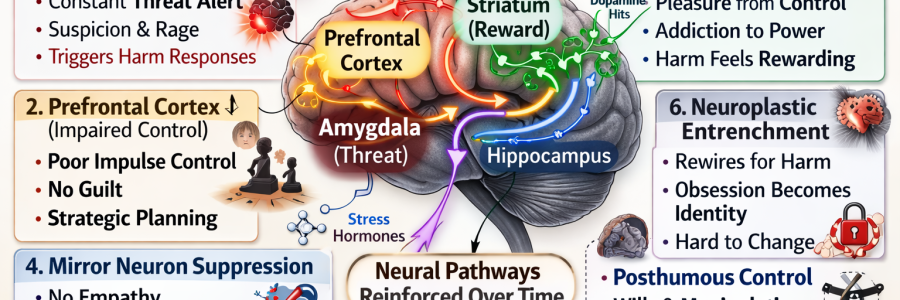
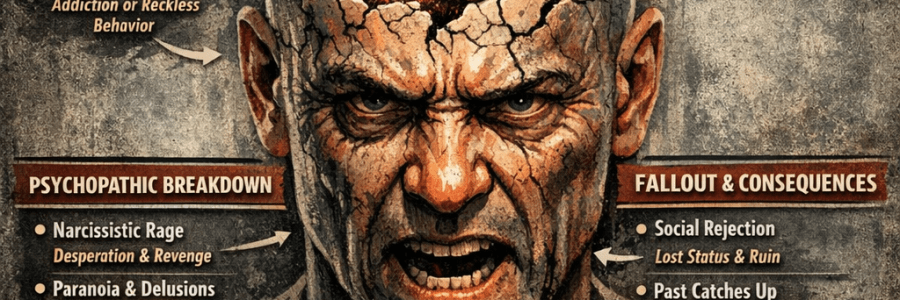
Sociopathy (ASPD traits) by itself does not automatically lead to abuse or violence.Many sociopathic people live calm, structured, pro-social lives. But certain combinations of traits can create a volatile system — especially when unregulated anger gets added.It’s the mix that matters, not the label. Below is what typically happens when sociopathy does turn destructive. 1. The Missing Brake Pedal Neurotypical people often feel an immediate emotional… Read More When Sociopathy Goes Wrong: How Anger Becomes Abuse

1. Psychological and Emotional Background

Predatory behavior often arises from unresolved psychological needs or personality patterns. Common factors include: 2. Family and Upbringing Factors Certain family environments can shape predatory tendencies: 3. Environmental and Social Factors Beyond upbringing, society and environment can reinforce predatory tendencies: 4. Psychological Mechanisms Predators often share certain thought patterns: 5. Not Inevitable It’s important to note: not everyone with… Read More 1. Psychological and Emotional Background

“When They Never Come: The Psychology of Avoiding What You Love”

Moraira.Perth, Australia.Bournemouth.Puerto Banús.The places your daughter and grandchildren lived.The places filled with laughter, warmth, and belonging. And he never came.Not once. Not to visit. Not to share a meal, a beach, a moment.Always an excuse — too hot, too far, too boring, too Benidorm. It speaks volumes. Because in psychology, avoidance is rarely about disinterest — it’s… Read More “When They Never Come: The Psychology of Avoiding What You Love”

“When the Abuser Moves to Your Dream: The Psychology Behind Suddenly Wanting Moraira”

There’s a certain kind of cruelty that isn’t loud — it’s symbolic.Ten years ago, Moraira was your dream: sunshine, family, peace.He never wanted to come. He criticized Spain — too hot, too tacky, too Benidorm.He dismissed your joy because it wasn’t his. But now, suddenly, it’s his place.He visits, settles, even claims it as though the dream was always… Read More “When the Abuser Moves to Your Dream: The Psychology Behind Suddenly Wanting Moraira”

How Narcissists Find a New “Supply” After a Long-Term Relationship

Let’s break this down carefully from both psychological and neuroscience perspectives, then compare healthy relationships vs. narcissistic relationships, including practical signs to watch out for. 1. How Narcissists Find a New “Supply” After a Long-Term Relationship In psychology, the term “narcissistic supply” refers to the attention, admiration, validation, or control a narcissist gets from others.… Read More How Narcissists Find a New “Supply” After a Long-Term Relationship