“One year of your life can make so much difference.”
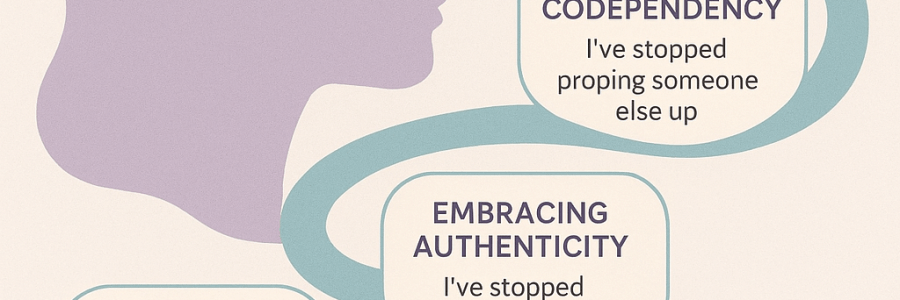
🧠 The Neuroscience and Psychology of One Year of Growth “One year of your life can make so much difference.”When you consciously choose healing, your brain’s neuroplasticity — its ability to rewire — begins to reshape how you think, feel, and relate. Every moment of self-reflection builds new neural connections for insight and self-compassion. 1. Self-Awareness: Seeing Yourself from… Read More “One year of your life can make so much difference.”

“The Look That Never Lied: The Psychology of Hatred and Survival”

You can see the pattern in every picture — birthdays, holidays, celebrations.The smiles around you are bright, the music is playing, yet beside you is that same expression: a cold, hostile glare that never softens.Even on his own birthday, surrounded by friends, the cake lit and the room full of warmth, his eyes stayed fixed… Read More “The Look That Never Lied: The Psychology of Hatred and Survival”

“The Psychology of Projection: When the Real Controller Says ‘They’re Trying to Control You’”

You heard it over and over:“They’re trying to control you.”Your family. Your friends. Anyone who cared about you —he cast them all as the enemy. But in truth, it was never them.It was him. Psychologically, this is a classic tactic of projection — one of the most common defense mechanisms in controlling or narcissistic personalities.Projection happens when a person… Read More “The Psychology of Projection: When the Real Controller Says ‘They’re Trying to Control You’”

“After Control: The Neuroscience of Finally Living as You Choose”

For years, you went everywhere alone.Weddings, dinners, birthdays, the Camino de Santiago —always the one who showed up, smiled, and stood alone.But he never came — not to celebrate, not to walk beside you.You attended masonic dinners, family events, special moments — mostly  without him. For three decades, the pattern never changed.The only things you… Read More “After Control: The Neuroscience of Finally Living as You Choose”

When Intimidation Stops Working: The Neuroscience of Calm Power

When fear, threats, and insults stop working — when the person who once scared you realizes you’re no longer shaken — something powerful has shifted.Not in them, but in you. They will throw everything they can: intimidation, legal threats, emotional manipulation, guilt trips, character attacks. But when your nervous system no longer reacts the way it used… Read More When Intimidation Stops Working: The Neuroscience of Calm Power

The Neuropsychology of Reclaiming Power: How Survivors Rebuild Confidence, Intuition, and Emotional Strength After Trauma

Trauma, whether from abuse, manipulation, or prolonged adversity, often leaves survivors feeling disempowered, hyper-vigilant, and emotionally fragmented. Neuroscience and psychology help explain why reclaiming personal power is both a complex and achievable process. 1. The Brain Under Trauma 2. Emotional Rebuilding 3. Reclaiming Confidence 4. Strengthening Intuition 5. Emotional Resilience 6. Practical Strategies for Reclaiming… Read More The Neuropsychology of Reclaiming Power: How Survivors Rebuild Confidence, Intuition, and Emotional Strength After Trauma

When the Lies Catch Up: The Neuroscience of a Life Built on Deception

For years, some people manage to live in a world of manipulation — lying, cheating, plotting — without apparent consequence. But the human brain is not designed to sustain deception forever. Eventually, the mind, the body, and reality itself begin to close in. 🧠 The Neuroscience: Stress, Fear, and ExposureChronic deceit activates the brain’s amygdala and prefrontal cortex,… Read More When the Lies Catch Up: The Neuroscience of a Life Built on Deception

Being the “Easy-Going One”: The Neuroscience of Over-Tolerating Bad Behavior

People often say, “You’re so understanding,” “You’re easy-going,” or “Nothing seems to bother you.”But sometimes, that calm exterior isn’t peace — it’s over-tolerance, a nervous system trained to keep the peace even when you’re hurting. 🧠 The Brain Behind Being “Laid-Back” When you grow up or live in environments where conflict feels unsafe, your brain learns to minimize tension to stay protected. This… Read More Being the “Easy-Going One”: The Neuroscience of Over-Tolerating Bad Behavior

🧠 The Neuroscience of Emotional Awareness

You’re Not “Too Much”: The Neuroscience of Emotional Depth and Connection Many women are told they’re “too emotional” or “too intense” when, in reality, they’re simply emotionally aware and capable of genuine connection. When someone accuses you of being “too much,” what they often mean is: “I can’t meet you at the level of emotional depth you require.” 🧠 The… Read More 🧠 The Neuroscience of Emotional Awareness

🌿 No Games, No Silence — Just Genuine Connection

The Neuroscience of Being with Someone Who Truly Wants to Be There There’s something deeply refreshing about spending time with someone who genuinely wants to be with you — no guessing, no mixed signals, no games. They don’t disappear to create control, or stay silent to create doubt. They show up. They’re present. And your… Read More 🌿 No Games, No Silence — Just Genuine Connection